



- Can you use a blanket LLM SEO strategy? Yes, to a certain degree, since AI search engines operate similarly by processing queries, retrieving information, and generating answers, but they differ in areas like context, training data, and how they interpret queries.
- Why do LLMs generate different answers to the same query? LLMs vary in training data freshness, retrieval methods, how they weigh authority versus recency, query interpretation, and location relevance, which causes brand recommendations to differ 62% of the time across AI engines.
- What should a blanket LLM SEO strategy include? A foundational approach should include clear authoritative content with direct answers, targeting relevant prompts, consistent brand mentions across the web, leveraging structured data, creating easy-to-skim site architecture, and maintaining consistent brand identity.
- When should you focus on platform-specific optimizations? Intentional optimizations are warranted when your audience is concentrated on a specific LLM platform or when you’re seeing visibility gaps where you appear in responses on one platform but are absent on another.
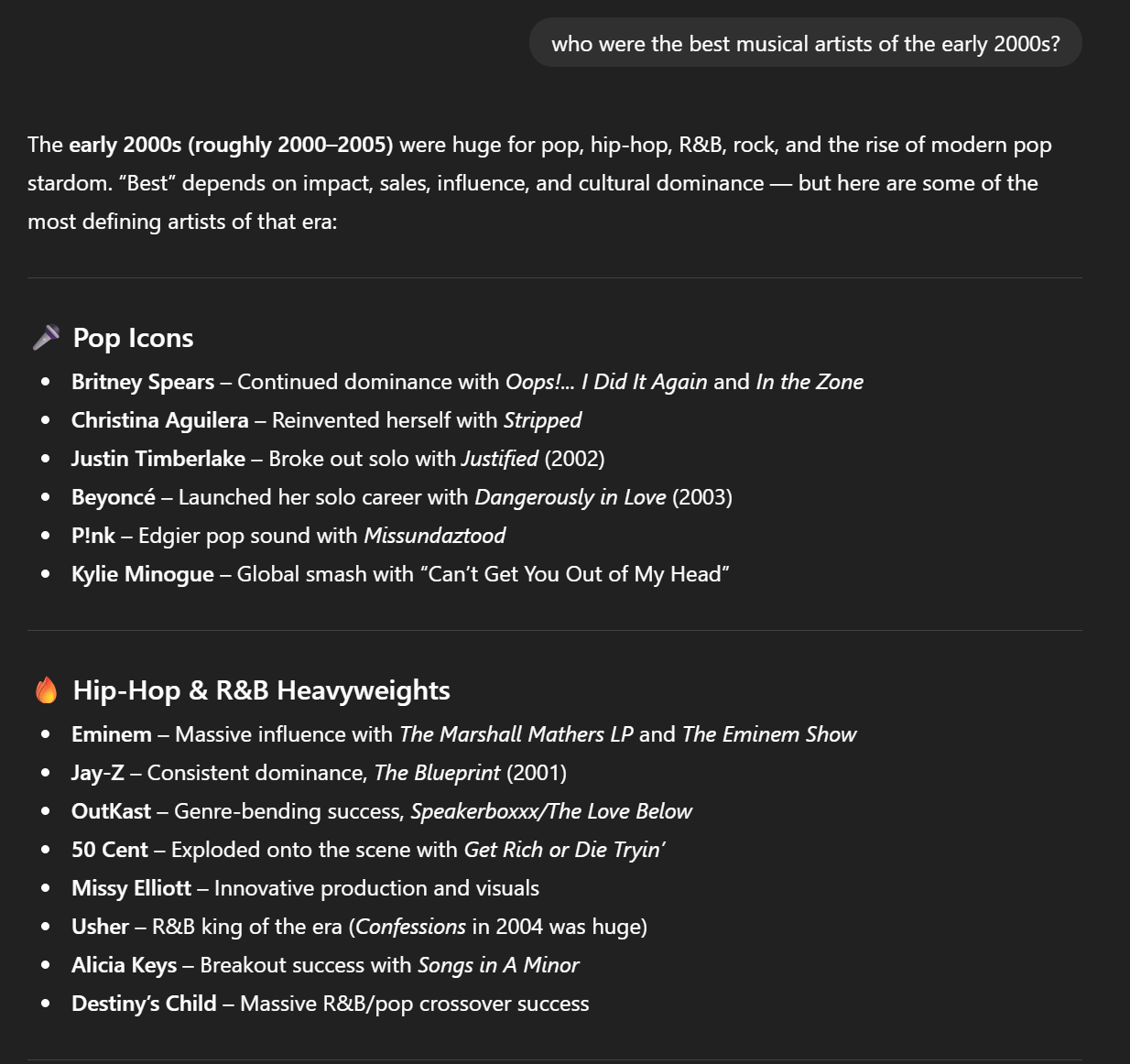
- How do different LLMs present the same information? ChatGPT and Gemini can organize identical query results differently, with ChatGPT categorizing by genre with bulleted lists and justifications while Gemini separates chart-toppers from genre definers, showing varied thought processes despite similar content.
A recent study came out showing that brand recommendations in AI search responses differ 62% of the time.
That means that AI engines don’t consistently pick the same people, brands, companies, or products for search. The answers can vary slightly depending upon the AI engine, and even other factors like location.
So it may make you wonder — can you use a blanket, catch-all LLM SEO strategy?
Let’s talk about it.
Can you use a blanket LLM SEO strategy?
Yes, to a certain degree.
At the base of it, AI search engines operate very similarly. They aim to process queries, retrieve information, compile it, and generate an answer.
Where they differ is areas like context and training data.
Let’s take this query as an example: “Who were the best musicial artists of the early 2000s?”
If you ask ChatGPT, you’ll get organized, bulleted lists of artists and a short justification for that artist making the list. They’re all organized by genre (pop, hip-hop, etc.):
Now if you ask the same exact query to Gemini, the organization and information provided looks a lot different:
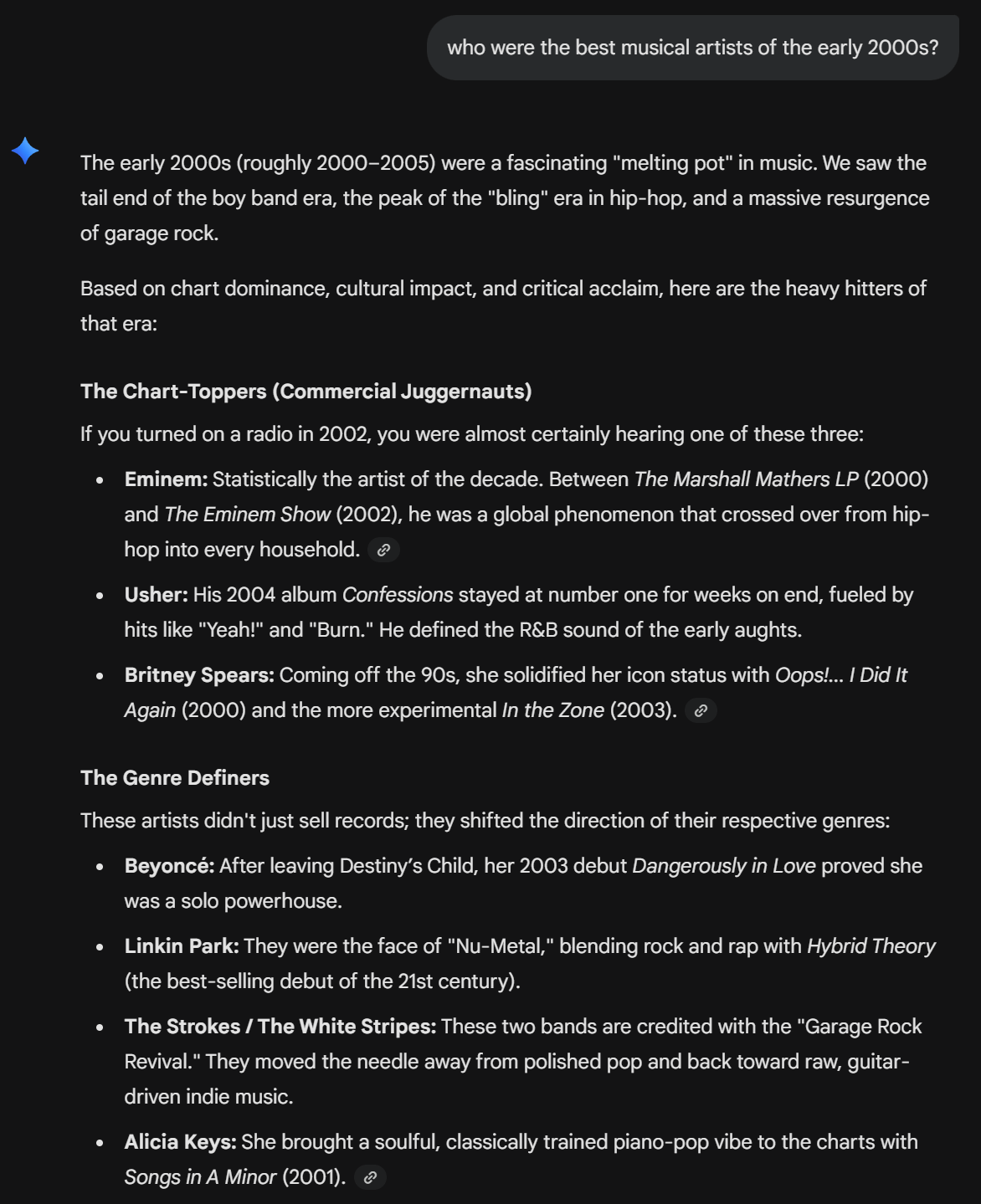
Gemini instead categorizes by chart-toppers and genre definers. Same query, but two different approaches to how the information is presented.
Even just in comparing these two sample queries, you can see how the “thought” process differed. ChatGPT looked at it from a “who’s the best in each genre” standpoint, while Gemini looked at overall best artists, pinpointing one specific person as the artist that defined the genre.
So, even though there is artist overlap and the information is similar, the formatting and approach are different.
If you want a deep look at how LLMs process the same queries, I did a deep dive into how AI search engines respond to the same query — you can get a better picture there.
But, just in looking at this small sample, you can see that a blanket LLM SEO strategy is good for setting a base, but you may need to tweak certain approaches based on what LLMs you’re targeting.
Why LLMs differ when generating answers
As I mentioned before, LLMs have a similar base structure, but there are a lot of variables otherwise.
These are factors that can impact what responses LLMs generate:
- Training data freshness: LLMs vary with how fresh the data is that they’re trained on. Some LLMs are trained on more recent data, which can generate different answers than an LLM that is trained on older data.
- Retrieval method: LLMs typically pull from their training data and/or the web. Which retrieval method they use first depends upon the platform.
- Weight of authority vs. recency: We know that authority and recency are both factors that influence LLM responses, but to what degree? Some LLMs weigh authority heavier than recency, and vice-versa.
- Query interpretation: AI search engines interpret the same query differently, which results in slightly varied responses from different LLMs.
- Location relevance: Where a user is located can influence results from certain queries, especially when it’s local query.
The differentiation with these factors can help explain why a brand may appear higher in one LLM’s response vs. another and why certain brands may be cited over others.
When to use a blanket LLM SEO strategy vs. intentional optimizations
By now, you might be feeling overwhelmed. The thought of having to create a specific LLM strategy for each LLM feels like a lot — and it is. That’s why it’s really just about being intentional with when and where you’re optimizing for specific LLMs.
A blanket LLM SEO strategy will serve as a good base for you to get started and gain some visibility. Follow practices like:
- Having clear, authoritative content that provides direct answers
- Targeting prompts relevant to your content
- Getting consistent brand mentions across the web
- Leveraging structure data
- Creating an easy to skim site architecture
- Having a clear brand identity that’s consistent in all mentions
This blanket approach gives you a good basis to appear across LLMs.
So, when do you start focusing on more intentional optimizations?
Here are two key scenarios where intentional optimizations are warranted:
- Your audience is platform concentrated: If you’re finding that most of your traffic is coming from a specific LLM, that signals that you should make some intentional optimizations for the platform where you’re seeing the highest concentration of people.
- You’re seeing visibility gaps: If you’re appearing in responses on one platform, but absent on another, it is a signal that you need some platform-specific tweaks to ensure you’re getting visibility.
Do one of these scenarios apply to you? If so, start researching your LLM platform of choice to see what specific optimizations you need to make to help you increase your visibility.
Stay agile in a changing AI SEO world
Keep your finger on the pulse of everything AI search, from platform changes to new discoveries to the latest optimizations. Subscribe to our email newsletter to stay in the know!

Acompanhe as mudanças no cenário de SEO
Cadastre-se em nosso boletim informativo para receber dicas práticas e conselhos de especialistas para ajudá-lo a melhorar a visibilidade do seu site.

Acompanhe as mudanças no cenário de SEO
Cadastre-se em nosso boletim informativo para receber dicas práticas e conselhos de especialistas para ajudá-lo a melhorar a visibilidade do seu site.
Acompanhe as mudanças no cenário de SEO
Cadastre-se em nosso boletim informativo para receber dicas práticas e conselhos de especialistas para ajudá-lo a melhorar a visibilidade do seu site.
Escritores