



- What is the main focus when tracking AI search performance? The focus should be on visibility and mentions rather than traditional rankings, since being cited at any position in AI search results provides similar value regardless of whether you’re the first or third source mentioned.
- How do you start tracking AI search rankings? Begin by determining which AI platforms (like AI Overviews, ChatGPT, Perplexity, or Gemini) your audience uses most, then decide whether to manually track performance or use a specialized tool to monitor your visibility across those platforms.
- What are the key metrics to track for AI search? The most important metrics include brand mentions and citations, market share of voice compared to competitors, source diversity across different pages, and overall visibility score for targeted prompts and queries.
- What is the difference between mentions and citations in AI search? Mentions occur when your brand name appears in AI responses without necessarily linking to your website, while citations show your website as the information source with links typically tagged at the end of sentences or in a source list.
- What tools are available for tracking AI search visibility? Popular AI search tracking tools include Ahrefs Brand Radar ($199-$699/month), SE Ranking AI Visibility Tracker ($103.20+/month), OmniSEO ($89+/month), Surfer SEO AI Tracker ($99+/month), and Rankscale.ai ($20+/month), each offering features like citation tracking, competitor monitoring, and visibility scoring.
AI search rankings.
You’ve probably heard a lot about this recently, whether people are talking about how to optimize for them, whether they matter, or how to track them.
But the one with probably the biggest question mark is how to track AI search rankings.
After all, it’s still so new — is there really a good or established way to track your rankings and visibility?
So let’s get into it!
Disclaimer: It’s more about AI search visibility than AI search rankings

A big differentiator that I want to address before diving deeper is the concept of rankings with AI search. Most people, when trying to optimize for AI search, think of it in terms of “rankings” like it was for traditional SEO.
Realistically, that’s just not the goal with AI search.
Where you rank doesn’t really matter. Whether you’re the first source or the third source on AI Overviews, for example, it’s all the same value.
(Now, there might be something to be said about being the 3rd source or one of the “Show All” sources, but that’s a topic for another day.)
At the end of the day, you want people to see your business, no matter what “rank” you are.
The same goes for LLMs like ChatGPT, Perplexity, and Gemini. The goal is moreso to be mentioned, rather than focusing on being mentioned first.
The reality is that people are looking at AI search results for specific information. So even if you’re cited first, it may not be the information they find the most helpful. Really, it comes down to whether you’re the citation for the information that’s most helpful to the searcher (which is hard to control).
That’s why, instead of focusing on “ranking,” it’s better to just focus on being visible and even getting a mention.
So, when I talk about “ranking,” I’m really talking about visibility.
How to track AI search rankings
If you want to track your AI search performance, follow these tips:
1. Determine what platforms you want to boost visibility on
Before you start tracking your AI search rankings, determine where you want to boost your visibility. How you track your search rankings may look different depending upon which platforms you’re focusing on.
As I’ll address later, one part of tracking AI search rankings is tracking what queries people are asking.
If you’re tracking AI Overviews, you’re focusing more on long-tail keywords. You can still track questions, but it’s more focused on keywords.
With LLMs like ChatGPT and Perplexity, you’re focusing more on prompts, which can be questions, longer statements, or something similar.
So, knowing where you want to track visibility helps determine some of those aspects.
In general, you’ll want to focus on the AI search platforms your audience uses the most. You don’t need to track performance on all AI search engines (but you certainly can).
2. Decide if you want to use a tool or manually track
If you’re going to track AI search rankings, you need to have a place to do it. There are two options: manually tracking in a sheet or using a tool.
Realistically, the question isn’t which you should do, but more so which tool should you use.
Manually tracking AI search performance is difficult. AI search changes so rapidly that it requires continual monitoring. Having to do that manually is time-consuming.
That’s not to say you can’t manually track your performance. But if you already have a pretty full plate, you’ll want to consider using an AI search tool.
Jump ahead to the top AI search tools
3. Identify your key queries/keywords/prompts to track
If you want to see how you’re ranking in AI search, you need to identify key queries/keywords/prompts to track.
As I mentioned earlier, what you’re tracking may look a little different depending upon which platforms you’re tracking. While you can track prompts for AI Overviews, people are more often searching keywords and phrases on this engine. At the heart of it, it’s still through Google, so people are searching the same way they do on traditional search engines.
So, determine what keywords and prompts you want to track and record them wherever you’re tracking your performance.
4. Look for citations and mentions
Once you know what phrases and queries you want to target, you can start tracking to see if you’re getting mentions or citations.
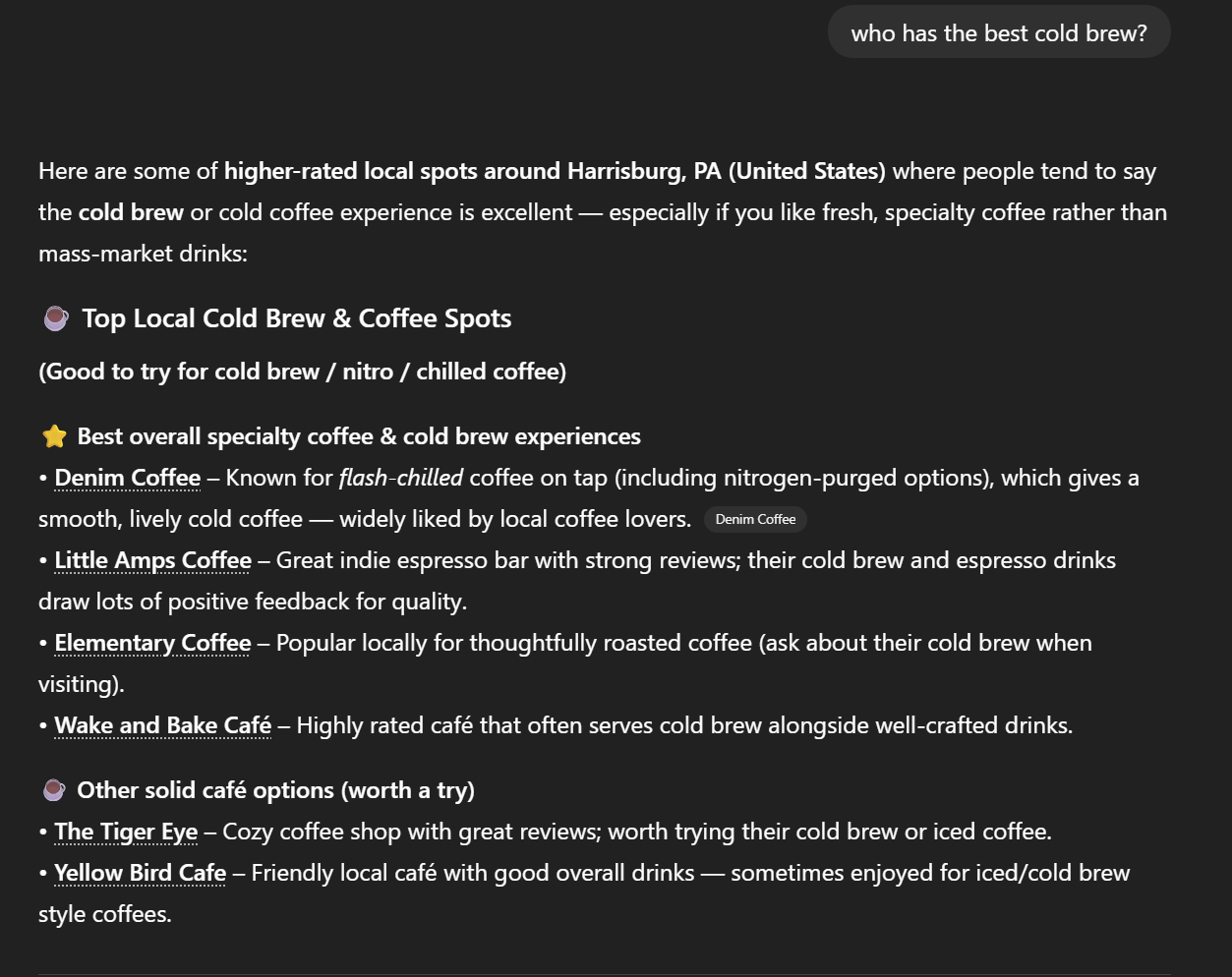
Mentions are when your name is included somewhere in the response. You’ll often see this for prompts that ask “who”-type questions. Mentions don’t always have a link back to your website.
Citations show your website as the source of information. These are often tagged at the end of a sentence or paragraph. A list of sources may also be listed at the bottom of the response, depending upon the LLM.
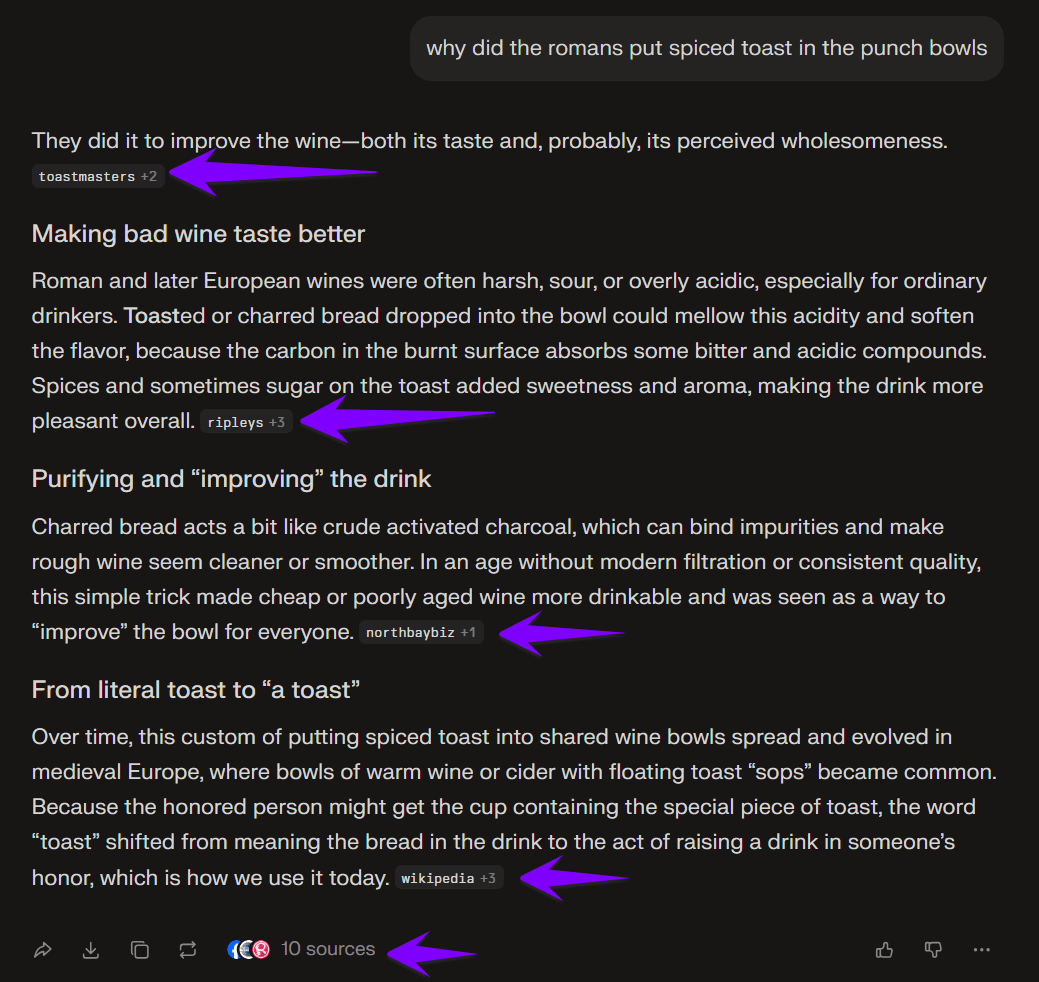
You’ll want to analyze your prompts and keywords to determine if you’re receiving either (or both). If you’re using a tool, you may be able to see how your citations have changed recently, like if you gained new ones, lost old ones, or still aren’t receiving any.
5. Identify key metrics to track
Whenever you track any digital marketing strategy, it’s all about the metrics. Metrics provide you with insights and tell you what’s working (and not) with your strategy. So naturally, you’re going to track metrics with AI search, too.
The most common metrics people track with AI search include:
- Brand mentions & citations: This involves tracking how often you’re mentioned or cited in AI search responses.
- Market share of voice: This metric involves comparing how often you’re mentioned in AI search responses with how often your competitors are mentioned.
- Source diversity: Source diversity can help you see if AI engines are just citing the same few pages repeatedly, or if you’re receiving citations for various pages.
- Visibility score: This looks at how visible you are overall for all the prompts and queries you’re targeting.
Top tools to help you track your AI search rankings
As I mentioned numerous times, if you want to make your life easy when it comes to tracking AI search rankings, you need to find the right tool to do it. Investing in a tool, rather than manually tracking, will be less work, give you clearer data, and make it easier to understand where you’re at with AI search optimization.
Here are my top recommended tools for tracking AI search visibility:
1. Ahrefs Brand Radar
Investment: $199/month per index or $699/month for all AI platforms
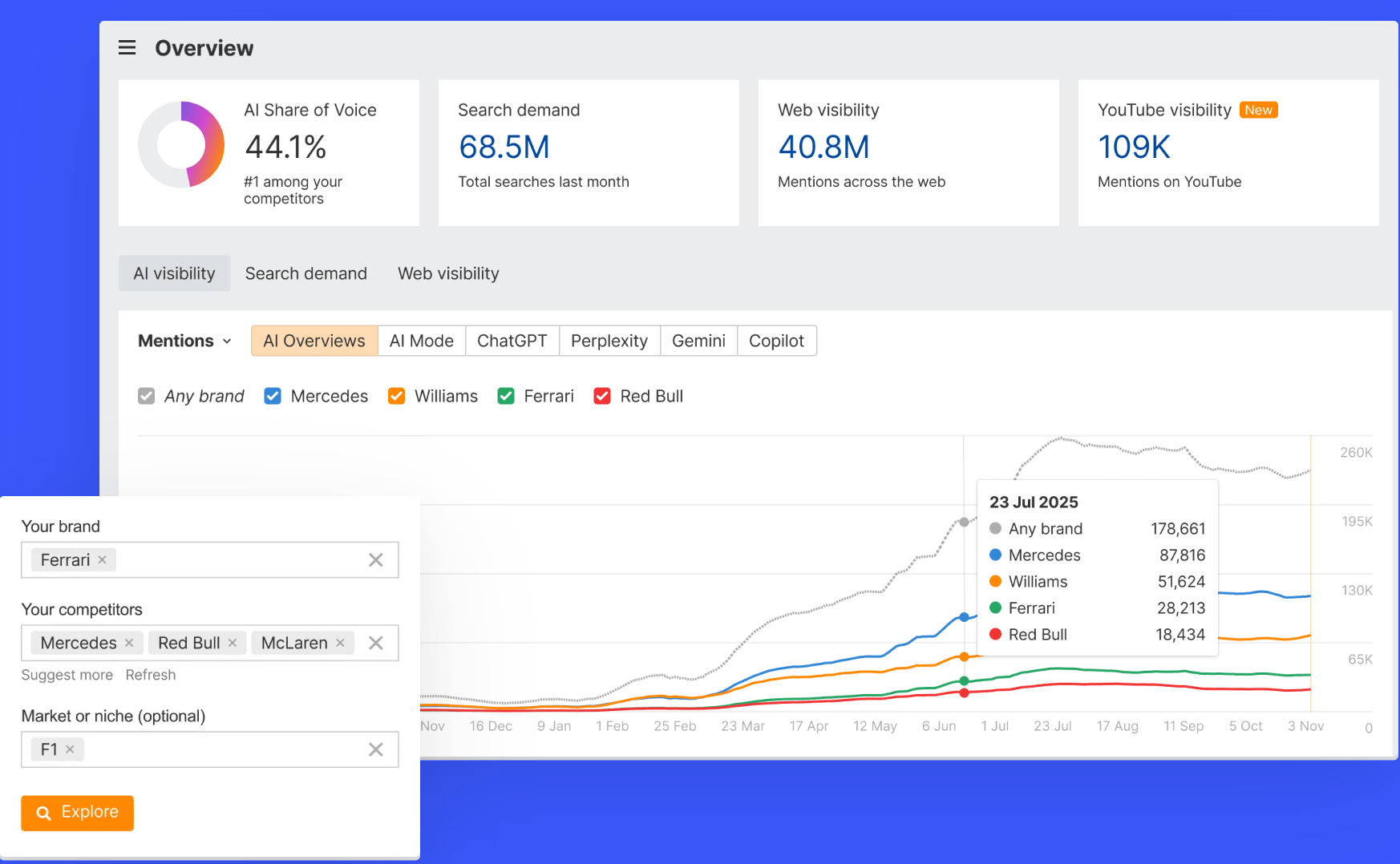
Brand Radar is a great option if you’re already familiar with Ahrefs’ products and need an AI monitoring tool. This tool enables you to track your visibility across AI answers, community forums, and YouTube.
Brand Radar enables you to see your share of voice, visibility, and demand across AI platforms. You can track your positioning around prompts, benchmark your performance against competitors, and more!
2. SE Ranking AI Visibility Tracker
Investment: $103.20+/month
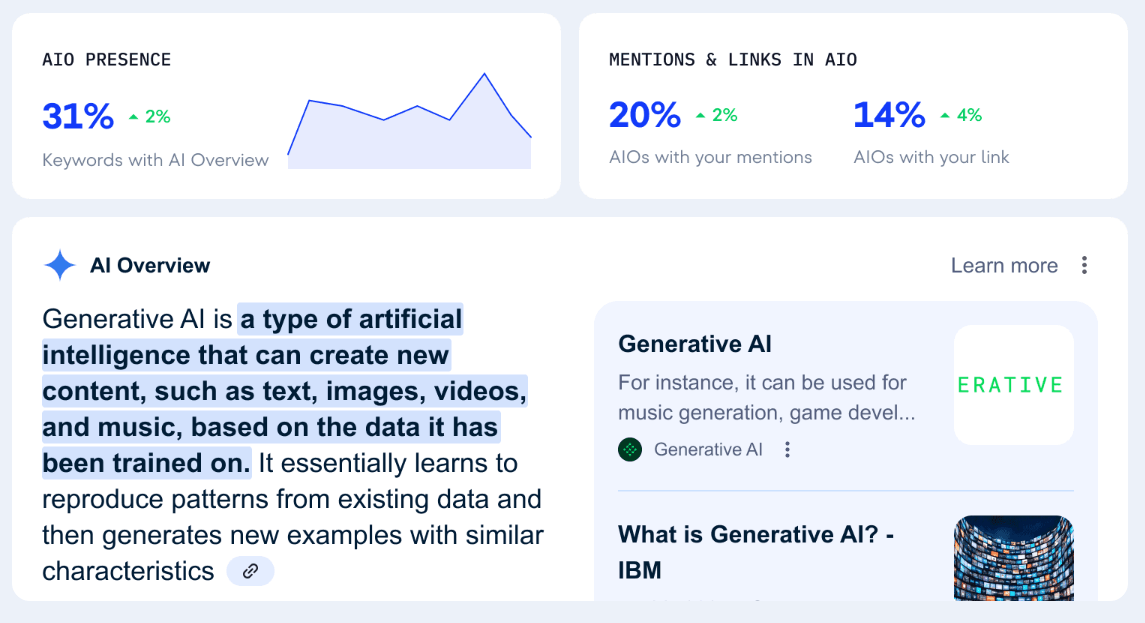
Another great AI rank tracking tool is SE Ranking’s AI Visibility Tracker. This tool enables you to track your visibility across platforms like AI Overviews, ChatGPT, and Gemini.
You can use this tool to track brand mentions, monitor your competitors’ AI search performance, and track specific prompts/keywords.
3. OmniSEO®
Investment: $89+/month
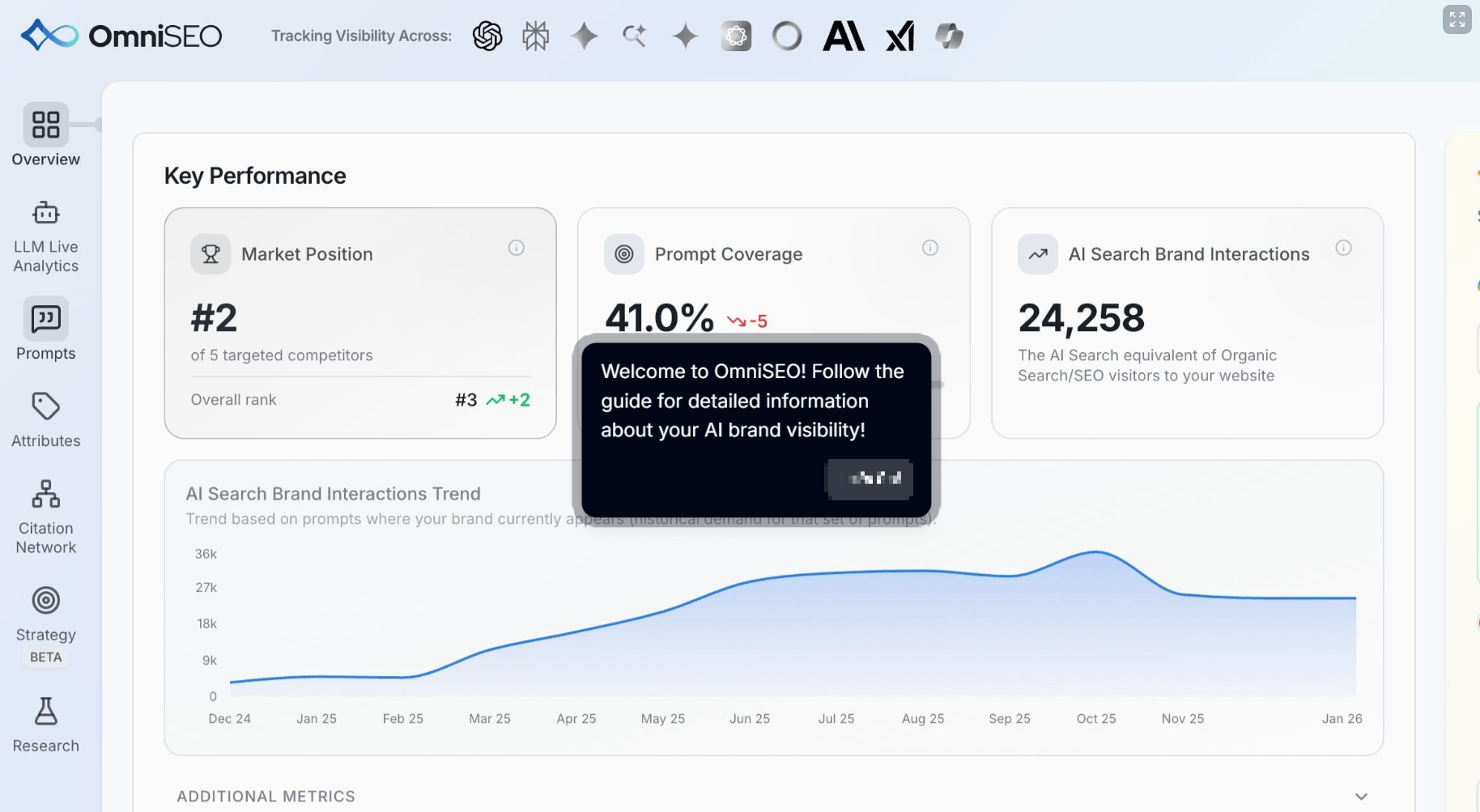
OmniSEO® is another great option for tracking AI search visibility. This platform enables you to do a lot, including tracking your visibility, getting a sentiment analysis, tracking citations, and monitoring competitor performance in AI.
This platform offers real-time visibility tracking across ChatGPT, Perplexity, AI Overviews, and many more. It can help you identify high-performing queries (the ones with the most citations and mentions), find gap opportunities with keywords, and understand your citation health.
4. Surfer SEO AI Tracker
Investment: $99+/month
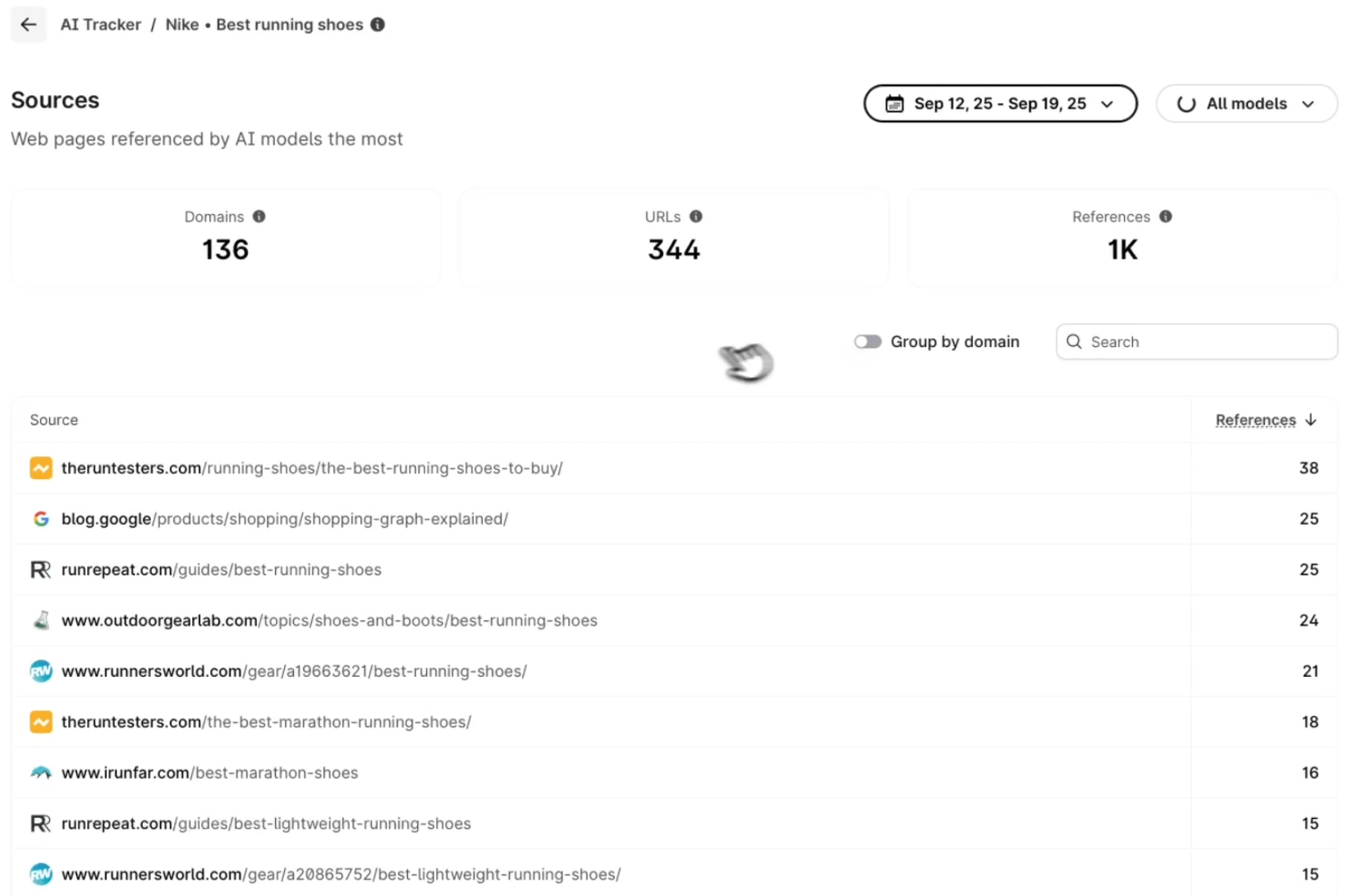
Surfer SEO AI Tracker is a great AI search visibility tracking tool for businesses that want a good understanding of their AI search performance. This tool can help you monitor and analyze your AI search visibility to help improve performance.
With Surfer SEO AI Tracker, you can track your AI search visibility, identify mention gaps, and see your AI share of voice. It’s easy to add the prompts you want to monitor, see how often your brand appears, and keep tabs on how your competitors perform for those same prompts.
5. Rankscale.ai
Investment: $20+/month
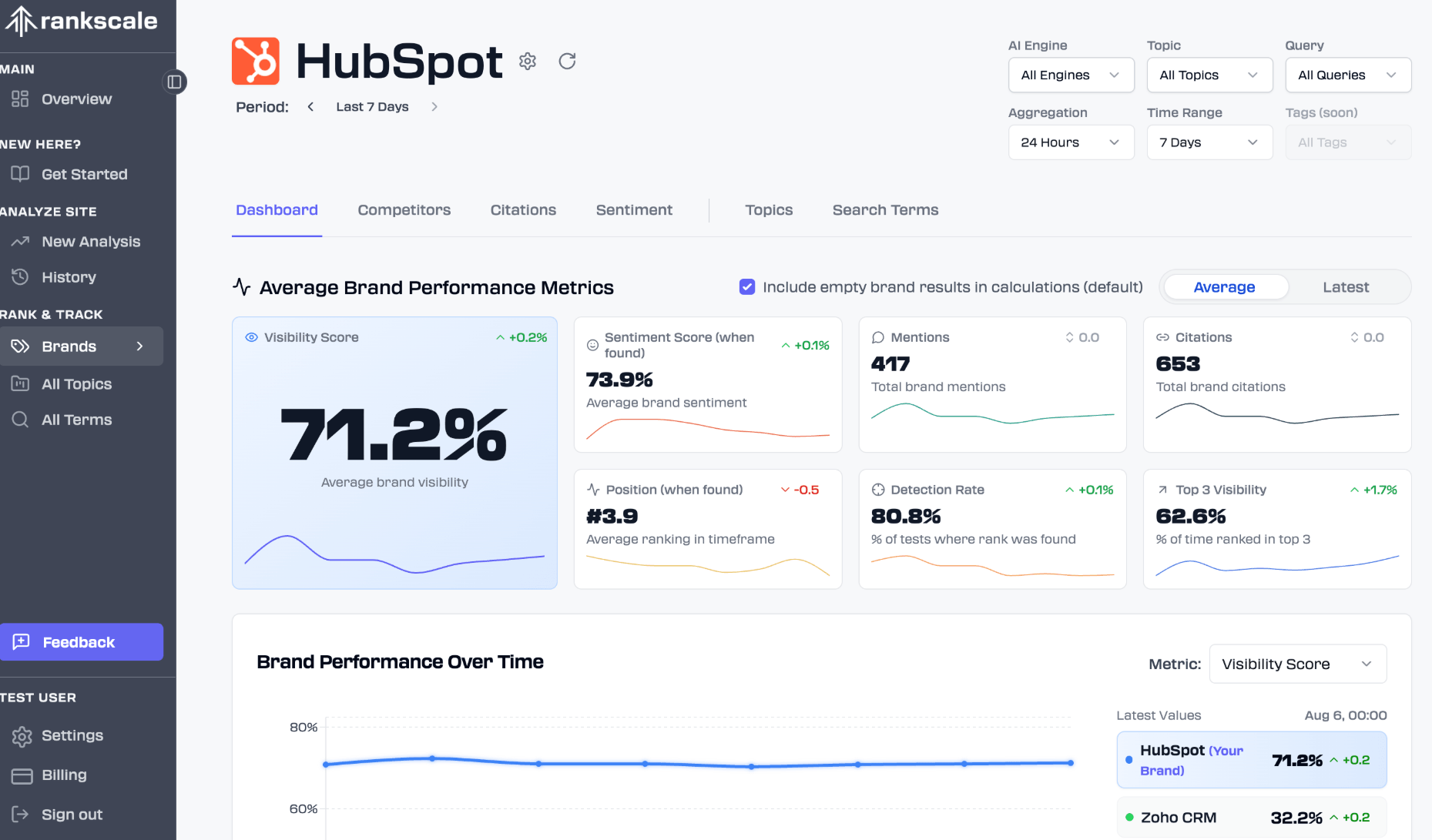
If you’re looking to ease into AI performance tracking and don’t want to break the bank, Rankscale.ai is a good option. This budget-friendly AI tracking tool enables you to track your brand sentiment, mentions, and citations across AI platforms.
Not only can you track your performance in platforms like AI Overviews, Gemini, and Claude, but you can see how your competitors fare as well.
Get help with tracking your AI search rankings
Now that you know how to track your AI search rankings, it’s time to dive in! You’ll want to start monitoring your AI search rankings now, so you can optimize and start improving your performance before your competitors catch on.
Need a little more than a tool? We’ve got AI SEO services that can help power up your AI search performance and improve your opportunities to earn mentions.
Connect with us today to see how we can help you level up your AI search strategy!

Suivre les classements au-delà de la recherche
Vos clients potentiels effectuent des recherches dans les moteurs d'IA au-delà de la recherche traditionnelle. Êtes-vous bien placé ?

Suivre les classements au-delà de la recherche
Vos clients potentiels effectuent des recherches dans les moteurs d'IA au-delà de la recherche traditionnelle. Êtes-vous bien placé ?
Suivre les classements au-delà de la recherche
Vos clients potentiels effectuent des recherches dans les moteurs d'IA au-delà de la recherche traditionnelle. Êtes-vous bien placé ?
Écrivains