



Ahora mismo, todo el mundo habla de lo que se puede hacer para que tu marca aparezca en las respuestas de los modelos de lenguaje grande (LLM).
Al fin y al cabo, es lo más importante en el ámbito de las búsquedas: la visibilidad de la marca es en.
Pero lo que la gente suele no habla es de lo que ocurre cuando tu marca se mencionada, pero la información es errónea o incluso perjudicial. ¿Qué hacer entonces?
Hablemos de cómo los modelos de IA pueden dañar la reputación de una marca y qué puedes hacer al respecto si te estás viendo afectado por ello.
Cómo los modelos de IA pueden perjudicar a tu marca
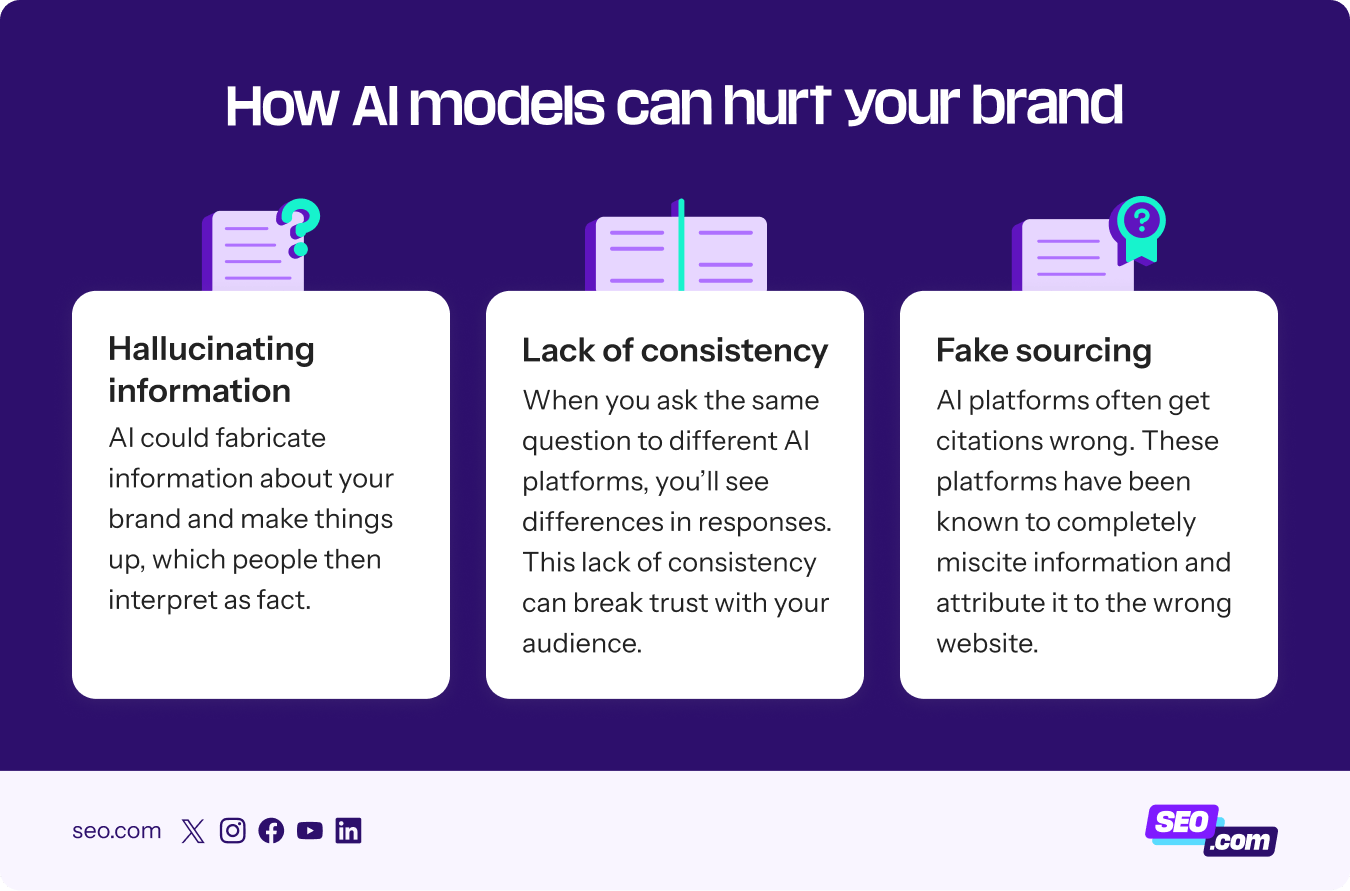
Todos sabemos que la IA no es perfecta, pero a veces esa imperfección puede resultar perjudicial para tu marca. A continuación te explicamos cómo los modelos de IA pueden perjudicar a tu marca:
Información alucinante
Uno de los mayores problemas de las plataformas de IA, en general, es que pueden «alucinar» información. La IA podría inventarse datos sobre tu marca y crear información falsa, que la gente acabaría interpretando como un hecho.
Las plataformas de IA pueden generar respuestas ofensivas, incorrectas o sesgadas que denoten una mala imagen de tu marca y afecten negativamente a tus productos o servicios. Esto puede provocar la difusión de información errónea, lo que puede dañar tu marca y obligarte a actuar con urgencia para solucionar el problema.
Falta de coherencia
Si formulas la misma pregunta a diferentes plataformas de IA, observarás diferencias en las respuestas. En algunos casos, esas respuestas podrían ser negativas para tu marca, dependiendo de los datos y la información con los que se haya entrenado la plataforma.
Por lo tanto, esta falta de coherencia puede minar la confianza de tu público. Puede darles una impresión negativa de tu marca si utilizan un modelo de IA que no la valora positivamente.
Origen falso
Un problema recurrente con las plataformas de IA es que a menudo cometen errores en las citas. Se sabe que estas plataformas citan la información de forma totalmente errónea y la atribuyen a un sitio web equivocado. O bien, citan la información de páginas que no existen.
En ambos casos, esto no siempre se interpreta como un punto en contra del motor de IA, sino de ti mismo. Hay quien lo interpretará como una muestra de incompetencia por parte de tu marca o como un intento de manipular los motores de búsqueda basados en IA para conseguir menciones.
Tu marca podría verse en apuros si la gente piensa que estás engañando deliberadamente (aunque sea mediante IA).
Qué hacer si la IA está perjudicando a tu marca
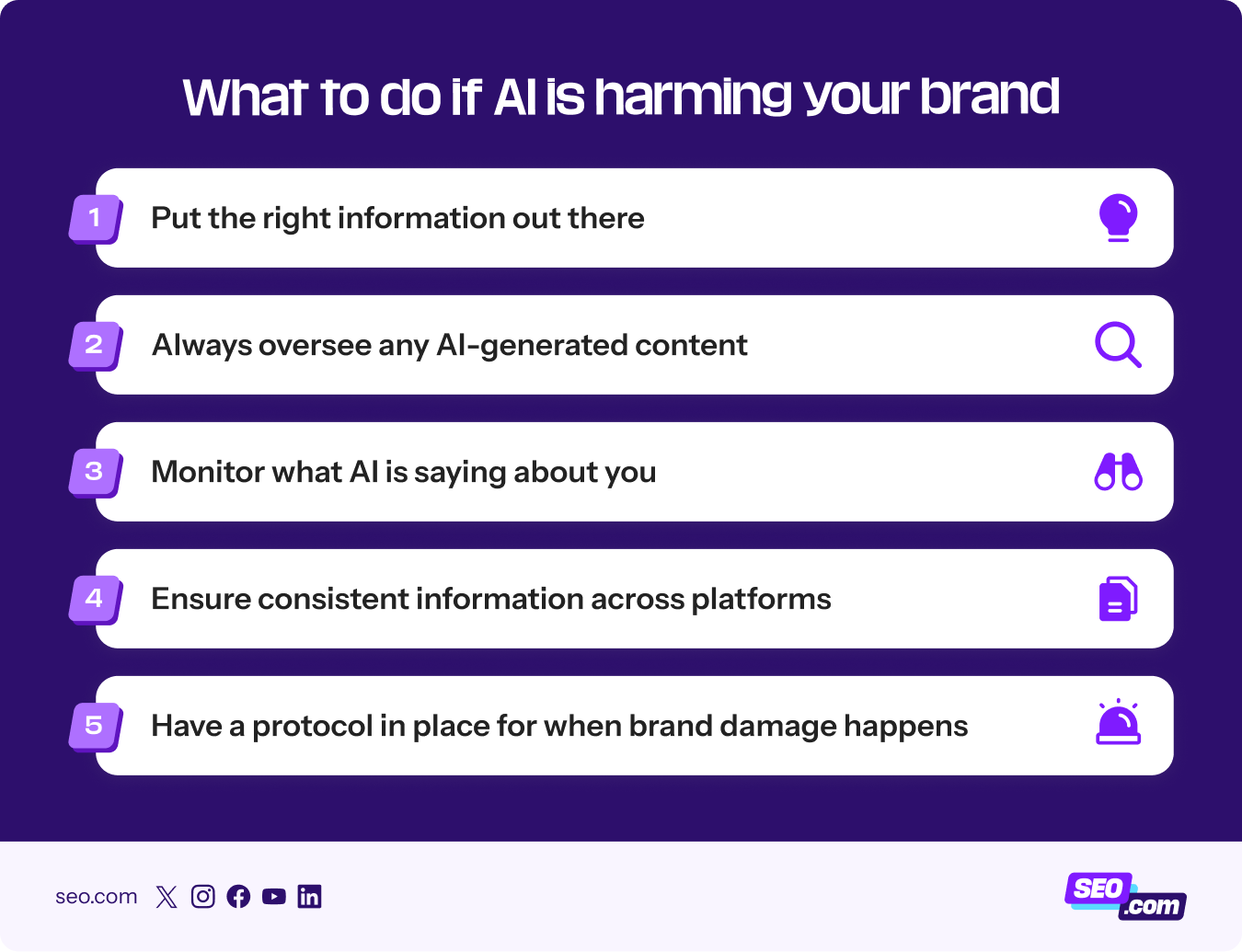
Si actualmente estás viendo cómo la IA difunde información falsa sobre tu marca, esto es lo que puedes hacer para solucionarlo:
1. Difunde la información correcta
Si te das cuenta de que la IA se está inventando información sobre tu empresa, es porque alguien ha hecho una pregunta y la plataforma no ha podido encontrar la respuesta en ninguna parte. La IA suele inventarse información cuando no tiene una respuesta directa.
La mejor manera de combatir eso es dar la respuesta directa. Si hay información confusa sobre tu política de devoluciones, por ejemplo, crea una página dedicada a cómo funcionan las devoluciones. Asegúrate de responder a todas las preguntas que alguien pueda tener.
De ese modo, si la gente vuelve a plantear esa pregunta, la IA tendrá una fuente de la que extraer la información correcta.
2. Supervisa siempre cualquier contenido generado por IA
Si utilizas la IA para ayudarte a generar contenido, asegúrate siempre de que haya una persona supervisándolo. A veces, los modelos de IA pueden dañar la reputación de tu marca simplemente porque publicas contenido generado por IA que no era del todo correcto (y que no se revisó a fondo). No te compliques la vida: revisa siempre el contenido creado por los motores de IA.
Asegúrate de que el contenido que publicas sea veraz y refleje fielmente tu marca. Esto puede ayudar a reducir los problemas derivados de la difusión de información falsa.
3. Mantente al tanto de lo que dice la IA sobre ti
Estar siempre al tanto de lo que dice la IA sobre ti es fundamental para evitar que la IA perjudique a tu marca. Si detectas a tiempo la información errónea, podrás sortearla fácilmente y resolver el problema.
Mantén un control sobre tu marca buscando tu empresa, tus productos o tus servicios en diferentes plataformas de IA. Puedes preguntar a estas plataformas qué saben sobre ti y ver cómo responden a las consultas relacionadas con tu empresa.
Si detectas alguna inexactitud, puedes corregirla rápidamente y difundir la información correcta.
4. Garantizar la coherencia de la información en todas las plataformas
Las incoherencias son una de las principales causas de que la IA malinterprete aspectos relacionados con tu marca y ofrezca información contradictoria. Debes asegurarte de que los mensajes que transmites sobre tu marca sean coherentes.
Si dices una cosa en las redes sociales y otra en tu sitio web, a las plataformas de IA les puede resultar difícil saber cuál es la correcta. Esto puede dar lugar a que se comparta información errónea, lo que genera confusión (sobre todo si la información compartida está desactualizada).
Asegúrate de transmitir el mismo mensaje en todas las plataformas. Ya sea en tu sitio web, tus perfiles en redes sociales, tus comunicados de prensa o los sitios web de tus socios, asegúrate de que la información sea la misma en todos ellos. Así evitarás que la IA proporcione información incorrecta.
5. Establecer un protocolo para los casos en que se produzca un daño a la marca
Lo mejor que puedes hacer, si te preocupa que la IA pueda dañar la reputación de tu marca, es contar con un plan de acción para saber qué harás hacer si la IA difunde información que perjudique a la marca.
Contar con un protocolo bien definido te garantiza que estarás preparado cuando llegue el momento. No tendrás que andar dando vueltas y entrando en pánico tratando de averiguar qué hacer: simplemente podrás pasar a la acción.
Al desarrollar tu protocolo, define aspectos como:
- ¿Quién se encarga de qué?
- Tanto si necesitas crear contenido nuevo, redactar un comunicado de prensa, etc.
- ¿Qué vas a hacer con los clientes que puedan haber visto esa información?
- Qué puedes hacer para evitar que esto vuelva a ocurrir
Un protocolo sólido te ayudará a gestionar con facilidad cualquier malentendido relacionado con la IA.
Mantente al tanto de lo que dice la IA sobre tu marca
No querrás que la IA siga difundiendo información falsa sobre tu marca, por lo que es importante que estés al tanto de ello. Puedes utilizar plataformas como OmniSEO® para ver en qué consultas aparece tu marca, de modo que sepas dónde buscar para ver qué dice la IA sobre ti en sus respuestas.
Pero si necesitas algo más, plantéate invertir en servicios de SEO con IA de una agencia con experiencia. WebFX, el equipo detrás de SEO.com, puede ayudarte a mantenerte al día y a supervisar activamente tu presencia en el ámbito de la IA. Desde mejorar la visibilidad de tu marca hasta realizar un seguimiento del rendimiento, podemos ayudarte con todo.
Ponte en contacto con nosotros hoy mismo para ver cómo podemos ayudarte a mejorar tu presencia en las búsquedas con IA.

Aumentar la autoridad de la marca mediante SEO
Ser reconocido como líder del sector al aparecer sistemáticamente en resultados de búsqueda relevantes y con autoridad basados en IA.

Aumentar la autoridad de la marca mediante SEO
Ser reconocido como líder del sector al aparecer sistemáticamente en resultados de búsqueda relevantes y con autoridad basados en IA.
Aumentar la autoridad de la marca mediante SEO
Ser reconocido como líder del sector al aparecer sistemáticamente en resultados de búsqueda relevantes y con autoridad basados en IA.
Escritores