





Can you really generate traffic from zero-volume keywords, or keywords with zero search volume data in keyword research tools like SEO.com, Ahrefs, Semrush, and Google Keyword Planner? The answer is yes, but there are some considerations before targeting zero- or low-volume keywords.
What are zero-volume keywords?
Zero-volume keywords are search queries with no or low search volume data in keyword research tools like Google Keyword Planner, SEO.com, Ahrefs, and Semrush. In search engine optimization (SEO), websites will target zero-volume keywords to reach audiences without the competition of high-volume keywords.
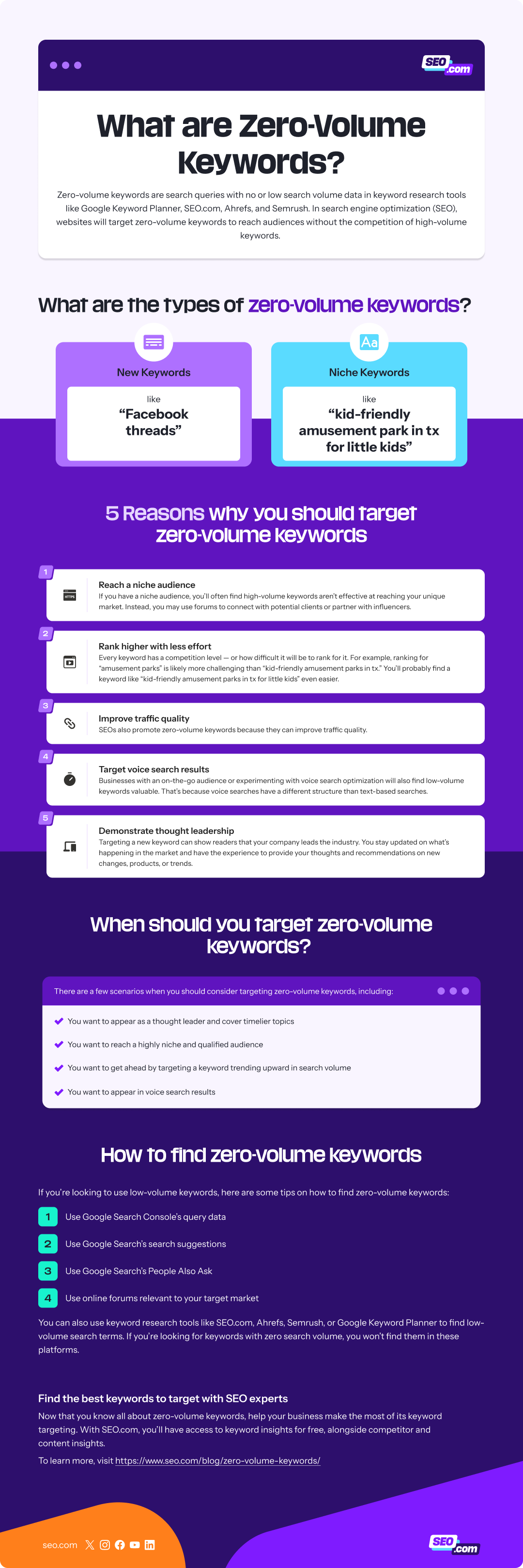
Download full infographic on Zero-Volume Keywords
What are the types of zero-volume keywords?
There are a few types of zero search volume keywords, including:
- New keywords, like “facebook threads”
- Niche keywords, like “kid-friendly amusement park in tx for little kids”
Sometimes, these keywords will transition from zero-volume to long- or short-tail keywords. For example, the keyword “facebook threads” will gain search volume but might register as a zero-volume keyword at launch.
Why target zero-volume keywords?
There are several reasons why SEOs target zero search volume keywords, including:
Reach a niche audience
If you have a niche audience, you’ll often find high-volume keywords aren’t effective at reaching your unique market. Instead, you may use forums to connect with potential clients or partner with influencers.
Zero-volume keywords, however, can help you reach this market through organic search.
Rank higher with less effort
Another reason why some SEOs promote low-volume keywords is because of keyword competition.
Every keyword has a competition level — or how difficult it will be to rank for it. For example, ranking for “amusement parks” is likely more challenging than “kid-friendly amusement parks in tx.” You’ll probably find a keyword like “kid-friendly amusement parks in tx for little kids” even easier.
While this is an advantage of zero-volume keywords, you need to consider a keyword’s:
- Relevancia
- Calidad
You won’t generate qualified traffic if the keyword is irrelevant to your target market. That’s why it’s crucial to evaluate low-volume keywords before targeting them. They’re not worth your time and resources if they don’t contribute to your overall goal, like more qualified traffic.
Mejorar la calidad del tráfico
SEOs also promote zero-volume keywords because they can improve traffic quality.
This benefit trickles down from having a niche audience. If you have a super-specific audience that uses an identified low-volume keyword, targeting and ranking for it can help your business attract more qualified traffic.
Remember that since you’re targeting a zero-volume keyword, though, you won’t see that much traffic.
Target voice search results
Businesses with an on-the-go audience or experimenting with voice search optimization will also find low-volume keywords valuable. That’s because voice searches have a different structure than text-based searches.
As an example, if you’re looking to eat somewhere, your searches might look like this:
- Voice search: I’m looking for a good sushi place
- Text search: sushi restaurants near me
Since voice search keyword data is limited or nonexistent in SEO and keyword research tools like Google Keyword Planner, Ahrefs (or Ahrefs alternatives), and Semrush, you’ll often find voice searches register as low- or zero-volume keywords.
Demonstrate thought leadership
Keywords without search volume can also help your business demonstrate thought leadership.
Targeting a new keyword, like “facebook threads,” can show readers that your company leads the industry. You stay updated on what’s happening in the market and have the experience to provide your thoughts and recommendations on new changes, products, or trends.
When should you target zero-volume keywords?
There are a few scenarios when you should consider targeting zero-volume keywords, including:
- You want to appear as a thought leader and cover timelier topics
- You want to reach a highly niche and qualified audience
- You want to get ahead by targeting a keyword trending upward in search volume
- You want to appear in voice search results
Before proceeding with low-volume keywords, it’s critical you:
- Understand your target audience’s online behavior
- Estimate your potential gains, like traffic or sales, from targeting these keywords
- Balance your strategy with long- or short-tail keywords
While zero-volume keywords can be effective, we recommend diversifying your keyword targeting.
How to find zero-volume keywords
If you’re looking to use low-volume keywords, here are some tips on how to find zero-volume keywords:
- Use SEO.com’s free keyword generator
- Use Google Search Console’s query data
- Use Google Search’s search suggestions
- Use Google Search’s People Also Ask
- Use online forums relevant to your target market
You can also use keyword research tools like Ahrefs, Semrush, or Google Keyword Planner to find low-volume search terms. If you’re looking for keywords with zero search volume, you won’t find them in these platforms.
Maximize your SEO strategy with zero-volume keywords
Zero-volume keywords can be a valuable part of your SEO strategy, helping you reach niche audiences, improve traffic quality, and demonstrate thought leadership. Understanding how to effectively target these keywords can enhance your online visibility.
Need expert help? Learn how our team can assist you in optimizing your keyword strategy, including targeting zero-volume keywords to boost your SEO performance. Contact us online today to get started!
Deja tu marketing en manos de los expertos de WebFX


empresa de marketing digital

empresa de marketing digital

Supera a tus competidores mañana
Esté donde están sus clientes y donde no están sus competidores: en los resultados de búsqueda basados en IA. ¡Descubra cómo conOmniSEO®!


Supera a tus competidores mañana
Esté donde están sus clientes y donde no están sus competidores: en los resultados de búsqueda basados en IA. ¡Descubra cómo conOmniSEO®!