


O que é o Google Trends?
O Google Trends é uma ferramenta gratuita do Google que analisa a popularidade das consultas de pesquisa na Pesquisa Google. Ela reúne dados de termos de pesquisa de diferentes regiões e idiomas e usa gráficos para comparar o volume de consultas de pesquisa ao longo do tempo.
O Google Trends é uma das ferramentas que você pode usar para analisar a popularidade das consultas de pesquisa no gigante dos mecanismos de pesquisa, o Google.
Mas o que é o Google Trends e como você pode usá-lo para otimização de mecanismos de pesquisa (SEO)? Continue lendo para saber como usar o Google Trends para SEO e direcionar tráfego para seu site!
O que é o Google Trends?
O Google Trends é uma ferramenta gratuita do Google que analisa a popularidade das consultas de pesquisa na Pesquisa Google. Ela reúne dados de termos de pesquisa de diferentes regiões e idiomas e usa gráficos para comparar o volume de consultas de pesquisa ao longo do tempo.
Como usar o Google Trends para SEO
Veja a seguir como usar o Google Trends para SEO em sete casos diferentes:
- Descobrir palavras-chave relevantes e de tendência
- Conheça as tendências de volume de pesquisa das consultas
- Identificar pesquisas sazonais
- Descubra tópicos relacionados para sua estratégia de marketing de conteúdo
- Analisar os termos de pesquisa do YouTube
- Informe sua estratégia de SEO local
- Acompanhe seus concorrentes
Vamos nos aprofundar em cada uso:
1. Descubra palavras-chave relevantes e de tendência
Use o Google Trends para encontrar palavras-chave relevantes e em alta relacionadas à sua empresa.
Por exemplo, digamos que você esteja no ramo de sacolas de lona. Você pode digitar sua palavra-chave principal e rolar para baixo para encontrar consultas de pesquisa relacionadas às tendências:
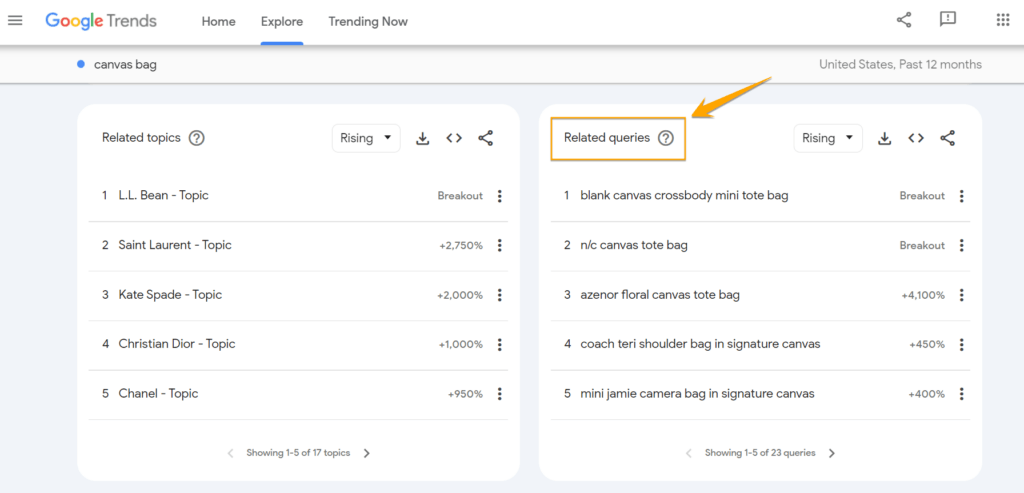
A ferramenta também mostra o aumento do volume de pesquisa em porcentagem para indicar sua popularidade. Você encontrará palavras-chave marcadas como "Breakout", que são palavras-chave com um aumento no volume de pesquisa de mais de 5000%.
As palavras-chave de destaque normalmente têm um baixo volume de pesquisa antes do período que você definiu, portanto, ainda não são competitivas. A palavra-chave de ruptura é apenas uma moda passageira? Se não for, publique conteúdo útil que satisfaça a intenção de pesquisa para que você possa se classificar para ela.
2. Conheça as tendências de volume de pesquisa das consultas
Você pode usar o Google Trends para pesquisa de palavras-chave para descobrir as tendências de volume de pesquisa de uma consulta, observando a seção Interesse ao longo do tempo.
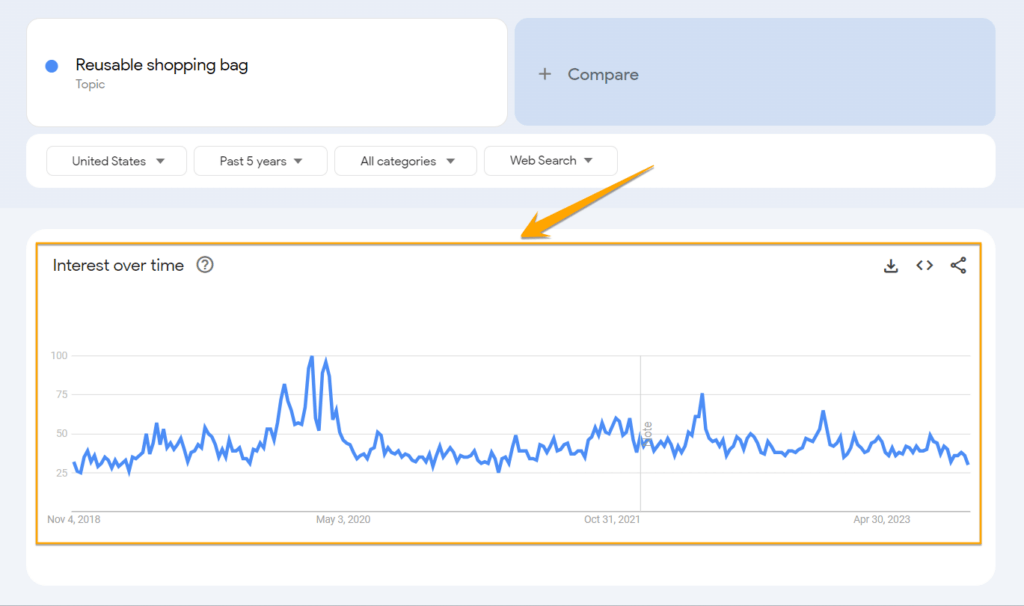
A seção Interesse ao longo do tempo informa se a palavra-chave está se tornando popular ou se está diminuindo.
Qual foi o desempenho da consulta de pesquisa em um período específico? Se o volume de pesquisa aumentar, as pessoas procuram o produto, o serviço ou as informações sobre o tópico. O volume de pesquisa está diminuindo? Se sim, o tópico provavelmente é uma moda passageira e o interesse está desaparecendo.
3. Identificar pesquisas sazonais
Outra maneira de usar o Google Trends para pesquisa de palavras-chave é determinar as pesquisas sazonais relacionadas à sua empresa. Uma pesquisa sazonal é uma pesquisa que normalmente ocorre na mesma época todos os anos.
Por exemplo, o termo de pesquisa "decorações de Natal" normalmente atinge o pico entre novembro e dezembro de cada ano, com base no gráfico abaixo:
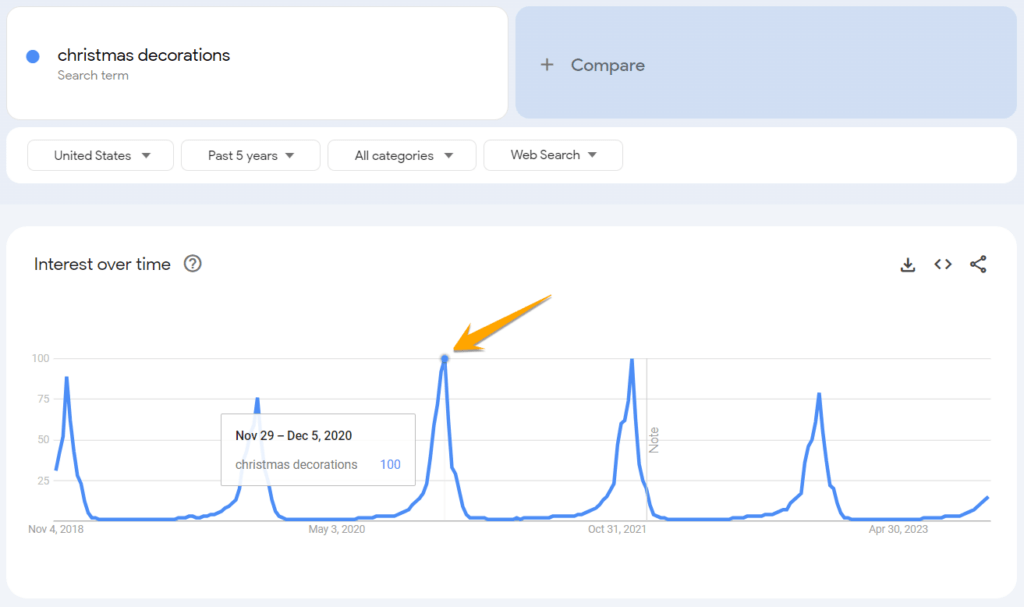
A identificação de pesquisas sazonais informa sobre novas oportunidades para sua empresa. Ele informa as palavras-chave sazonais que seu público usa, permitindo que você publique e otimize as páginas para que possa se classificar para esses termos!
4. Descubra tópicos relacionados para sua estratégia de marketing de conteúdo
Está ficando sem tópicos relacionados para sua estratégia de marketing de conteúdo? Aproveite o Google Trends para marketing de conteúdo verificando a seção Tópicos relacionados .
Os tópicos relacionados são as consultas de tendências que os usuários que pesquisaram seu termo também digitaram. Por exemplo, digamos que você tenha uma loja de varejo para cães e queira procurar tópicos relacionados a um de seus produtos, como uma capa de chuva:
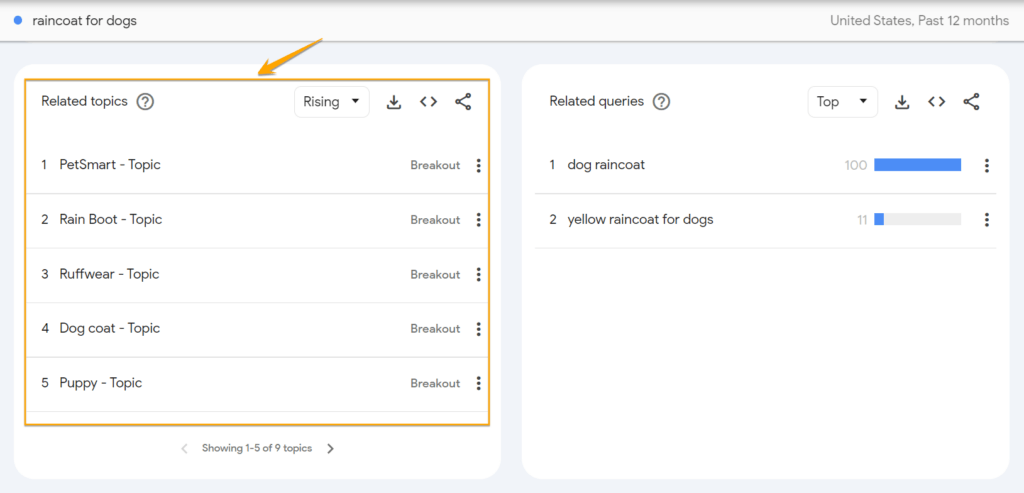
Normalmente, esses são tópicos e consultas de pesquisa amplos. Considere a possibilidade de criar conteúdo relacionado a esses tópicos. Você pode fazer mais pesquisas de palavras-chave usando outras ferramentas com esses tópicos amplos em mente.
5. Analisar os termos de pesquisa do YouTube
O Google Trends também é uma ferramenta útil para sua estratégia de vídeo. Você pode usar o Google Trends para identificar tópicos relacionados à sua empresa e informar sua estratégia no YouTube.
No Google Trends, digite sua palavra-chave. Clique no menu suspenso Pesquisa na Web e selecione Pesquisa no YouTube. Certifique-se de selecionar também a categoria apropriada.
Por exemplo, digamos que você esteja no ramo de artes e artesanato e venda ferramentas e materiais de crochê. Digite "crochet tutorials" (tutoriais de crochê) para ver se o interesse por essa arte está aumentando:
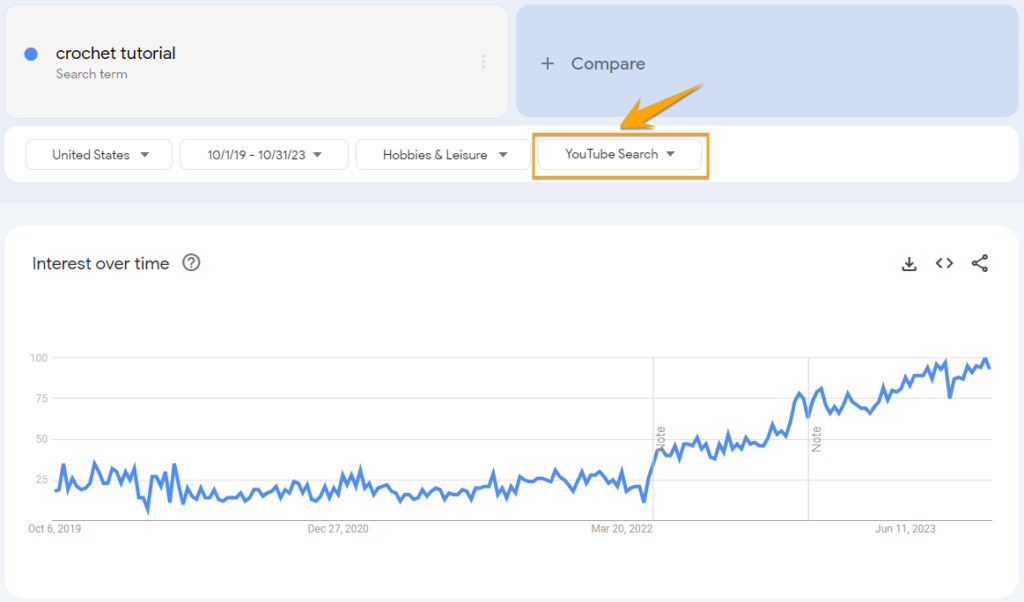
Com base na palavra-chave, você verá que o interesse em vídeos de tutoriais de crochê tem aumentado! Você pode criar novos vídeos de tutoriais de crochê para educar seus clientes potenciais. Explore os outros tópicos relacionados no Google Trends para que você também possa identificar outros termos de pesquisa que seus clientes potenciais usam.
Você pode adicionar links para páginas relacionadas na descrição do vídeo para que seu público-alvo possa encontrar mais informações, o que melhora a experiência do usuário. Forneça também links para os produtos que você mencionou ou usou no vídeo, para que os clientes em potencial possam visitar facilmente as páginas se quiserem saber mais ou comprar!
6. Informe sua estratégia de SEO local
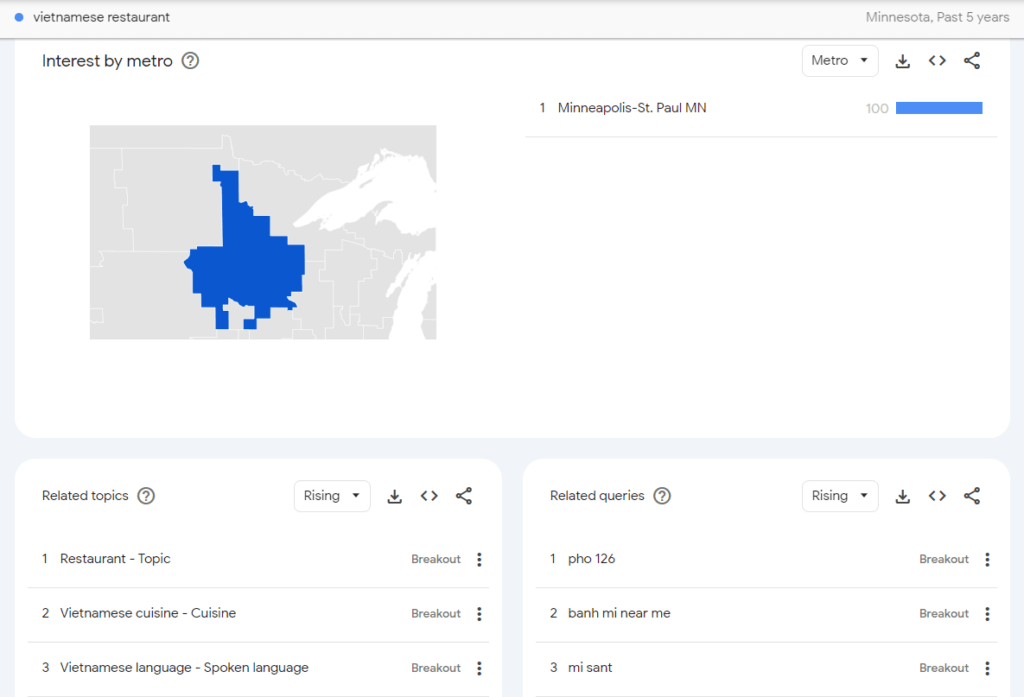
Você tem uma empresa local que só está disponível em áreas específicas? Use o Google Trends para descobrir se há um interesse crescente em sua empresa nesses locais.
Em Interest by region (Interesse por região), selecione sua área para determinar se o interesse de sua empresa está estável ou crescendo ao longo do tempo. Você também pode verificar os tópicos e as consultas relacionadas para incorporá-los à sua estratégia de SEO de serviços locais:
7. Acompanhe seus concorrentes
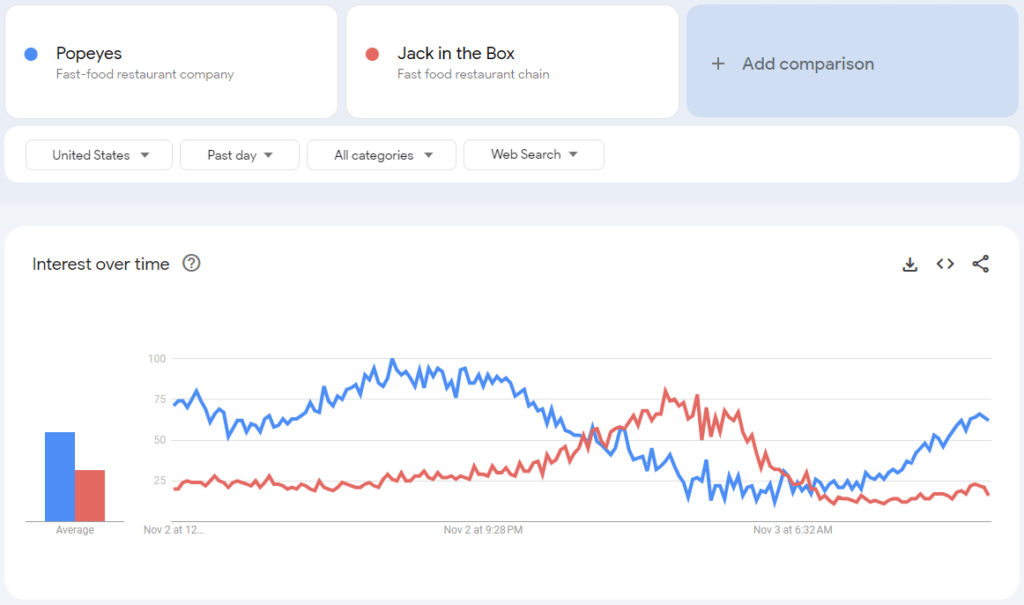
Deseja comparar o volume de suas palavras-chave de marca com o de seus concorrentes? Use o Google Trends para determinar como suas palavras-chave de pesquisa de marca se saem em relação às consultas de pesquisa de marca de seus concorrentes.
Saber como você está em relação aos seus concorrentes permite que você aprimore sua estratégia de SEO. Isso o ajuda a entender a estratégia de seus concorrentes e a identificar quais páginas você precisa otimizar para pesquisa.
Gere mais tráfego com o SEO.com
Embora ferramentas como o Google Trends possam fornecer insights valiosos para a estratégia de SEO da sua empresa, elas são apenas uma parte de uma abordagem abrangente. Nossos serviços profissionais de SEO são projetados para ajudá-lo a identificar oportunidades de segmentação por palavras-chave, acompanhar o desempenho de SEO, analisar os concorrentes e muito mais.
Entre em contato conosco hoje mesmo para descobrir como nossas soluções personalizadas de SEO podem aumentar seu tráfego!
Escritores

-
Leia agora
Explore as principais ferramentas de SEO para auditoria, otimização e acompanhamento do desempenho de SEO, incluindo opções gratuitas como o Google Search Console e o Bing Webmaster e plataformas pagas como Ahrefs e Semrush.
-
Leia agora
O Google Trends é inestimável para SEO, oferecendo insights sobre as tendências de palavras-chave, pesquisas sazonais, SEO local e concorrentes. Saiba como usá-lo para aprimorar seu SEO.
-
Leia agora
Descubra como aproveitar o Google Search Console para avaliar e aprimorar os fatores de SEO do seu site, desde a solução de problemas de indexação até a análise de perfis de backlinks.
-
Leia agora
Explore a importância do link building em SEO e descubra sete ferramentas essenciais: Semrush, Ahrefs, Majestic, BuzzStream, HARO, Pitchbox e Serpstat.