



Queres um tutorial infalível para melhorar o teu SEO com o YouTube? Aqui está:
- Aderir à tendência viral do YouTube
- Fazer um vídeo curto
- Aparecer em todos os resultados de pesquisa
Um grande sucesso.
Estou só a brincar! Quem me dera que o SEO fosse assim tão fácil.
Embora não possa negar a importância dos vídeos curtos para o crescimento do seu canal no YouTube, isso por si só pode não ter um impacto tão grande no seu SEO global como pensa.
Conteúdo de atualidade vs. conteúdo intemporal: qual é o melhor?
Sim, o YouTube indica que os Shorts registam, em média, 200 mil milhões de visualizações diárias, o que torna inegável o valor da notoriedade da marca através dos Shorts.
Além disso, os canais que utilizam tanto vídeos de curta duração como de longa duração tendem a registar um maior crescimento.
Mas a sua visibilidade nos motores de busca é outra história.
Os dados apontam para que os vídeos de longa duração sejam um fator determinante para a visibilidade — inclusive nos resultados da IA.
A importância dos vídeos de longa duração para o SEO
Vamos analisar mais de perto o YouTube enquanto plataforma por um momento.
Uma análise recente revela que os canais mais populares obtêm a maior parte do seu tempo de visualização orgânico a partir de vídeos com mais de 30 dias.
Não se trata de conteúdo recente nem de tendências atuais. Trata-se de conteúdo intemporal com um mês.
Por favor, afastem-se um pouco enquanto analisamos o SEO no seu conjunto.
Os vídeos do YouTube têm vindo a ganhar cada vez mais importância como fonte de citações de IA, e as citações de IA têm vindo a ganhar cada vez mais importância como fator determinante para o sucesso do SEO.
Um estudo revelou que o YouTube é a segunda plataforma de redes sociais mais citada, com o Reddit no primeiro lugar.
Outro estudo revelou que os vídeos longos no YouTube foram os que geraram mais citações relacionadas com IA.*
Os vídeos de longa duração não só ajudam a desenvolver o seu canal do YouTube, como também contribuem para dar visibilidade à sua marca junto da parcela crescente do seu público que utiliza IA.
A visibilidade é o que conta na era da IA, por isso, deixa que o YouTube te ajude a vencer.
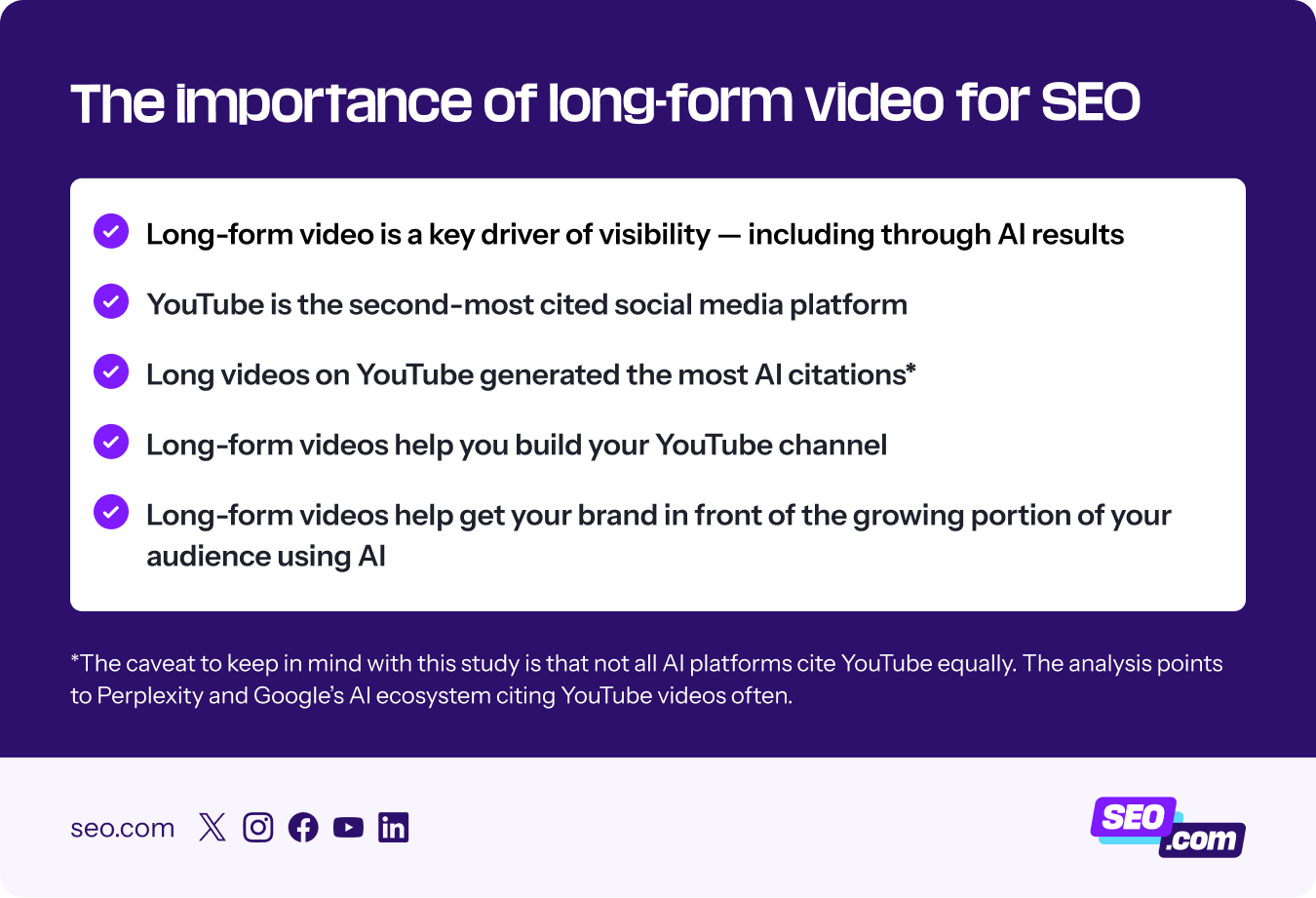
*A ressalva a ter em conta neste estudo é que nem todas as plataformas de IA citam o YouTube com a mesma frequência. A análise aponta que o Perplexity e o ecossistema de IA do Google (como era de esperar) citam vídeos do YouTube com frequência. O ecossistema do Google inclui o AI Overviews, o AI Mode e o Gemini. No entanto, dado que o Google detém uma grande parte da quota de mercado, vale a pena compreender estas estatísticas.
O que fazes com esta informação?
Se eu terminasse este post com algo genérico, como «começa a fazer vídeos longos», talvez me odiasses. E eu detestaria isso. Por isso, não o farei.
Em vez disso, vamos fazer o seguinte.
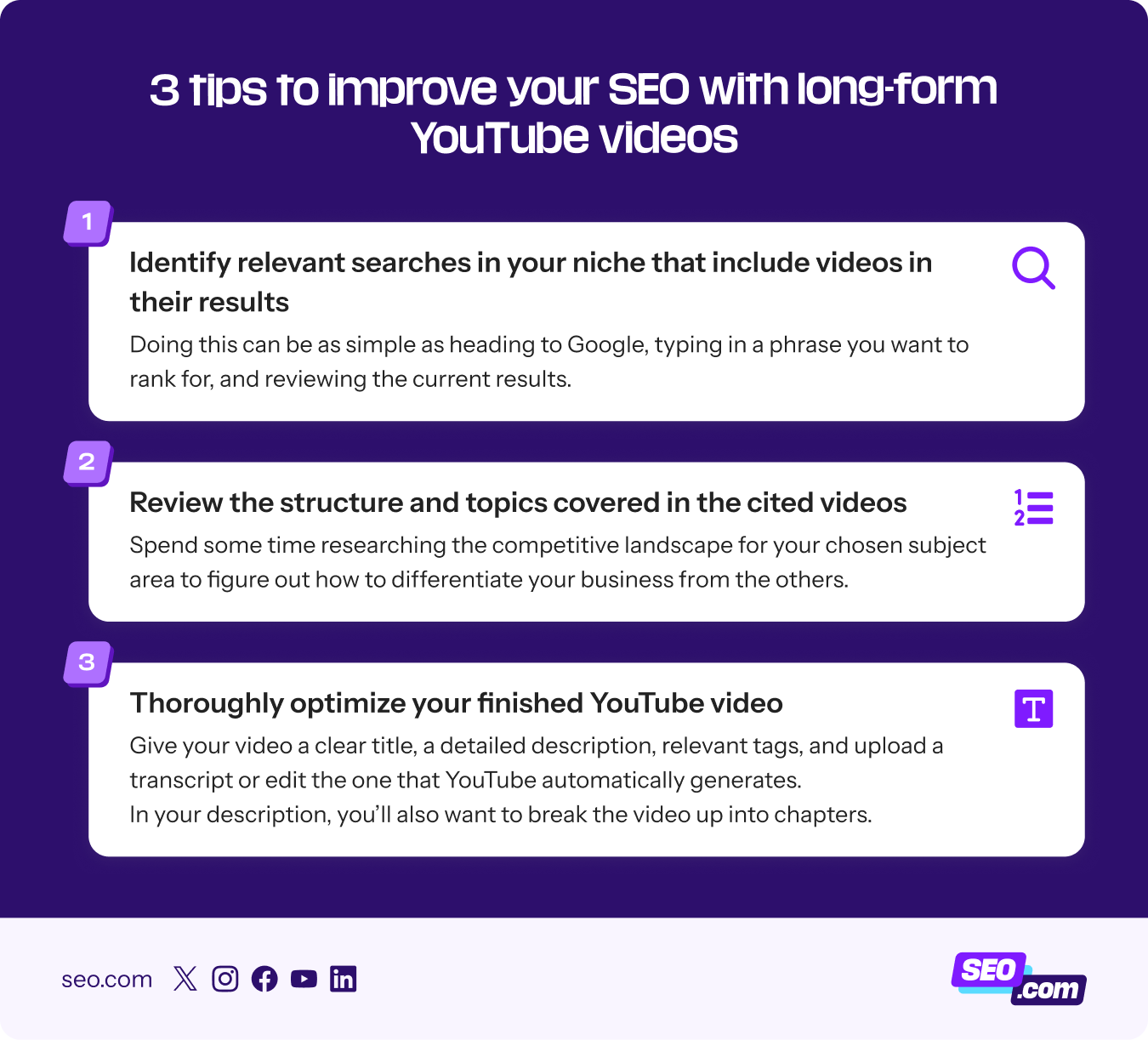
3 dicas para melhorar o seu SEO com vídeos longos no YouTube
1. Identifique pesquisas relevantes no seu nicho que incluam vídeos nos resultados
Fazer isso pode ser tão simples quanto ir ao Google, digitar uma frase para a qual se quer aparecer nos resultados de pesquisa e analisar os resultados atuais.
Verifique se existe uma «Visão Geral da IA» e se essa «Visão Geral da IA» utiliza conteúdo do YouTube.
Repita este processo com as plataformas de IA que o seu público utiliza. ChatGPT, Perplexity, Claude — veja o que os LLMs apresentam em resposta ao seu prompt.
Se não quiser fazer isto manualmente, o OmniSEO® pode reduzir significativamente o tempo que dedica à pesquisa de IA.
2. Analise a estrutura e os temas abordados nos vídeos referidos
Qual é a duração média dos vídeos citados pela IA ou aos quais se remete nos resultados de pesquisa tradicionais? Com que profundidade são abordados os temas?
Dedique algum tempo a pesquisar o panorama competitivo da área temática que escolheu, para ter uma ideia de base do que o seu vídeo deve incluir.
O objetivo é descobrir como diferenciar a sua empresa das demais.
Se tiver dados exclusivos para apresentar ou experiências que reforcem a sua credibilidade, esses são excelentes recursos para incluir no seu vídeo.
3. Otimize completamente o seu vídeo finalizado no YouTube
Depois de criar e publicar o seu vídeo no YouTube, deve fornecer ao YouTube o máximo de informações possível sobre ele.
Quanto mais detalhes fornecer, mais fácil será para os rastreadores e os modelos de linguagem de grande escala (LLMs) compreenderem e referenciarem o seu vídeo. E, mais importante ainda, maior será a probabilidade de as pessoas clicarem nos seus vídeos.
Eu sei. Ainda precisamos de otimizar para as pessoas em 2026. É de loucos, não é?
Certifique-se de que atribui ao seu vídeo um título claro, uma descrição detalhada e etiquetas relevantes, e de que carrega uma transcrição ou edita a que o YouTube gera automaticamente.
Se conseguires incluir as palavras-chave e perguntas-alvo nos metadados do teu vídeo, isso pode dar-te um impulso. Mas não te limites a enfiar todas as palavras-chave imagináveis no título e dar o assunto por encerrado.
Isso não vai ajudar ninguém a compreender o teu conteúdo.
Na sua descrição, convém também dividir o vídeo em capítulos.
É frequente vermos o Google a mencionar capítulos de vídeo quando faz referência a vídeos do YouTube, por isso é aconselhável listar os segmentos individuais do seu vídeo e os respetivos pontos temporais. Isto também contribui para uma melhor experiência do utilizador.
Ganha pontos extra se conseguires incluir algumas palavras-chave nos títulos dos capítulos.
Luzes, câmara, ação
Então, se está pronto para aumentar a sua visibilidade nas redes sociais, planeie a criação de um novo (ou o seu primeiro) vídeo de longa duração.
Conhece a sua marca e conhece o panorama competitivo. Agora, só precisa de registar esse conhecimento em vídeo.
Para saber mais sobre como produzir o seu primeiro vídeo, pode consultar um pequeno guia de marketing de vídeo escrito por mim.
Boa otimização!

Seja encontrado nos resultados de pesquisa baseados em IA
Torne-se uma marca recomendada pelos motores de IA com uma estratégia de pesquisa personalizada baseada em IA, criada pelos especialistas da WebFX.

Seja encontrado nos resultados de pesquisa baseados em IA
Torne-se uma marca recomendada pelos motores de IA com uma estratégia de pesquisa personalizada baseada em IA, criada pelos especialistas da WebFX.
Seja encontrado nos resultados de pesquisa baseados em IA
Torne-se uma marca recomendada pelos motores de IA com uma estratégia de pesquisa personalizada baseada em IA, criada pelos especialistas da WebFX.
Opiniões de especialistas
da equipa da SEO.com
Escritores