



Google Ask Maps is a new tool that allows users to ask detailed, specific questions about businesses and locations to receive conversational answers and customized maps.
So, how can you prepare and optimize your local SEO strategy for this new experience? And what does it mean for the future of local SEO? Find out below!
What is Google Ask Maps?
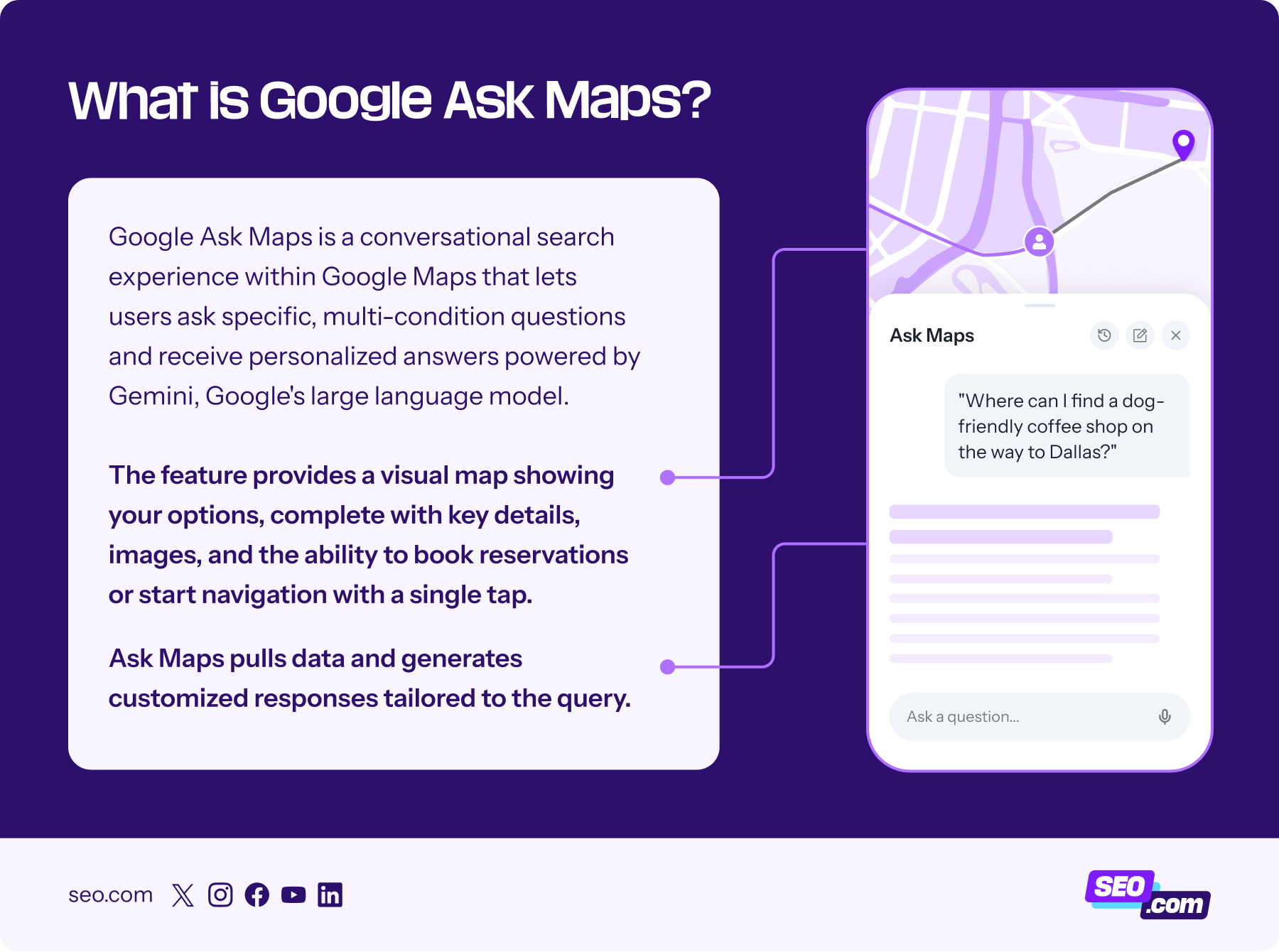
Google Ask Maps is a conversational search experience within Google Maps that lets users ask specific, multi-condition questions and receive personalized answers powered by Gemini, Google’s large language model.
Instead of typing “coffee shops near me” and scrolling through dozens of results, users can now ask questions like:
- “Where can I find a dog-friendly coffee shop on the way to Dallas?”
- “Is there a public tennis court with lights on that I can play at tonight?”
- “Any restaurants with a cozy aesthetic and a table for 4 at 7 tonight?”
Ask Maps pulls data and generates customized responses tailored to the query. The feature also provides a visual map showing your options, complete with key details, images, and the ability to book reservations or start navigation with a single tap.
Before this, finding answers to these types of detailed queries required extensive research across multiple websites and review platforms. Now, users get conversational, tailored answers in seconds.
Do “near me” searches still matter?
Yes. Even with Ask Maps allowing users to ask hyper-specific questions, traditional local search queries remain important. People still search for phrases like “pizza near me” or “plumber in [city name],” so targeting those keywords continues to be valuable for local SEO.
What’s changing is the level of detail users can request. Ask Maps expands the scope of discoverable queries beyond simple keywords to include complex, conversational prompts. Businesses that optimize for both traditional local searches and detailed, attribute-based queries will have the most visibility.
How you can adapt for Ask Maps
The introduction of Ask Maps places even greater importance on maintaining a complete, accurate, and up-to-date Google Business Profile. Since Ask Maps relies on data from Business Profiles to answer user questions, incomplete or outdated information could exclude your business from relevant results.
Here’s what you need to do:
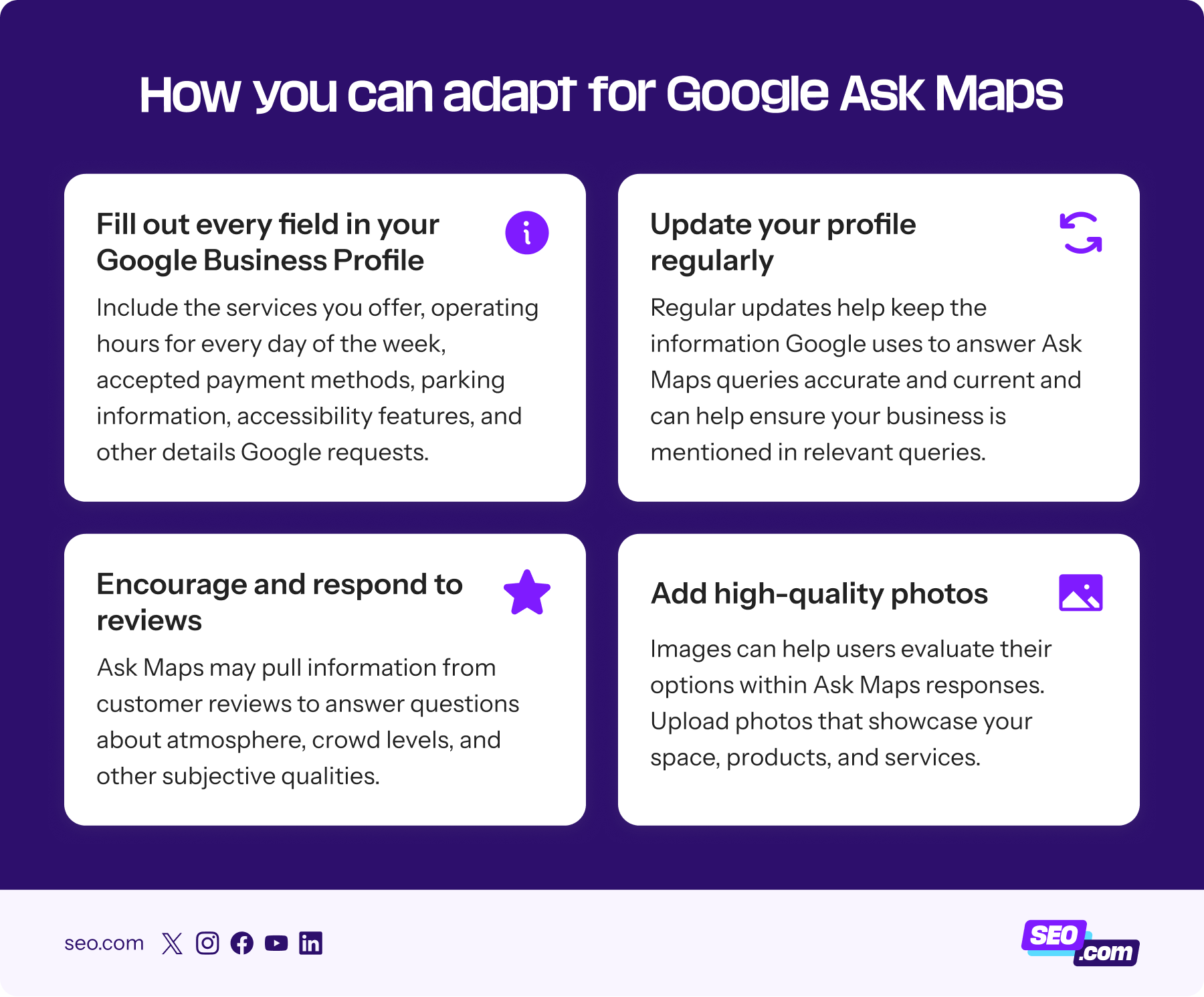
- Fill out every field in your Google Business Profile: Include the services you offer, accurate operating hours for every day of the week, accepted payment methods, parking information, accessibility features, and any other details Google requests.
- Update your profile regularly: Regular updates help keep the information Google uses to answer Ask Maps queries accurate and current and can help ensure your business is mentioned in relevant queries.
- Encourage and respond to reviews: Ask Maps may pull information from customer reviews to answer questions about atmosphere, crowd levels, and other subjective qualities. Authentic, detailed reviews could help Google understand what makes your business unique.
- Add high-quality photos: Images can help users evaluate their options within Ask Maps responses. Upload photos that showcase your space, products, and services.
Google hasn’t confirmed exactly how Ask Maps selects which businesses to include in its answers or how it weighs information from your Google Business Profile against reviews and other sources. Until we have more details, the best approach is to treat your Google Business Profile like a critical marketing asset.
How does Ask Maps impact the value of your Google Business Profile?
While we don’t yet know all the factors influencing Ask Maps rankings, we can reasonably assume your Google Business Profile plays a significant role. It’s the primary source of structured data about your business that Google can feed to its AI models.
This makes your profile one of your most valuable local SEO assets. Keeping it complete, accurate, and regularly updated gives your business the best chance to appear in relevant Ask Maps results.
How will Ask Maps impact long-term local SEO strategies?
Google’s AI Overviews have already shifted organic SEO strategies, and Ask Maps will likely have a similar effect on local SEO. We’ll see businesses increasingly optimizing for conversational, multi-condition queries rather than just single keywords.
Local businesses will need to think about the questions their ideal customers ask and make sure their Google Business Profiles contain the information needed to answer those questions. The businesses that adapt quickest to this conversational search format will gain a competitive advantage in local discovery.
Ready to optimize your local SEO strategy?
Google Ask Maps represents a major shift in how customers discover local businesses. As AI-driven search continues to evolve, having a strong local SEO foundation is more important than ever.
Local SEO services from an experienced agency can help you adapt your strategy and keep you ahead of the competition for whatever future trends and changes may come.
Contact us today to learn how we can help you create a local SEO strategy that wins in the new AI era of search!



AI search is changing fast. Are you keeping up?
Get expert breakdowns and insights on the latest AI search trends and changes.


AI search is changing fast. Are you keeping up?
Get expert breakdowns and insights on the latest AI search trends and changes.
Expert Takes
from the SEO.com team
Writers