



What is ongoing SEO? Ongoing SEO is an approach to SEO where you constantly work to maintain and improve it over time, rather than treating it as a one-and-done strategy.
Some things in life are one-and-done. For example, if you need a new table, you can just buy one — you don’t have to pay for a subscription service for it (at least, not with any furniture store that I know of). And if you get an ear piercing, it’s not like you have to re-pierce it every day.
Search engine optimization (SEO) is not one of those things. A successful SEO strategy requires constant maintenance and improvement, which is why it’s important for your business to practice ongoing SEO. On this page, we’ll talk about several aspects of this topic, including:
Keep reading to find out more about each one!
What is ongoing SEO?
Ongoing SEO refers to an SEO approach where you continuously upkeep and reoptimize your SEO campaigns. The idea behind ongoing SEO is that for SEO to be effective in the long term, you have to maintain and improve your strategy on an ongoing basis with regular updates. In other words, you can’t just throw a few pieces of content together and then move on.
Ongoing SEO benefits

Now that we’ve answered “what is ongoing SEO,” let’s talk about why you should use ongoing SEO.
There are several significant benefits to having an ongoing SEO strategy. Here are a few of the biggest ones:
All those benefits ultimately come together to contribute to the most significant one: Higher website traffic and, ultimately, more revenue.
On the other hand, failing to implement ongoing SEO will lead to your content becoming stale, dropping in rankings, earning less traffic, and driving less revenue. That’s definitely something you want to avoid!
The ongoing SEO process and tips for using it
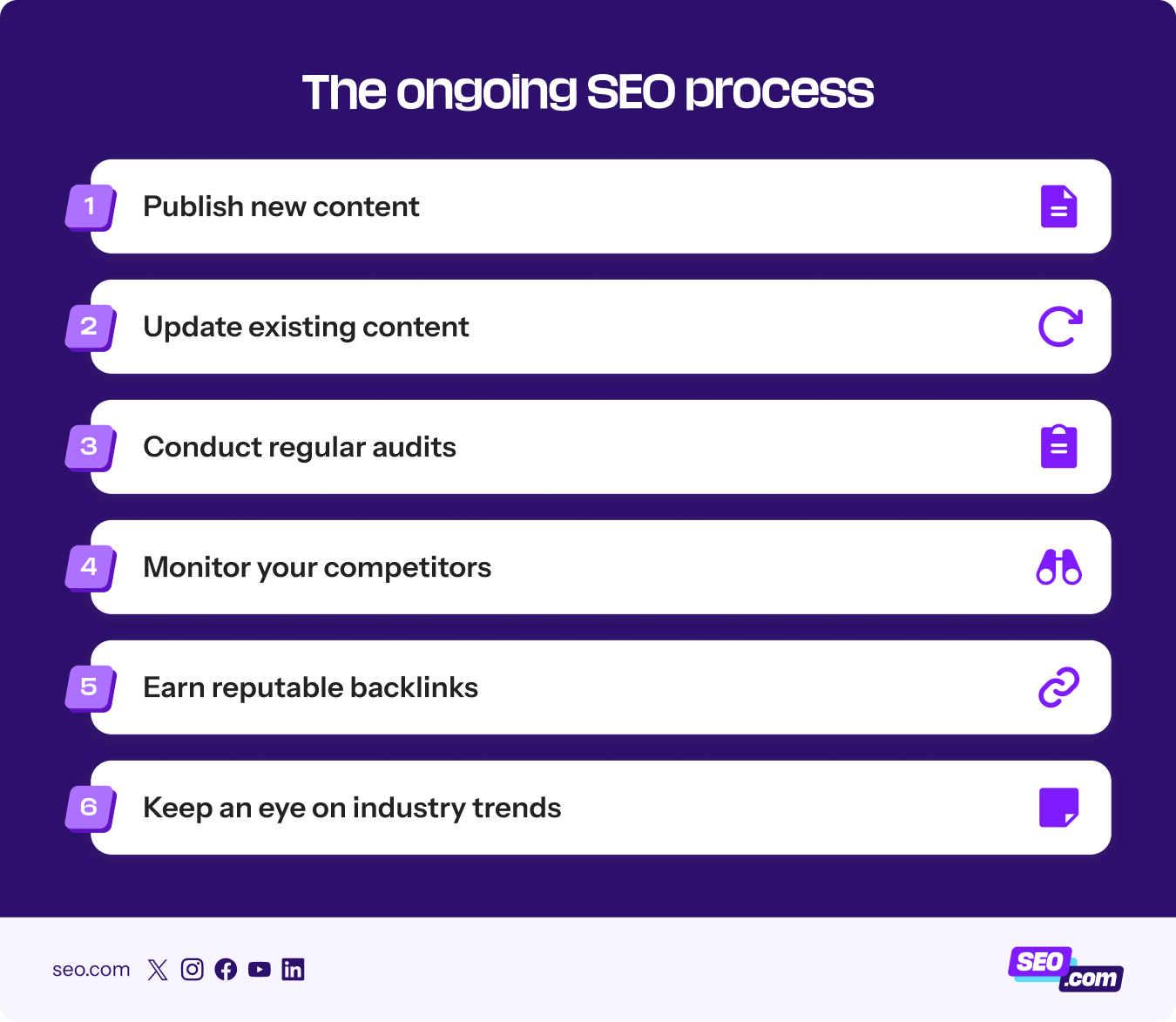
Now you know the major ongoing SEO benefits, let’s go over the ongoing SEO processes and tips for how to optimize it. There are a variety of SEO tasks you can carry out on an ongoing basis, and we’ll go over six of those tasks below:
- Publish new content
- Update existing content
- Conduct regular audits
- Monitor your competitors
- Obtenha backlinks de sites confiáveis
- Keep an eye on industry trends
Read on for more info about each of these ongoing SEO tips!
1. Publish new content
One of the most important things to do on a regular basis is publish new content. Your SEO strategy runs on content — without it, you have nothing to draw users to your site. But it’s also important that you have fresh content.
If all your content was written three years ago and you haven’t published anything since, people won’t be as interested. And it’s not just people. Google also likes newer content, so publishing on a regular basis will help you earn higher rankings.

Also, new topics pop up all the time, no matter what your industry is. You want to address those topics when they show up, which you can only do with new content. For that reason, be sure to publish content on a consistent basis, be it blog posts, videos, or another format altogether.
2. Update existing content
Another way to keep your SEO content fresh is to update existing content to help it stay current. Over time, content will inevitably fall behind. Sometimes, it will contain outdated info, while other times, it won’t be optimized for all the latest SEO tactics. In either of those cases, a simple content update can help resolve the issue.
It’s a good idea to keep an eye on your existing content, so you can reoptimize it when needed. You might even want to set up a system where you update content on a rolling basis, reworking a few pieces each month.
3. Conduct regular audits
There’s more to SEO than just content. You also have to consider a variety of technical SEO elements across your site. While it might seem as easy as optimizing everything at once, the reality is that those elements often require ongoing maintenance.
Não seja reprovado no teste mais importante do seu site
Obtenha um relatório de SEO do seu site gratuitamente em menos de 30 segundos.
As you continue to develop and change your website, certain technical elements might get altered or broken along the way. You want to make sure you catch those issues as soon as they crop up, which is why it’s good to conduct regularly scheduled website audits.
Elements to look at include:
- Page load speeds
- Otimização para dispositivos móveis
- Website navigation
- Structured data and schema markup
4. Monitor your competitors
Another of the most important ongoing SEO tips to follow is that you should consistently monitor your competitors. Even if you don’t stay on top of your SEO, your competitors no doubt will — which means they’ll outperform you in search results. To avoid letting that happen, be sure to keep up with what they’re doing.
Visão geral de domínios gratuitos

When you see your competitors jump on a particular topic or keyword, or pivot to a new content format, it might be a sign for you to do the same. That’s not to say you should copy your competitors’ every move, but if something is working well for them, there’s a good chance it would work for you, too.
5. Earn reputable backlinks
Earning backlinks is also important for any ongoing SEO strategy. If you’re not familiar with backlinks, they’re links from third-party websites to your content. Earning backlinks is important for SEO because aside from leading more users to your site, they also improve your Google rankings.

You don’t want just any backlinks, though — you want to earn them from reputable websites in your industry. When Google sees a reputable site link to yours, it will assume your site is reputable too, and it will rank you higher.
To earn backlinks, you can go to those websites and look for broken or missing links. When you find some, contact the site owners and recommend that they replace them with fresh links to your content. Identifying those opportunities takes time, though, which is why it’s a continuous SEO process.
6. Keep an eye on industry trends
Finally, it’s crucial to keep up with any changing patterns, trends, or news in both the world of SEO and your own industry. For example, if you notice an emerging topic in your industry, you’ll want to jump on that with your content. Likewise, if you learn about a new SEO tactic that businesses are finding success with, you’ll want to try it out for yourself.
But to address these changes in a timely manner, you’ll need to catch them early, which means you should regularly check up on industry news. That will allow you to spot trends as they emerge, leading you to get ahead of the game with your ongoing SEO strategy.
Drive revenue through your ongoing SEO with SEO.com
Implementing all the ongoing SEO tips listed above can be time-consuming, particularly since each of them refers to something you have to do constantly. But you can take a load off your shoulders when you hire an external agency to manage those tasks for you. Thankfully, SEO.com is here to help.
When you partner with us for our SEO services, you’ll get help performing each of the tips on this list and more. Though we’ll handle the full workload for you, you’ll still be in full control of your campaigns, allowing you to develop a strategy that works for you.
Interested in working with us? Just contact us online today to get started!

Serviços de SEO que não são padronizados
Obtenha uma estratégia de SEO personalizada para o seu negócio, setor e metas de receita.


Serviços de SEO que não são padronizados
Obtenha uma estratégia de SEO personalizada para o seu negócio, setor e metas de receita.
Serviços de SEO que não são padronizados
Obtenha uma estratégia de SEO personalizada para o seu negócio, setor e metas de receita.
Escritores