

What is answer engine optimization?
Answer engine optimization (AEO) is the process of optimizing your website to appear in generative engines like ChatGPT, Claude, and Gemini, as well as AI Overviews. The goal is to make your content easily extractable by AI engines, so they mention and cite you in responses. AEO, also referred to as GEO or AI SEO, involves doing things like building E-E-A-T signals, leveraging first-party data in content, and creating answer-first structure to content.
How to do AEO: A page walkthrough

Checking search intent of the page in AI engines
The first thing I would do is check the search intent within AI engines for whatever topic you’re covering. You can check AI Overviews, for example, to see what the Overview is pulling in. If there’s information that the AI engine covers that you don’t, consider filling that gap and adding the content to your page.

Looking for question targeting opportunities
The next thing I’m looking for is opportunities to target questions. With AI search, people are more likely to search conversationally, which means more questions. So, next, I would be doing two things: 1. Identifying what questions to target within my content and 2. Figuring out where I can target those questions on the page if I’m not already.

Setting up sections for answer-first extraction
Next, I’m looking at the structure of the page to make sure that it’s set up for answer-first extraction. Anytime you have a heading where you answer a question or cover a new topic, you need to make sure you’re providing the answer or summary right after the heading. So, I would comb through my page and make sure that I’m putting the helpful summation of information right at the beginning.

Finding places for first-hand expertise
When I’m looking at a page, I’m trying to find opportunities to integrate first-hand expertise. This includes things like expert quotes, first-party data, real examples, case studies, and more. So, I’m analyzing the page to see where I can incorporate these elements into my content to make it more unique and authoritative.

Looking for FAQ opportunities
Next thing I’m looking for is opportunities to add FAQs to the page. FAQs are perfect for extraction, so figuring out what questions you can ask and answer can create more opportunities for citation. So, I would either look at the People Also Ask section or use an AI engine to figure out what other questions to target and add to an FAQ.

Checking schema
Lastly, I’m double-checking the schema on my page. I’m making sure that all the relevant schema that can help with understanding the page is there. Depending upon the page, I’m looking to add schema like HowTo, ItemList, FAQ, Article, and more.
Why answer engine optimization matters in 2026
Answer engine optimization matters because search has shifted to an AI-powered experience. AI is determining what information shows up in search results, and the curation and selection of information looks different than it did with a traditional search engine. That, and people are searching more conversationally with AI search, meaning your “keyword” targeting is now shifting, too (to full questions).
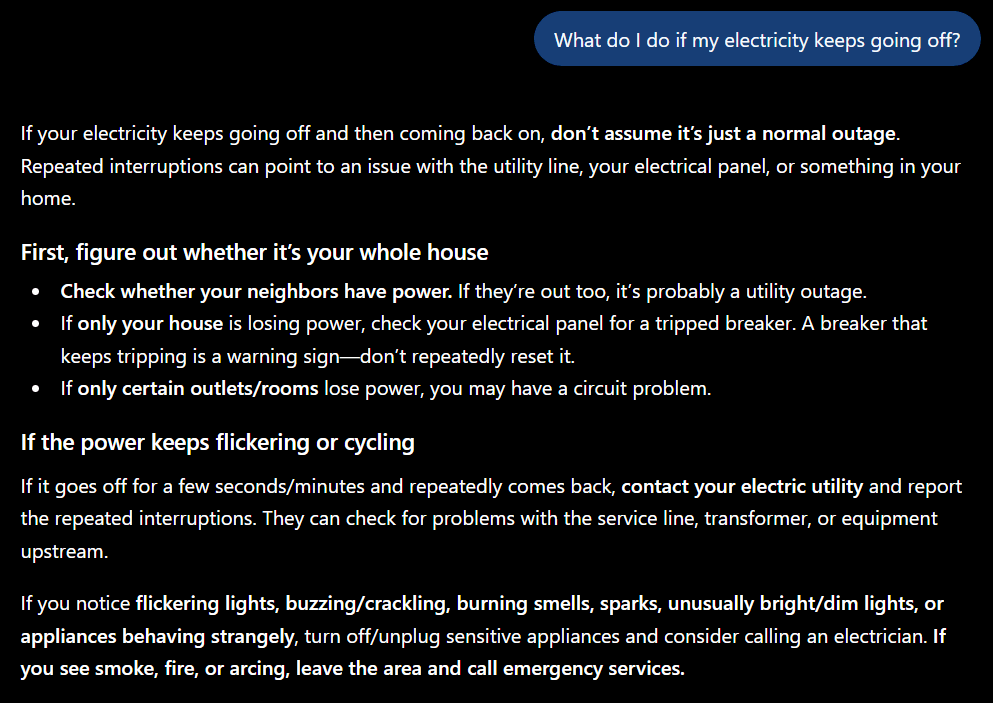
So, you may be thinking, “Can’t I just skip over this entirely? Traditional results still show up on Google.” That’s true — but people are looking at the AI responses. They’re looking at AI Overviews, ChatGPT, and Gemini to get information. So if you ignore it, you’re missing on visibility opportunities that grow your business in today’s search landscape.
How does AEO differ from SEO?
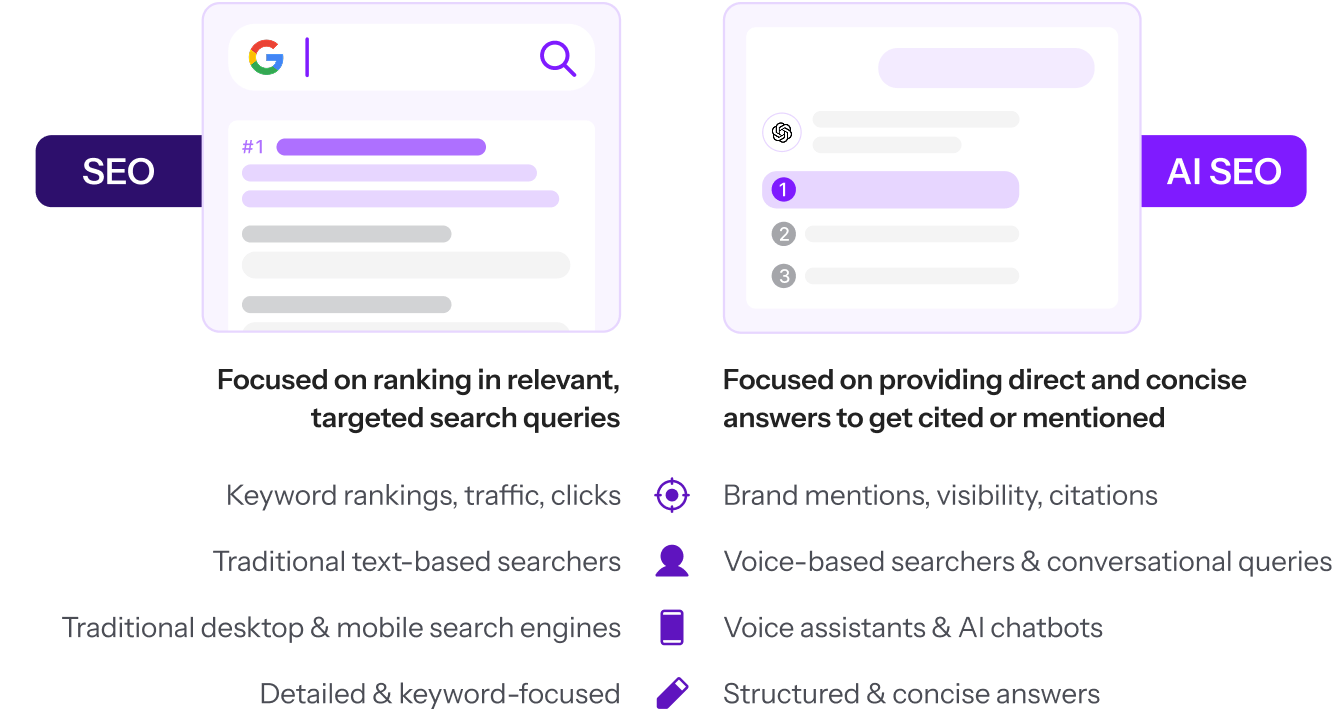
AEO and SEO have a lot of overlapping areas, but they differ in platform, user targeting, and metrics you track.
SEO focuses on platforms like Google, Bing, and DuckDuckGo. AEO focuses on platform like ChatGPT, Perplexity, and Gemini. User targeting focuses on keywords with SEO, but conversational questions and longer phrases with AEO.
On top of that, SEO tracks things like traffic, rankings, and conversions. AEO looks at mentions, citations, and brand visibility.
At the end of the day, both of them have the goal of reaching people through search experiences, the approach just looks a little different for each.
FAQs on answer engine optimization
Here are some basic, common questions I hear about answer engine optimization:
Are GEO, AEO, and AI SEO the same?
Yes! People use a few different acronyms to describe optimizing for AI search engines. Whether you hear it referenced to as AI SEO, AEO, or GEO, it’s all the same concept, just a different name.
How do answer engines choose what content to cite or feature?
While none of us know the secret sauce to exactly how AI engines choose answers, we do have some indicators as to some signals that are factored into how it chooses.
Some signals include:
- Clarity of information (and good structure that compliments the clarity)
- Authoritativeness and trustworthiness of information
- Freshness and accuracy
- Direct, factual statements
How do I get started with answer engine optimization?
1. Set goals and KPIs
You’ve got the green light to optimize for answer engines, which means determining:
- What goals will define your success
- Which metrics will measure your performance
Since answer engine optimization is a newer strategy with limitations (like reporting), I recommend setting modest goals, like earning 1-2 mentions for a related set of questions, and accessible metrics, like citations, mentions, and referral traffic.
2. Develop a strategy
Next, build an initial strategy, starting with some research steps like:
- Auditing the site’s existing SEO
- Researching the conversational questions to target
- Understanding the target market’s preferences for different engines, like Meta AI vs. Claude
- Analyzing competitor visibility
Using this data, outline where to focus the team’s (or your) time and resources.
3. Optimize on-site
The most effective on-site optimizations for AEO include:
- Use headings, lists, short paragraphs, and visuals to improve user experience
- Enhance content with specific instructions, anecdotes, or quotes
- Produce studies and/or reports using internal data, surveys, or third-party research
- Generate schema markup for content, like Recipe, FAQ, and Article
- Include custom multimedia, like graphics, videos, or GIFs, to explain concepts, highlight findings, and walk through steps
- Demonstrate E-E-A-T (Experience, Expertise, Authoritativeness, Trustworthiness) through author bios, credentials, first-hand experience, and citations
4. Optimize off-site
The most effective off-site optimizations for AEO include:
- Promote authoritative content (like a study based on internal data) using social media, email, or ads
- Claim local listings, like Google Business Profile, and optimizing them
- Building up reviews on sites like Yelp, G2, Google, and more
5. Evaluate performance
In most cases, businesses track AEO performance with the following steps:
- Search the conversational phrase in an answer engine
- Log whether the business is cited or mentioned
- Repeat the process in other answer engines
This process takes time, but there are alternatives. Tools like OmniSEO® can complete the above steps automatically, along with tracking competitor visibility for the same search phrases.
What counts as an answer engine?
An answer engine includes any AI-powered search entity that enables you to get information and do research. The list includes platforms like:
- AI Overviews
- ChatGPT
- Claude
- Perplexity
- Gemini
- Copilot
- AI Mode
- Grok
- DeepSeek
- and more
Is AEO better than SEO?
AEO isn’t better than SEO because they’re not exactly the same. Each has their merits and importance in role with reaching people in search engines.
What makes AEO challenging?
AEO is challenging because:
- It’s difficult to track performance and know it’s working
- It’s hard to get internal buy-in for the strategy
- There are multiple AI engines to optimize for
How long does answer engine optimization take?
Answer engine optimization can take a few weeks to a few months to deliver results. Its performance depends on a website’s existing SEO, and from our experience, our AEO services help clients see those results faster by building on established best practices.
That’s because these sites have started the process of:
- Being discoverable to search and answer engine crawlers
- Producing relevant content for common topics within their industry
- Building an authoritative and relevant backlink profile
- Claiming local listings and social media profiles
If search engine optimization is a new investment for your organization, consider focusing your resources there. Then, after mastering the basics, invest some resources into answer engine optimization.
Get discovered in answer engines with AEO & SEO
Congrats! You’ve learned the basics of answer engine optimization — and its correlation with ongoing SEO. Now, start growing your brand’s presence in ChatGPT, Microsoft Copilot, Perplexity AI, and more.
Ready to grow your brand’s presence in AI engines? For AEO tracking and professional support, contact us online.

Future-Proof Your SEO Strategy with OmniSEO®
Goodbye search engine optimization, hello search everywhere optimization.

Future-Proof Your SEO Strategy with OmniSEO®
Goodbye search engine optimization, hello search everywhere optimization.
Writers