


- How is Amazon using AI in marketing? Amazon uses AI-driven personalization through item-to-item collaborative filtering, machine learning-based product recommendations, and Rufus (a generative AI shopping assistant), which collectively account for approximately 35% of total sales and are predicted to generate $700 million in 2025.
- What AI marketing strategies did Coca-Cola implement? Coca-Cola launched the “Create Real Magic” contest using their proprietary AI platform and GPT-4, allowing fans and artists to create AI-generated artwork from brand assets, resulting in 300 million organic impressions and reaching audiences in over 17 countries.
- How does Netflix use AI for viewer engagement? Netflix employs AI and machine learning algorithms to deliver hyper-personalized movie recommendations based on viewing history, preferences, and location, and uses AI-driven testing to select optimized thumbnails for each user, with AI recommendations driving up to 80% of view activity and worth approximately $1 billion annually.
- What AI tools has Sephora developed for customers? Sephora created the Virtual Artist tool using facial recognition for virtual makeup try-ons, AI chatbots for instant customer support that increased conversion rates by 11% and reduced response times by 40%, and AI-powered in-store experiences with personalized skin analysis devices.
- How is Nike implementing AI in product design and retail? Nike uses the Nike Fit app with computer vision and augmented reality for shoe sizing, employs a proprietary generative AI model called Athlete Imagined Revolution (AIR) for hyper-personalized product design, and leverages AI for personalized product stocking in flagship stores, boosting digital sales from 10% in 2019 to 26% in 2023.
Did you know that 80% of marketers already use some form of AI in their marketing activities? While some businesses rely on innovative AI tools for predictive analytics and AI chatbots, other brands are using them to deliver personalized recommendations and generate content.
Without a doubt, AI is powering the most impactful digital marketing campaigns in 2026 and beyond. In this article, we explore seven standout examples of how globally recognized companies are using AI to optimize marketing and drive measurable business results. The brands we cover include:
Top 10 AI marketing examples
Discover how leading global brands are successfully using AI to power their marketing strategies, to get inspiration for your AI marketing campaign.
1. Amazon: Pioneering AI-driven personalization at scale
Amazon deserves the first mention of companies using AI to future-proof their marketing. They started using AI before it became a buzzword and the revolutionary technology everyone is now looking to adopt.
Amazon’s first dance with AI dates back two decades to the early nineties. The global ecommerce giant started by using AI to enhance customers’ shopping experience by providing personalized recommendations, optimizing operations, and driving innovation across their different businesses.
Today, at the height of AI adoption, Amazon continues to use AI to provide its users with the most seamless shopping experience while also providing businesses on AWS with guidance to unlock the full potential of generative AI.
So, how exactly does Amazon use AI in marketing? Here are a few ways:
- Item-to-item collaborative filtering: AI algorithms go beyond regular product recommendations to suggest items based on similarity, user ratings, and interactions.
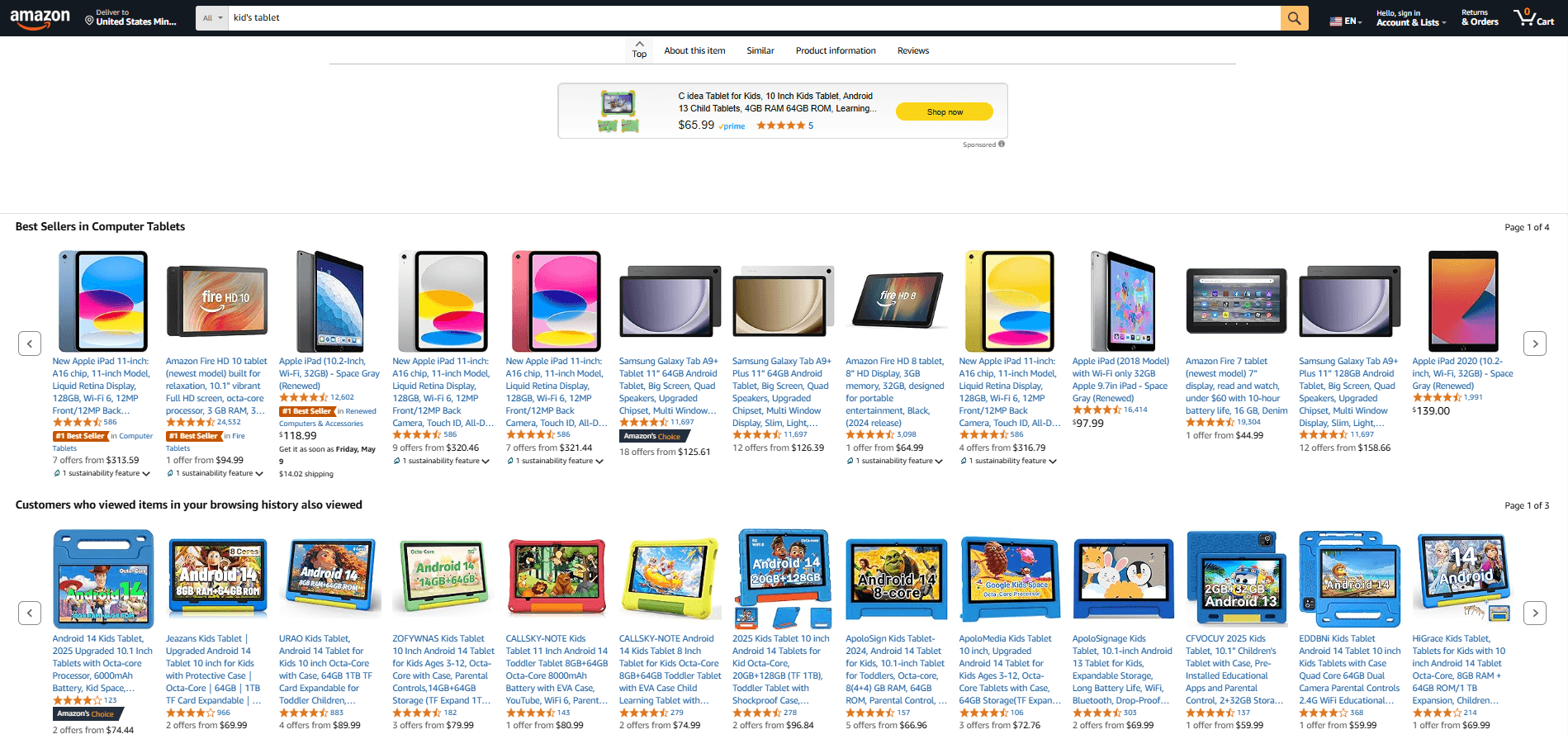
- Personalized product recommendations: Amazon leverages machine learning to provide users with personalized recommendations based on their online behaviors, previous purchases, and browsing history.
- Rufus: Amazon’s generative AI-powered shopping assistant enables voice searching for shoppers, which boosts convenience and customer experience as you can shop hands-free. As a result of integrating AI in their workflows, Amazon has gained in the following ways:
- Amazon’s personalized AI-driven recommendations account for about 35% of the company’s total sales, about 10 billion dollars annually.
- Amazon’s internal forecast predicts that Rufus will drive up to $700 million in 2025, its first year of operation.
2. Coca-Cola: Empowering creativity with AI-generated campaigns
Did you know that Coca-Cola was among the first companies to adopt TV ads? And in 2023, as soon as AI started shaking things up in marketing, they were not far behind. Their most notable AI marketing was the “Create Real Magic” contest that brought together fans, digital artists, and ad creatives via Coca-Cola’s patented AI platform.
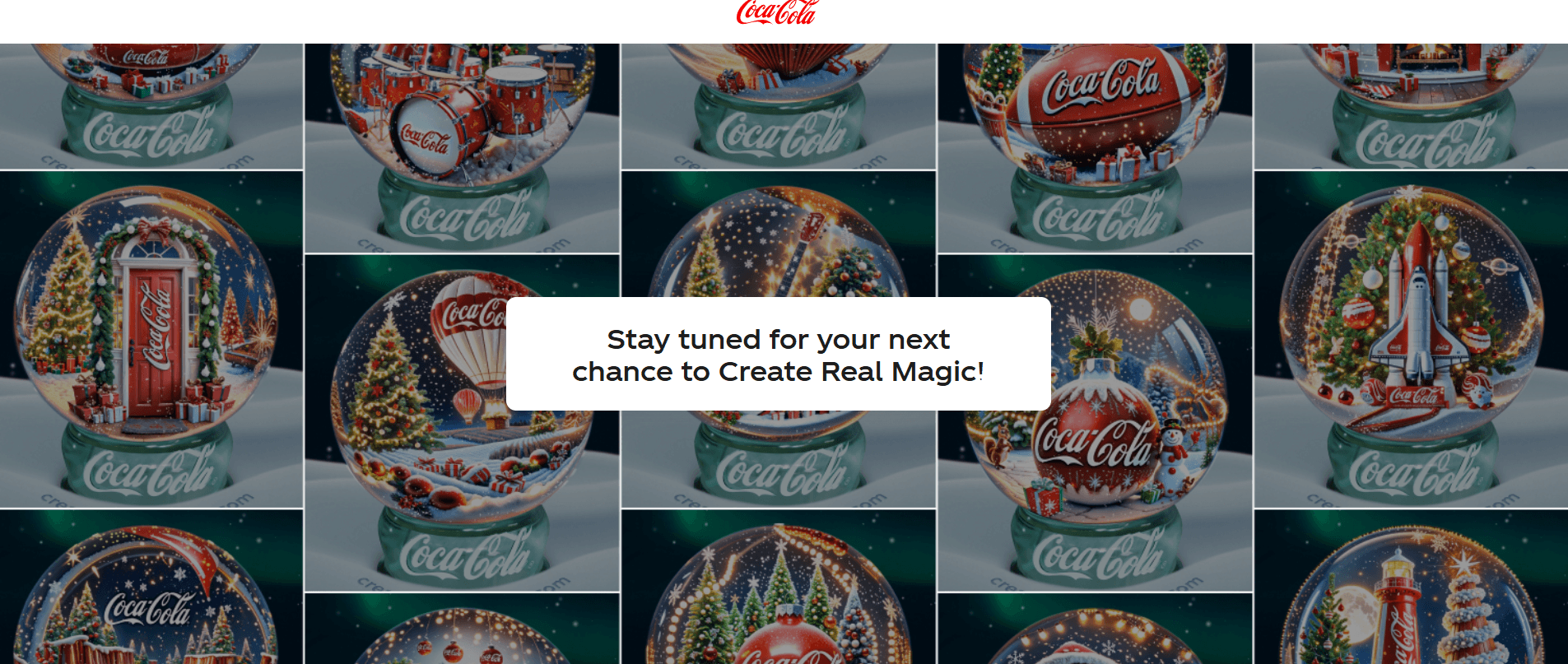
The contest prompted fans to create AI-generated artwork of different brand assets, including the Spencerian script logos, a unique contour bottle, and distinctive symbols from Coke’s archived story.
The first-of-its-kind Christmas campaign utilized GPT-4 to help creators generate realistic artwork, which was later displayed on digital billboards in New York’s Times Square and London’s Piccadilly Circus. The impact of the campaign was impressive, as you can see below:
- The campaign went viral, driving approximately 300 million organic impressions through social media sharing.
- The campaign increased Coca-Cola’s global visibility by reaching audiences in over 17 countries.
3. Sephora: Transforming beauty retail with AI-powered experiences
Sephora, the beauty powerhouse, is using AI to streamline numerous customer operations. Their AI-powered innovations are driven by their need to improve customer experience and eliminate the paradox of choice many of their customers face.
Here’s how Sephora is utilizing AI in its marketing strategies:
- Sephora Virtual Artist: This AI-powered virtual makeup try-on tool is available on the Sephora app and allows customers to try on hundreds of makeup products, including lip colors, eyeshadows, and faux lashes. The tool uses facial recognition to make recommendations customized to your face.
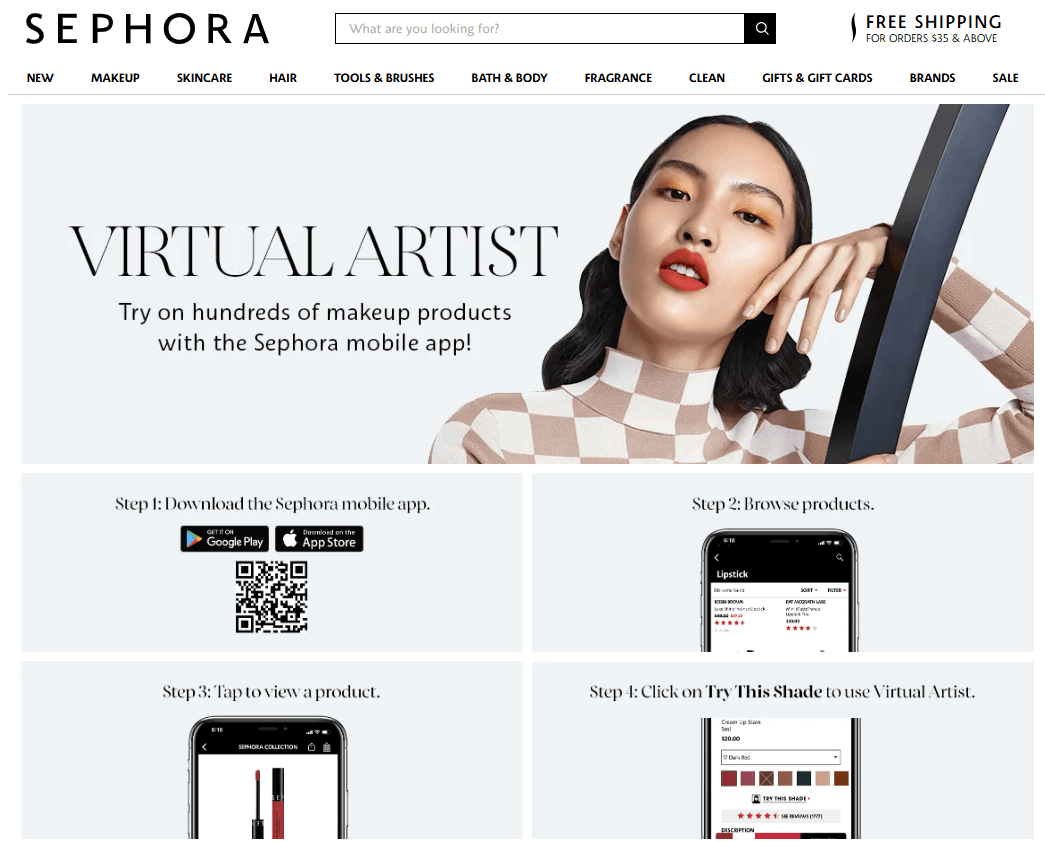
- AI chatbots: Sephora uses AI-driven chatbots on the website, mobile app, and website to offer instant customer support. The chatbots handle common inquiries, help with ordering, and provide product recommendations.
- AI-driven in-store experiences: With AI-powered product recommendations and skin analysis devices, Sephora uses AI to attract more customers to their stores. These innovations help create customized in-store experiences with personalized insights and tailored recommendations.
These AI integrations in Sephora’s products and service ecosystems have driven measurable results. Some noteworthy results from Sephora’s AI integrations include:
- The chatbots on the website and the app have driven an 11% rise in conversion rates for in-store makeup appointment bookings.
- The chatbots have cut back Sephora’s response times by 40% and increased customer satisfaction significantly.
4. Starbucks: Brewing personalized customer journeys with Deep Brew
Starbucks is implementing AI on an impressive scale thanks to its proprietary AI platform, Deep Brew. The platform uses machine learning to personalize marketing, enhance customer experiences, and streamline business operations.
The global coffee giant uses Deep Brew to analyze customer data, including location, favorite drink, and past purchases, to provide more personalized recommendations through its mobile app. Deep Brew collects data using sensors installed on Starbucks coffee machines and insights from the mobile app and loyalty cards.
Being a personalization engine, Deep Brew helps to segment marketing messages and send custom offers through the Starbucks app and rewards programs. It also helps Starbucks understand customer needs through predictive analytics.
Deep Brew has impacted Starbucks’ bottom line in a number of ways, including:
- Deep Brew drives a 30% marketing return on investment (ROI).
- Now, 30% of all orders in the US are made online on the app or the website.
- AI has boosted the number of US Starbucks reward members by 13% YoY, reaching over 34 million users.
5. Netflix: Driving viewer engagement with hyper-personalization
Since its launch, Netflix has been using artificial intelligence and machine learning to deliver highly personalized movie and TV show suggestions to subscribers. The AI-driven recommendations are based on subscriber location, preferences, interaction patterns, search queries, and viewing history.
Do you like the personalized thumbnails and promotional images Netflix presents you with? You probably do. They’re not by chance. They’re actually AI-driven testing and machine learning algorithms to choose the thumbnails that’ll encourage you to click on specific titles.
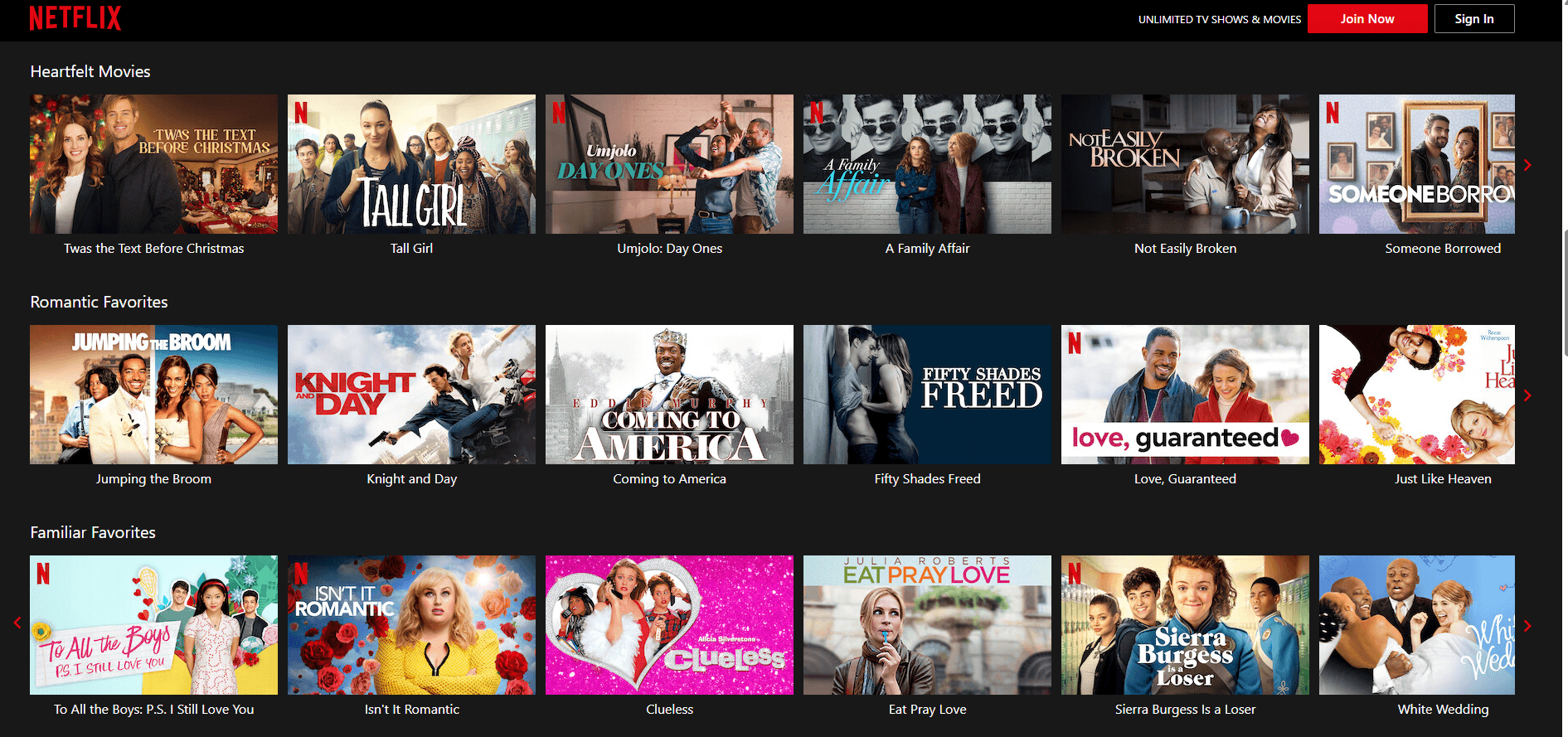
Thumbnails are not the same for everyone. For a movie like “My Best Friend’s Wedding,” romcom fans will likely see a thumbnail of Julia smiling in a wedding gown. In contrast, ensemble fans will see a group shot featuring Julia Roberts with Cameron Diaz and Rupert Everett, hinting at friendship.
Netflix also uses AI to optimize email campaigns based on open and engagement rates. The impact of AI marketing for Netflix is nothing short of game-changing, as you can see below:
- AI recommendations are worth up to $1 billion a year to Netflix.
- AI recommendations result in up to 80% of view activity.
- Netflix has 76,000 micro-genres or content categories thanks to AI.
6. Nike: Revolutionizing retail and design with AI-driven insights
Nike is using AI to appeal to more and more people by using it to add emotional depth to their digital marketing campaigns. Nike’s AI implementation involves analyzing customers’ emotional intelligence to segment audiences and create personalized narratives for each segment.
There are various other ways Nike uses AI-powered analytics, including:
- The Nike Fit app: It’s an interactive mobile application available in-store or for download. It uses computer vision and augmented reality to scan customers’ feet and recommend the ideal shoe size.
- AI-enhanced product design: Since 2024, Nike has been using a proprietary generative AI model to design hyper-personalized products, like Athlete Imagined Revolution (AIR) shoes, based on exclusive athlete data. Nike’s CIO John Hoke insists they only use it to amplify, not replace human creativity.
- Personalized product stocking: Nike uses AI to gather data, such as preferred colors, favorite sports, and shoe sizes, to inform how they stock their flagship retail stores. This data also informs their location targeting, ensuring effective utilization of their marketing budget.
Here are some of the benefits Nike is enjoying from powering their marketing campaigns with AI:
- AI has boosted digital sales from 10% in 2019 to 26% in 2023.
- They’ve improved their product-market fit by analyzing customer data and preferences.
- The personalization in the stores and the app has increased customer engagement and loyalty.
7. BMW: Elevating customer experience with AI chatbots and smart interactions
The BMW Group has over 600 AI use cases across its entire value chain, from customer and employee relationship management to marketing. Among these use cases is the use of chatbots to personalize assistance on the website and mobile apps.
They also use marketing automation to facilitate easier and more seamless booking of test drives to enhance trust and loyalty throughout a customer’s journey. However, the one unforgettable way the BMW Group has used AI is for AI-powered initiatives.
In 2021, BMW partnered with creative technologist Nathan Shipley and art curator Gary Ye for “The Ultimate AI Masterpiece” marketing campaign. This campaign involved using AI to analyze 50,000 historic images and 50 contemporary BMW artworks to generate unique art pieces that were projected onto a virtual BMW 8 Series Gran Coupe.
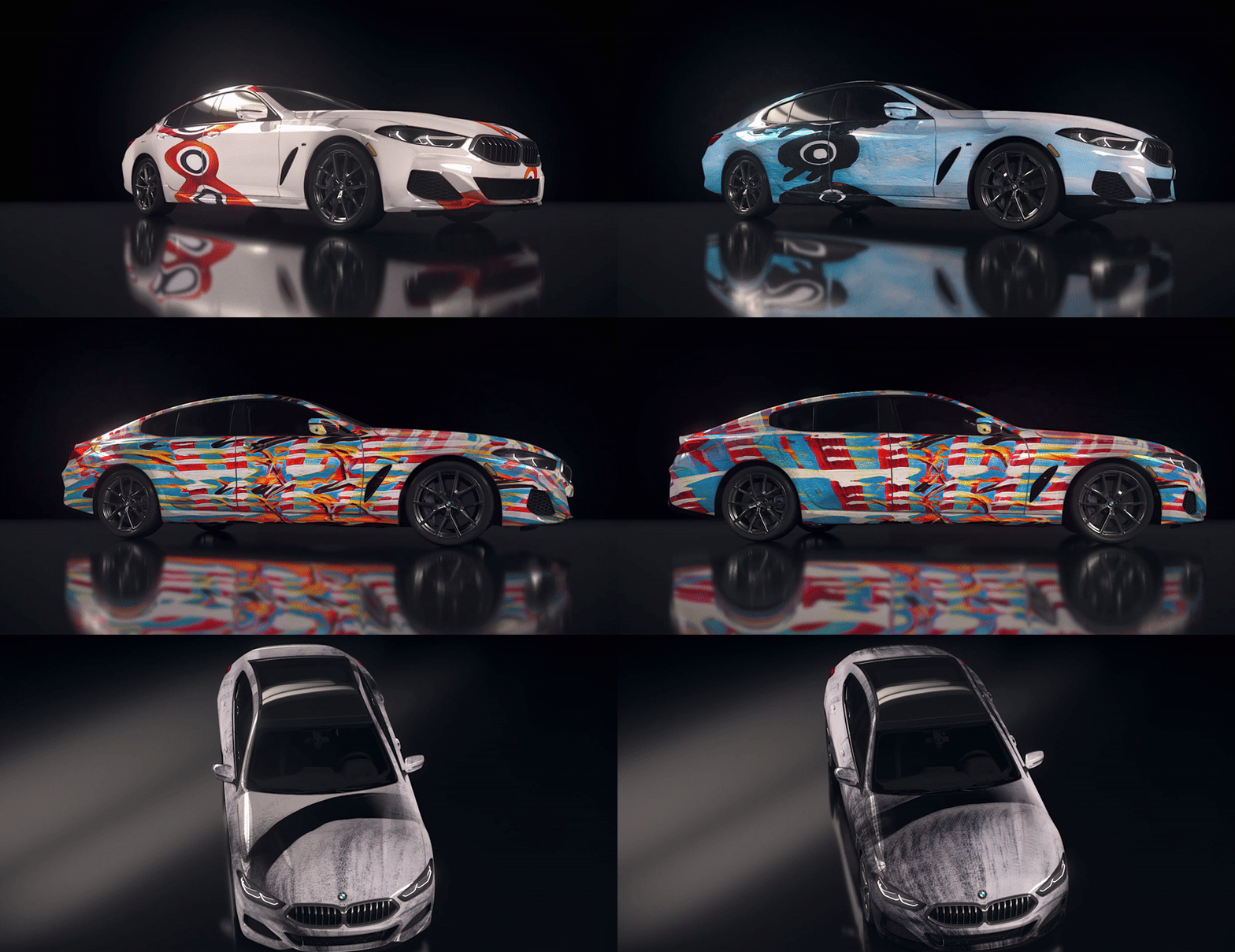
Later in 2023, BMW launched “The Electric AI Canvas” marketing campaign, which involved using AI to generate animations. These animations were then projected onto the fully electric BMW i5 sedan to appeal to a wider audience.
These AI marketing campaigns have had a cultural and commercial impact on BMW that can be seen below:
- Integrating art, technology, and sustainability has significantly elevated brand perception.
- The Electric AI Canvas campaign drove millions of media impressions.
- Fusing AI and art increased dwell time at BMW exhibitions.
8. JPMorgan Chase
JPMorgan Chase, the global banking giant, is leading the industry in adopting AI marketing strategies. JPMorgan Chase is adopting AI in a way many don’t expect from a renowned finance institution, and that’s by using AI tools to draft ad copy.
They’re leveraging an innovative AI software startup by New York-based company Persado to test the capability of AI in drafting engaging ad copy. JPMorgan Chase admits that, so far, AI is helping them achieve more personalized and humanly marketing.
Persado’s secret to keeping its clients happy is its database, with over a million words and phrases tagged for emotional resonance. JPMorgan Chase is happy with their experience so far with Persado, which involves eventually using the technology for other processes, like personal banking and wealth management.
In addition to using AI to draft ad copy, JPMorgan Chase employs generative AI to provide personalized investment recommendations and curate thematic investment baskets. Their strategic implementation of AI marketing has driven the following benefits for JPMorgan Chase:
- After a successful pilot run, JPMorgan Chase now has 30-plus AI projects in the pipeline.
- Nearly 100% of their financial advisors now use AI technology.
9. Heinz
Heinz ran an AI-advertising campaign dubbed “Draw Ketchup” in 2021 that brought together contestants from 18 countries, including Brazil, Germany, and Ireland. The campaign involved asking participants to draw the iconic ketchup bottle without prompts.
After successful completion, they reinvented the campaign in 2022, this time utilizing OpenAI’s DALL-E 2 image generator. Thousands of random prompts were input into the tool, like “ketchup bottle,” “ketchup street art,” and “ketchup outer space,” all generating different variations of the Heinz ketchup bottle, proving that “even to AI, ketchup looks like Heinz.”
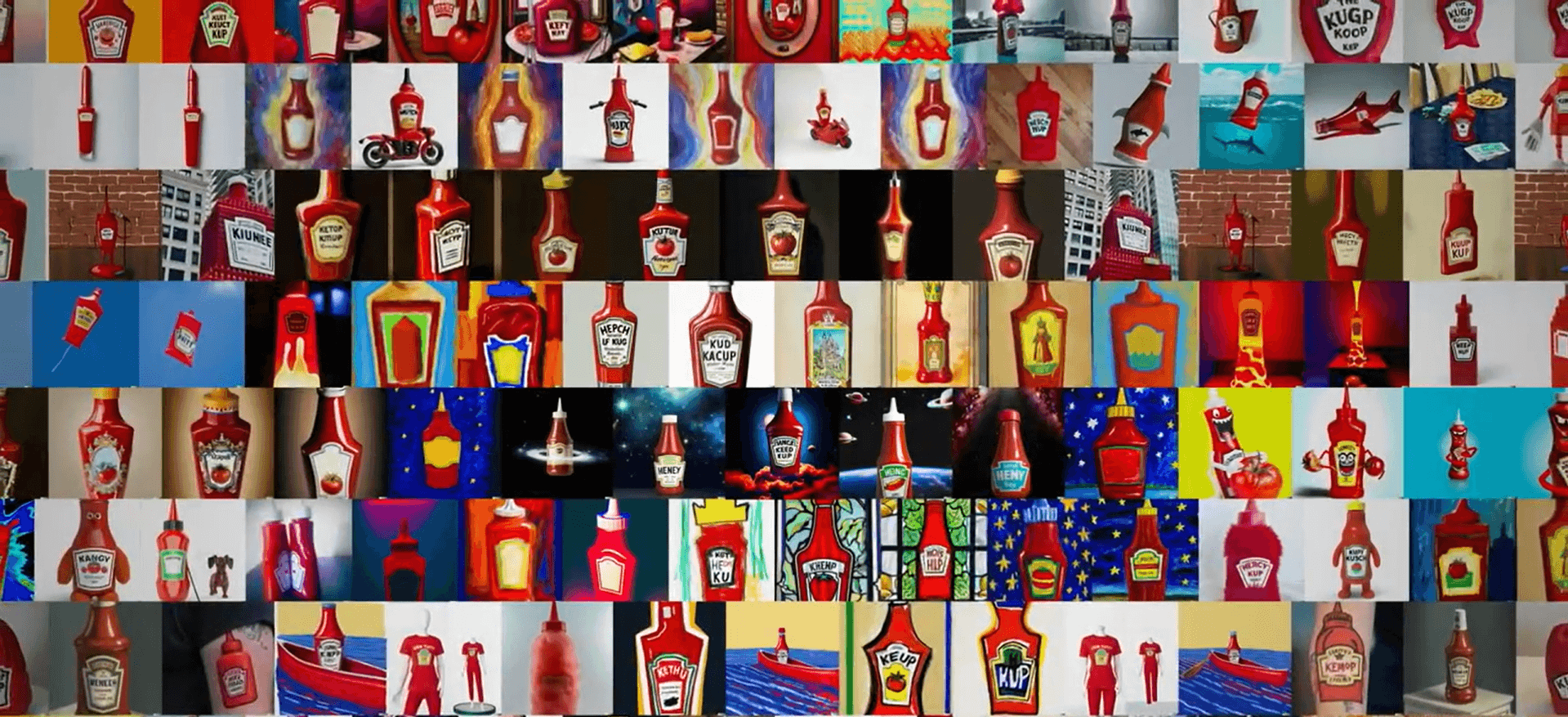
Just like the initial campaign, the AI-driven “Draw Ketchup” campaign emphasized Heinz’s branding elements, like label design, bottle shape, and deep red color. The AI-driven campaign helped Heinz engage the younger, tech-savvy audience and drive measurable results, including:
- The campaign earned over 850 million impressions and 38% higher engagement on social media than before.
- It received multiple accolades, including the Cannes Lions and D&AD awards.
- Resulted in a 10% boost in Heinz Ketchup sales.
10. Unilever
Unilever, the consumer goods giant, is taking a huge leap with its AI marketing application. One of their notable projects is the launch of their GPT API — Alex — a consumer engagement application. Alex plays the essential marketing role of filtering the millions of emails sent to the brand’s Consumer Engagement Center.
With Alex, Unilever can seamlessly sift spam messages and pay close attention to the genuine messages, ensuring they address their customers’ concerns in a timely manner that’s consistent with their brand. Other AI marketing initiatives by Unilever include:
- Digital Twins: An AI initiative that utilizes NVIDIA Omniverse to create 3D digital replicas of Unilever products for marketing purposes.
- DEM Predictor: This tool was developed by Kantar, a global marketing data and analytics company, to help Unilever predict digital ad performance before launching. It enhances predictive accuracy, ensures creative optimization, and maximizes ad spend.
Effective AI marketing has driven the following results for Unilever:
- Reduce the time customer support agents spend answering customer queries by 90% and reduce the amount of work for customer support agents by 90%.
- With Digital Twins, the content production costs are reduced by 50%, and the content creation times are half of what they were before.
Key takeaways from the best AI marketing examples
Top brands implementing AI in their marketing and other business operations is a sign that AI marketing is not just a trend —It’s a performance engine. You can’t afford to be left behind.
From the examples shared here, there are a few themes that stand out, like:
- AI helps business personalize their offerings at scale, ensuring customers feel seen, heard, and valued.
- Generative AI is a powerful tool for amplifying creativity that marketers should leverage to increase the impact of their campaigns.
- AI helps turn expansive customer data into actionable insights that inform product design, digital marketing strategies, and ongoing decision-making.
- AI chatbots and recommendation engines minimize friction in the purchasing process by reducing response times and offering personalized suggestions.
FAQs about AI marketing examples
Still have some questions about these AI marketing examples? You’re not alone — here are some common questions most people still ask even after reviewing AI marketing examples.
How are companies using AI in marketing today?
Businesses of all sizes are using AI in marketing today to enhance different marketing processes. These include customer segmentation, lead generation and nurturing, personalization at scale, ad targeting, and predictive analytics.
Can small businesses leverage AI marketing?
Yes! Most AI marketing tools are affordable and scalable, making it possible for small businesses to leverage AI for optimized marketing and advertising.
Is AI replacing marketers?
No. AI will not replace marketers. It’ll help marketers enhance their efficiency and productivity by handling repetitive tasks so they can focus on strategy and creativity.
Transform your marketing with AI-driven digital marketing
These real-world examples, like Netflix’s hyper-personalized recommendations or Nike’s AI-enhanced product designs, prove AI isn’t just a tool for automation. It’s a catalyst for creativity, personalization, and performance.
Are you convinced it’s time for you to revolutionize your marketing with AI? If you’re, then it’s time to partner with a digital marketing agency that specializes in AI optimization strategies. WebFX —SEO.com’s parent company — has just the tool you need to ace AI-driven marketing.
OmniSEO® is a tool that helps businesses drive their organic visibility across all search engines. With OmniSEO®, you get to diversify your traffic sources to accelerate revenue, unlock AI insights, and access an award-winning team of AI marketing experts.
Request a demo today or call us at to discuss how we can help you implement AI marketing.

Future-Proof Your SEO Strategy with OmniSEO®
Goodbye search engine optimization, hello search everywhere optimization.

Future-Proof Your SEO Strategy with OmniSEO®
Goodbye search engine optimization, hello search everywhere optimization.
Writers