



- What is ChatGPT’s shopping research experience? ChatGPT’s shopping research experience is a conversational product discovery tool that allows users to describe what they’re looking for and receive a curated, personalized buyer’s guide with product recommendations based on their specific needs and preferences.
- How does the shopping research process work? Users enter shopping mode, provide a detailed prompt about what they need, answer follow-up questions from ChatGPT, and give feedback on product previews by selecting “not interested” or “more like this” — ChatGPT then creates a personalized buying guide with recommended products, prices, and retailers.
- Who can access ChatGPT’s shopping research feature? Any logged-in ChatGPT user on mobile or web can access this feature, regardless of whether they’re on the Free, Go, Plus, or Pro plan, and currently have unlimited usage during the 2025 holiday season.
- How does this feature impact ecommerce SEO strategies? While AI currently drives only 1% of web traffic, ecommerce businesses should optimize product descriptions with relevant keywords, curate high-quality product images with descriptive alt text and file names, and accumulate reviews across multiple platforms to increase their chances of appearing in ChatGPT’s personalized buyer’s guides.
- What can ChatGPT shopping research do for users? The feature helps users discover new products, find similar or lookalike items, compare products side-by-side, locate the perfect gift based on specific criteria, and find the best deals — all while simplifying the traditionally time-consuming product research process.
ChatGPT recently launched their shopping research experience, which allows people to prompt ChatGPT to find the perfect product for them. They can give it specific information and details about what they’re looking for, and ChatGPT will curate a shopping guide based on that information.
ChatGPT’s new shopping experience is looking to make finding the right product easy, whether it’s a gift for friends or family, or something for yourself.
On this page, I’ll cover everything you need to know about this new shopping experience, including:
- What is ChatGPT’s shopping research experience?
- How does shopping research work in ChatGPT?
- What can ChatGPT shopping do for users?
- Who can access the shopping research experience?
- The shopping research experience’s impact on ecommerce SEO
What is ChatGPT’s shopping research experience?
ChatGPT’s shopping research experience allows people to prompt ChatGPT to help them research, compare, and find the right product based on a description. Instead of searching through multiple websites and product listings to find the right thing, ChatGPT can do the legwork for users and help them find the right product.
How does shopping research work?
As OpenAI puts it, this shopping research experience “turns product discovery into a conversation.”
Basically, someone will visit ChatGPT, click the plus sign, and select “Shopping research” from the list of options.
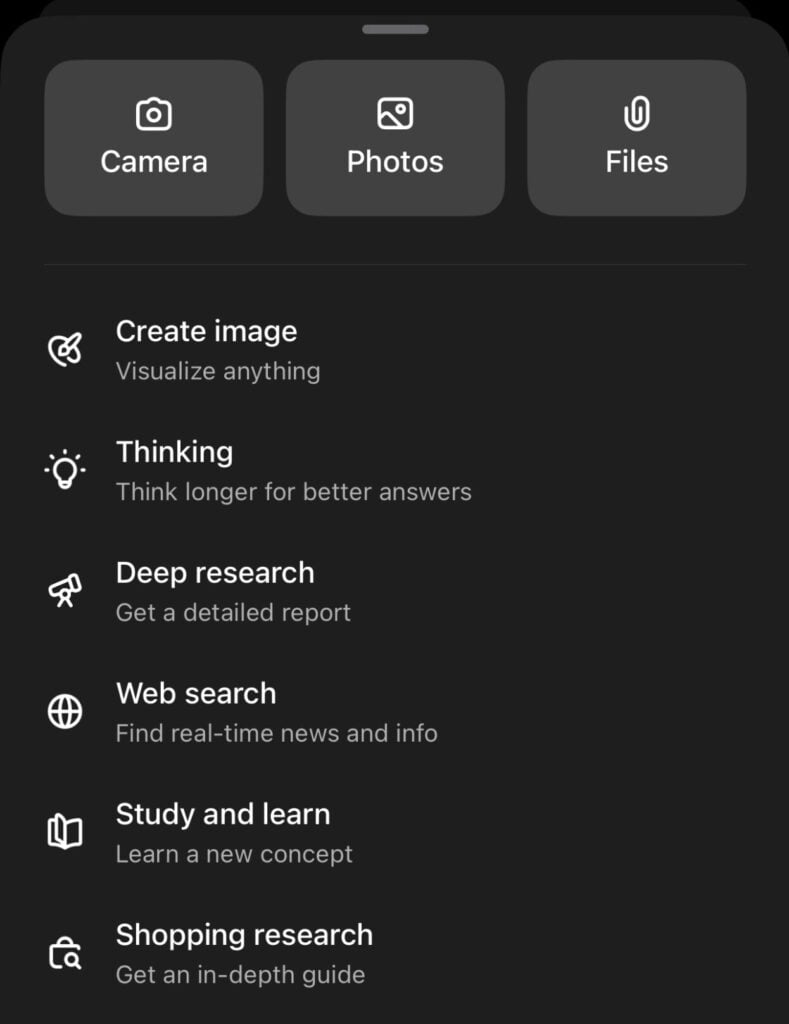
The user then inputs their shopping prompt to ask ChatGPT for what they need. Here are some example prompts:
- “Show me the best cordless vacuum cleaners for dog hair”
- “Help me choose between these three pots and pans sets.”
- “I need to find a gift for my 1-year-old nephew that loves rubber ducks.”
Once the user enters the prompt, ChatGPT will ask some follow-up questions to clarify what they’re looking for. It will also give some product preview options that they can look at and choose if they’re “not interested” or want “more like this.”
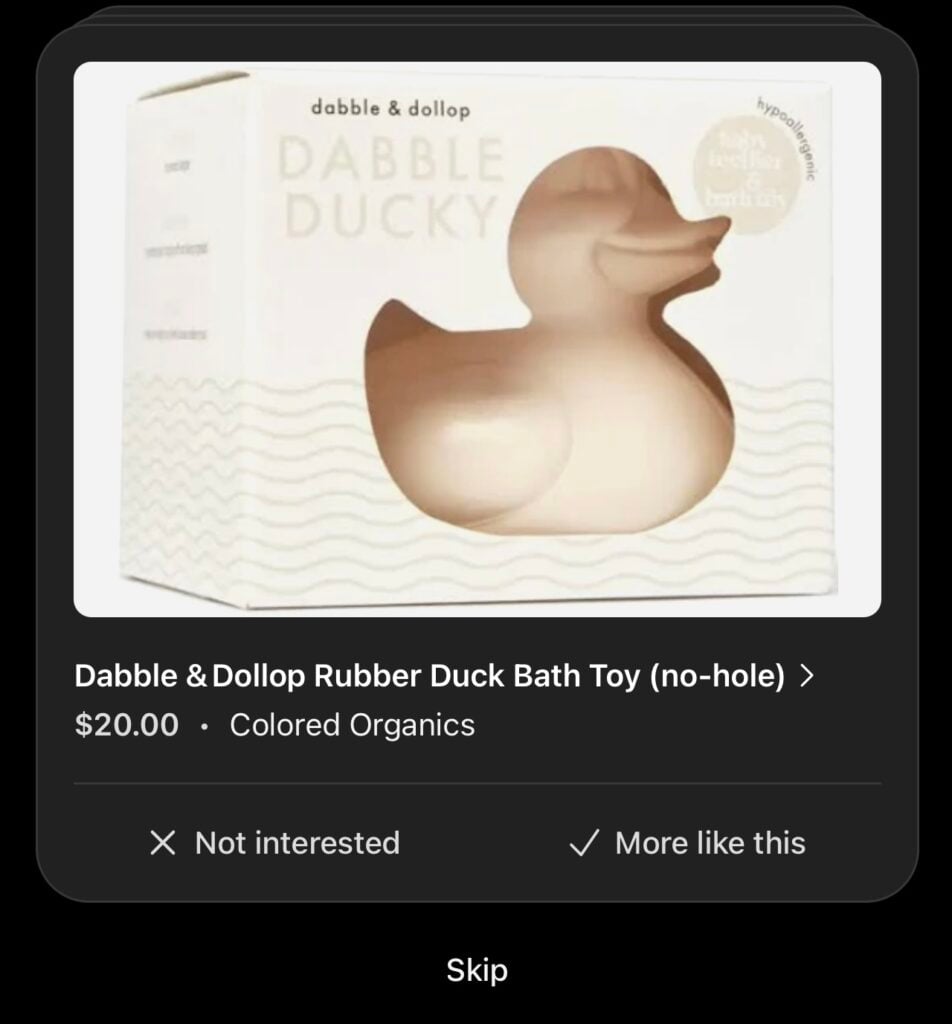
If they select the “not interested” option, ChatGPT will sometimes ask a follow-up question about why the user isn’t interested. It will ask if it’s because of the:
- Price
- Style
- Brand
- Features
- Something else
If it’s something else, the user can input a custom reason why they’re not interested in that particular product.
Once ChatGPT gets the user’s feedback, it will curate the personal buying guide. The curation process involves researching products, reviewing sources, and using past interactions to create the most tailored buyer’s guide.
ChatGPT’s shopping experience excels in areas where a lot of detail or specs are needed to find the right product. That includes categories like:
- Electronics
- Beauty
- Home and Garden
- Kitchen and Appliances
- Sports and outdoors
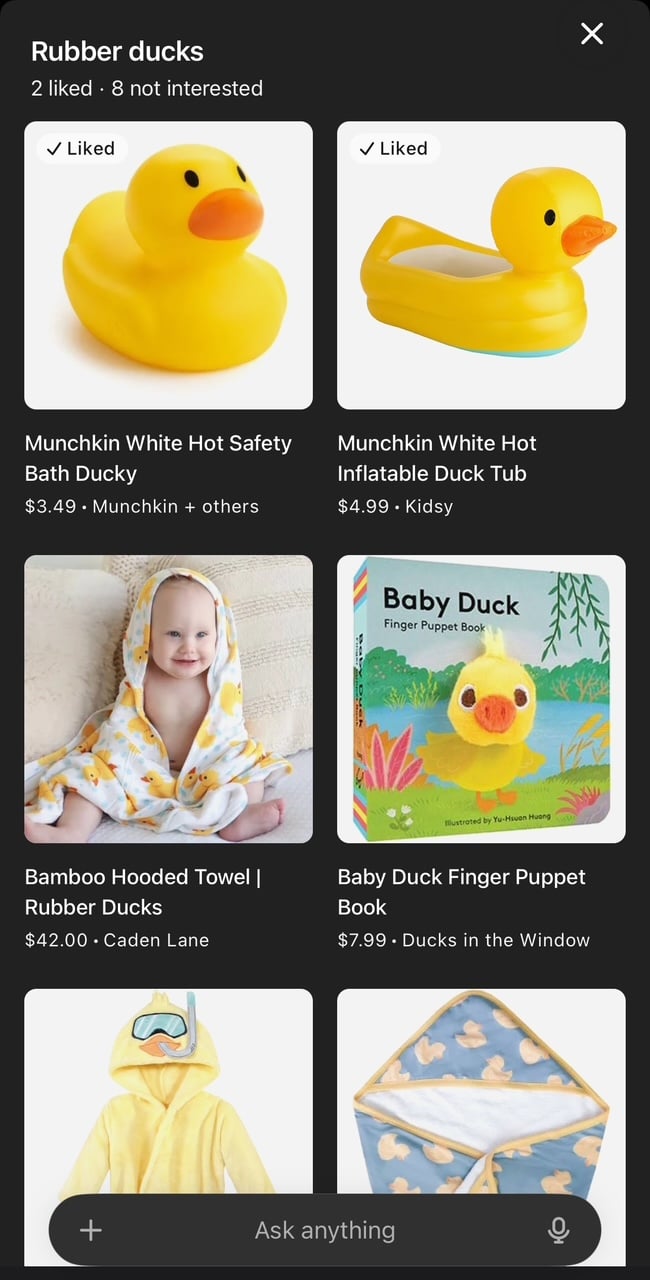
The personal buying guide includes recommended product listings based on the user’s feedback. It includes an image of the product, price, and retailer.
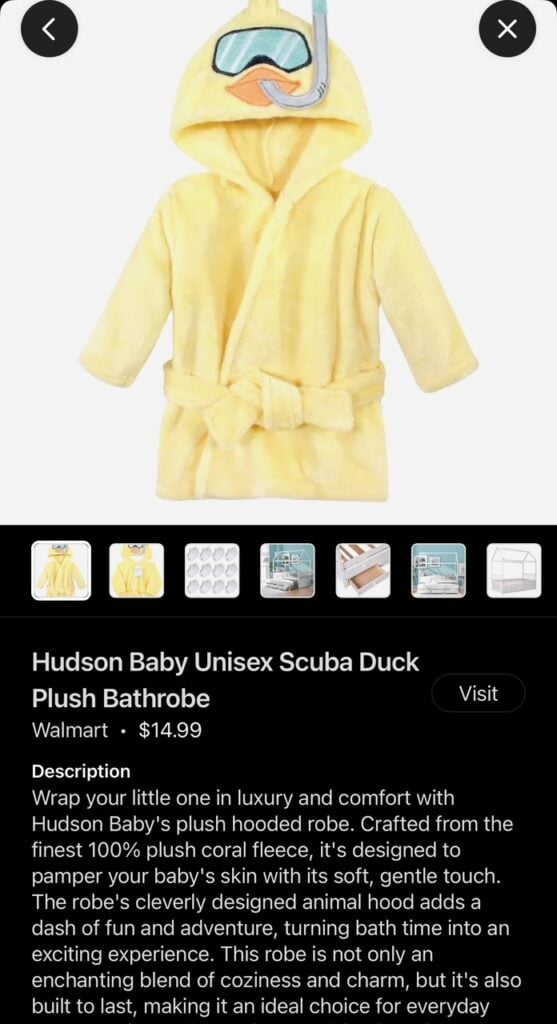
If you click on a product listing, it will give you a complete description of the item, plus a “Visit” button to go to the retailer’s website to purchase.
In the future, users will be able to check out using Instant Checkout with eligible retailers.
In addition to the curated feed of products, ChatGPT will also give its recommendations based on the products it found.
What can ChatGPT shopping research do for users?
With the shopping research experience, users can simplify the product research process. ChatGPT’s shopping experience can help users:
- Discover new products
- Find lookalike or similar products
- Compare items side-by-side to pick the best one
- Find the perfect gift
- Locate the best deal for a product
Who can access shopping research?
This shopping research experience is available to any logged-in ChatGPT user on mobile or web. You can be on the Free, Go, Plus, or Pro plan and access this feature.
Currently, users have unlimited usage of this feature for the 2025 holiday season.
What does ChatGPT’s shopping research mean for ecommerce SEO?
ChatGPT is changing the shopping experience for users, and, arguably, making it less of a hassle. It helps to create a curated feed of products for shoppers, so they can find what they need.
So, what does all of this mean for ecommerce businesses?
First, let’s address this — AI only refers about 1% of all web traffic, with ChatGPT accounting for 87% of those referrals. So, it’s only accounting for a small fraction of your business’s traffic. But, nonetheless, it’s expected to continue growing as more people start trusting these generative AI platforms.
And even as it stands, ChatGPT does account for some conversions, which will only continue to grow as more people use the platform and trust it.
That means that ChatGPT is a new opportunity for you to reach shoppers as they look for products. If someone is trying to create a curated feed of a product you sell, you want to make sure your product appears in the running.
Even if they don’t convert from ChatGPT, building product and brand association is crucial for getting people back to your website to buy.
That means an even stronger emphasis on ecommerce SEO.
After toying around with this feature, there are a few aspects of ecommerce SEO that I think will become especially crucial if you’re trying to get in these personalized buyer’s guides:
1. Product description optimization
One of the core components of your ecommerce SEO strategy is optimizing your product descriptions. You focus on providing the benefits and features of your products, all while targeting relevant keywords. That practice will become even more crucial with ChatGPT’s shopping experience.
It’s important for two reasons:
- ChatGPT does the research for users, so providing proper details and integrating relevant keywords will help provide context for it
- A description appears with your product when someone clicks on it, so it’s important that it’s optimized for the user if they decide to read it
That means you’ll want to ensure that your product descriptions are optimized, so that ChatGPT puts your product in relevant buyers’ guides.
2. Image curation and optimization
The product images you choose have a big impact on whether someone interacts with your product and learns more, or leaves the page in search of a competitor’s product. If you use images that are too blurry, small, or busy, it deters people from wanting to buy your product.
After all, people often judge a product by its product image, so choosing the right image could make the difference between getting a click and not getting one.
Additionally, the optimization of those images (called image SEO) will have an impact on whether you appear in curated buyers’ guides or not. Namely, the descriptive alt text you provide for your images and your file names.
Essentially, any components of your image that provide context for ChatGPT’s AI bots could make a difference whether you get picked or not.
So, follow the best practices of this ecommerce SEO component by writing descriptive alt text and providing descriptive image file names, as well as structured data for your images.
3. Review accumulation
One of the core components that ChatGPT considers when creating custom buyers’ guides is reviews. Reviews are a key component of any shopping experience — they help tell people about others’ experience and enables them to determine if they want to buy a product or not.
With these personalized buyers’ guides, ChatGPT takes reviews into account, and not just from your website. It can also curate reviews from community forums and other trusted sources. That means you’ll want to build up reviews of your products across platforms to help you get pulled into ChatGPT’s responses.
Keep your finger on the pulse of AI search changes
Don’t want to fall behind on the latest news in the AI search world? Subscribe to our email newsletter to stay on top of what’s new in AI search and how you can leverage it to empower your business!

Keep Up With The Changing Landscape of SEO
Join our newsletter to receive practical tips and expert advice to help you improve your website’s visibility.


Future-Proof Your SEO Strategy with OmniSEO®
Goodbye search engine optimization, hello search everywhere optimization.
Future-Proof Your SEO Strategy with OmniSEO®
Goodbye search engine optimization, hello search everywhere optimization.
Writers