



- What is query fan-out? Query fan-out is the process where AI search engines conduct multiple related sub-queries in addition to the original search query to gather comprehensive information and provide more helpful, complete answers to users.
- Why do AI search engines use query fan-out? AI search engines use query fan-out to account for vague searches and create more comprehensive answers—it allows them to anticipate related questions and provide robust responses that cover multiple aspects of a topic even when the original query isn’t specific.
- How does query fan-out impact SEO strategy? Query fan-out means you need comprehensive content covering all aspects of a topic, not just the main query, because AI may cite your related content pieces rather than your primary article when generating responses to user searches.
- What is content clustering in relation to query fan-out? Content clustering involves creating a network of related content that branches from a core subject into subtopics and specific pieces, establishing your authority on all aspects of a topic and increasing your chances of being cited in AI search results.
- How can you optimize for AI search engines? To optimize for AI search engines, create comprehensive content clusters that cover main topics and related subtopics thoroughly, building your authority across all aspects of subjects your audience searches for rather than focusing on single keyword targets.
If you’re deep in the world of AI search, you may have heard the term “query fan-out.”
And if you’re here because you don’t know exactly what it means, I’ve got all the answers you need to understand what query fan-out is, how it works, and why it matters to your business. Let’s dive in!
What is query fan-out?
Query fan-out is the process of conducting multiple sub-queries to help answer a user’s single search. Instead of only directly consulting sources related to the original query, it generates a bunch of sub-queries that are related to the original topic and looks for information on those topics.
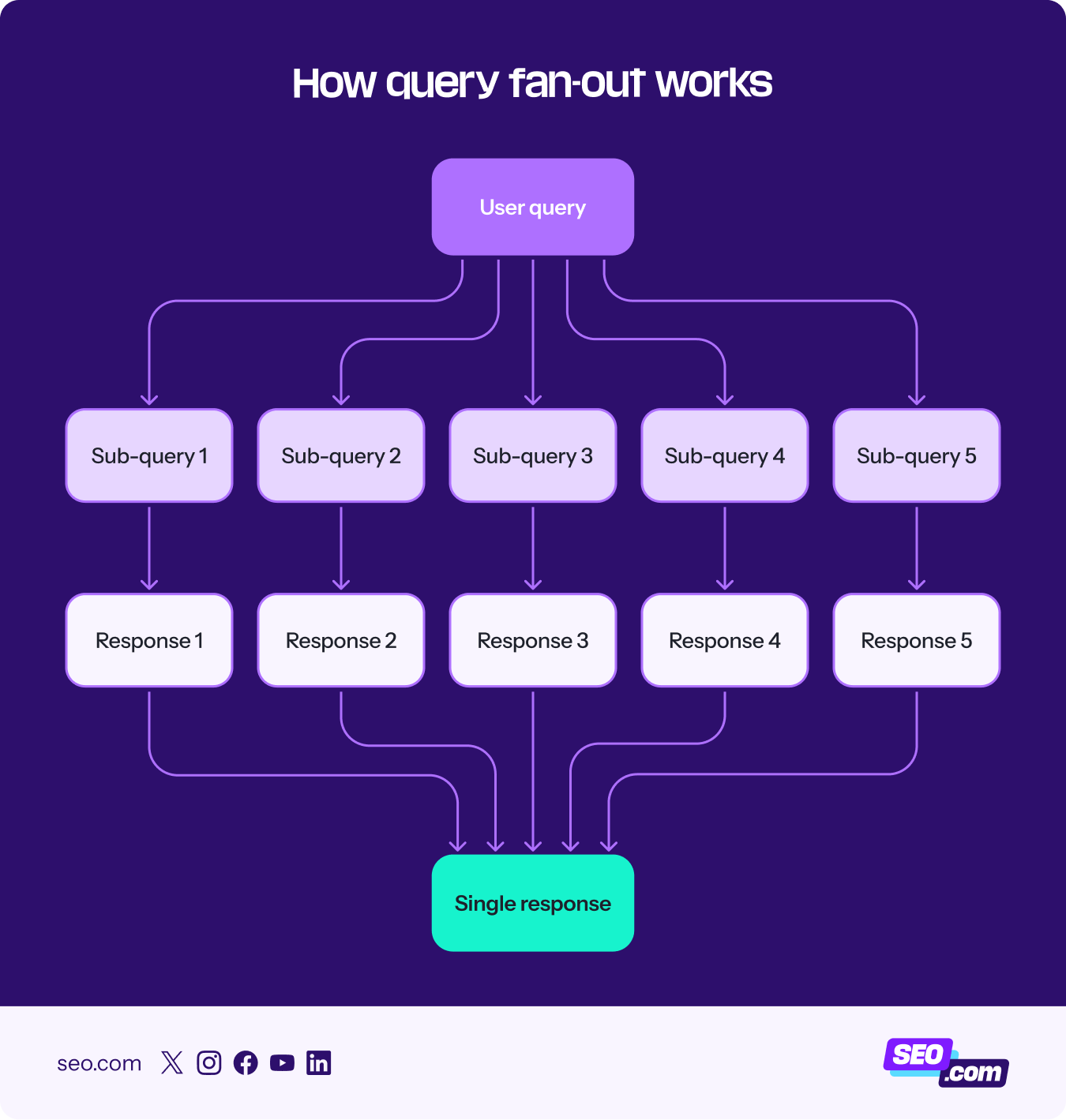
The process of query fan-out: How it works

The entire query fan-out process happens on the backend any time someone conducts a search on an AI search engine.
The user inputs their query into the AI search engine, and then on the backend, the AI search engine is conducting multiple related queries in addition to the original query to gather information about the topic.
So, for example, let’s say that you searched the query, “What kind of attire should you wear to a business-casual wedding?”
This query is extremely vague. It doesn’t indicate anything like what type of clothing the person is looking for (Tops? Bottoms? Shoes?) or even who it’s for (a man or woman). But because of query fan-out, AI search engines account for this and conducts multiple sub-queries related to this original query.
So, for example, some potential sub-queries AI may have conducted for this include:
- What kind of attire should a woman wear for a business casual wedding?
- What kind of attire should a man wear for a business casual wedding?
- What kind of shoes should a woman wear to a business casual wedding?
- What kinds of fabrics look good for a business casual wedding?
- Should a man wear a tie to a business casual wedding?
- What kinds of shoes should a man wear to a business casual wedding?
- What types of clothing are appropriate for a business casual wedding?
While the user’s original query was just asking what kind of attire to wear to this type of wedding, there are multiple, related sub-queries happening on the backend to help gather a cohesive and helpful response for the searcher.
Why AI search engines use query fan out
So, why do AI search engines rely on query fan-out for delivering responses to users? Why don’t they just search the original question and answer it as-is?
There are two big reasons for why AI search engines use query fan-out:
1. It allows AI to account for vagueness
One of the reasons that AI search engines use query fan-out is that it allows them to account for vague searches.
Like with the example above, you could see that it wasn’t entirely clear who the query was for. It wasn’t clear if the person who was searching was looking for advice for a man or woman.
If AI didn’t use query fan-out, it likely would not produce a helpful response for the searcher because the query is vague.
Query fan-out allows AI search engines to account for the vagueness of queries and still provide a helpful answer for the user.
2. It allows for AI search engines to create more comprehensive answers
Query fan-out allows AI search engines to provide more robust responses to user queries.
If AI search engines only answered the exact question the user asked, it wouldn’t provide as much helpful information. It would be relying on resources that, while they target the main topic, may not provide all the helpful information a user would need for that query.
For example, one of the things that the AI search engine accounted for in my example query was whether a man should wear a tie. That wasn’t explicitly asked for in the original query, but nonetheless is something important that a man who is attending a business casual wedding would want to know.
By providing this information, the response is comprehensive for the user. All aspects of wedding attire are accounted for, allowing the user to make decisions about what to wear.
As you can see based on this example, query fan-out allows the user to get a more comprehensive response that better answers their original query.
How query fan-out impacts your search strategy
You may now be sitting here wondering, “Why does any of this matter at all? Why do I need to account for query fan-out when I’m trying to rank an AI search results?”
Understanding query fan-out matters because it impacts your approach to content. As I mentioned previously, query fan-out involves consulting multiple sources of information related to the topic of the original query.
That means that if you don’t have content that comprehensively covers that topic, you may miss out on opportunities to appear as a branded or cited mention in the search results for that topic.
Even if you’re targeting the original query, you may not appear in the responses because of that piece of content. Instead, you may get pulled into the responses because of a related piece of content that you created that is now being cited because it’s deemed to be helpful to the user’s query.
So if we go back to the wedding example, you’d want to have content that covers topics like:
- What a woman should wear to a business casual wedding
- What a man should wear to a business casual wedding
- Do you need to wear a tie to a business casual wedding?
- What are the best shoes to wear to a business casual wedding?
Having all of this content makes you an authoritative and helpful resource, and also makes you more likely to get pulled into AI search responses.
The rise of content clustering: A pawn in the query fan-out game
The use of query fan-out has created the rise of a new, but old, strategy: Content clustering. Content clustering involves creating related content that ties back to a core subject of information.
Essentially, you take a main idea and you branch off from it. You look at multiple topics that are related to the original topic, and then split it into different categories of subtopics.
From there, you then break down those subtopics into specific pieces of content that you can write about.
So, if we go back to the wedding example, the main topic would be wedding attire. That would then branch out into subtopics like formal wedding attire, business casual wedding attire, and casual wedding attire. Then, from there, it would break down into even smaller topics like:
- Appropriate gowns for a formal wedding
- Types of shoes to wear for a business casual wedding
- What you shouldn’t wear to a casual wedding
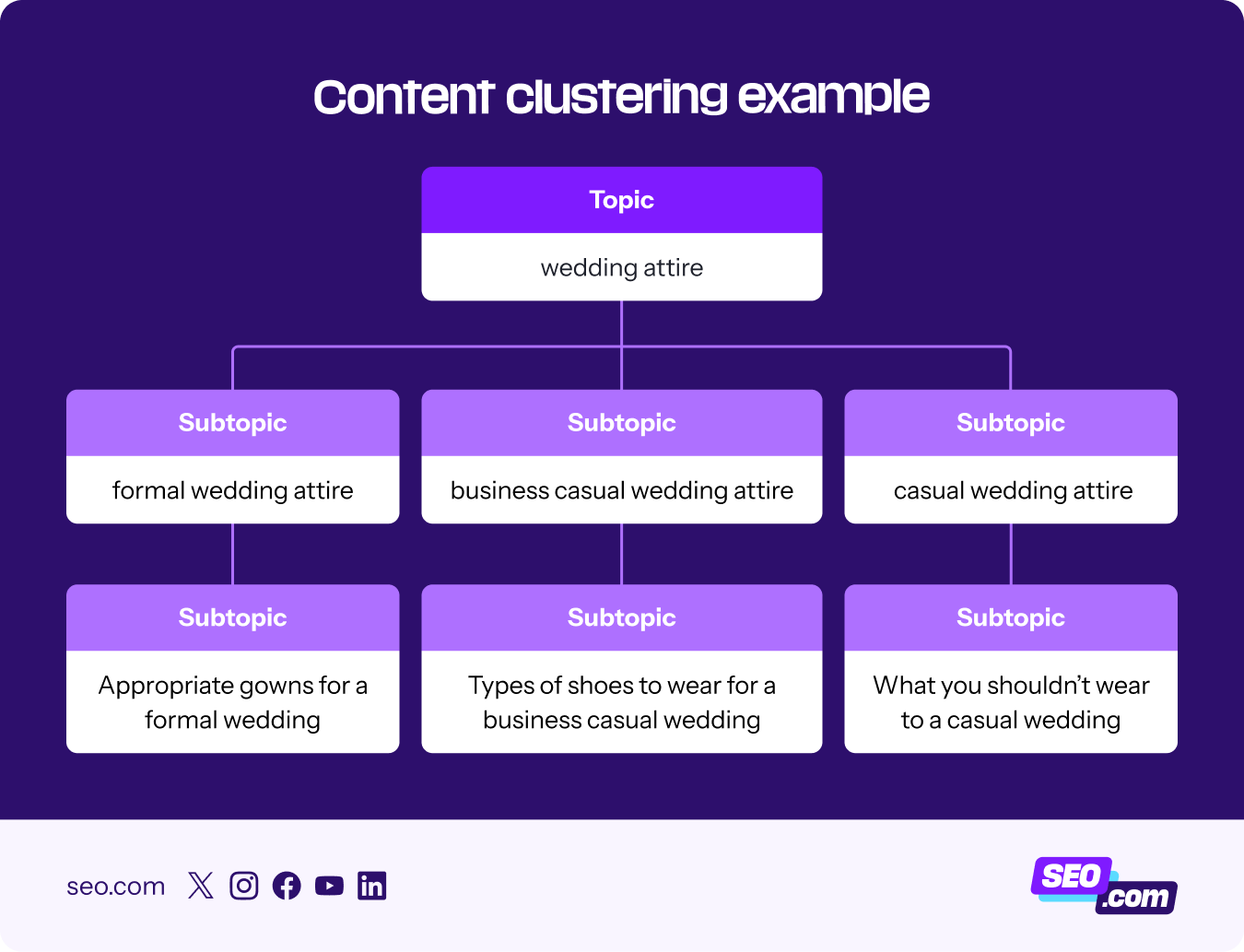
Essentially, you’re building up your authority on all things in that topic (in this example, wedding attire) to help establish your knowledge and authority in the space.
So, content clustering can help you build yourself as a resource for topics your audience actively searches about, making you more likely to get cited in AI search results.
Get help optimizing for AI searches
AI search isn’t just a fad — it’s part of the future search landscape. If you aren’t optimizing to appear in AI search engines, you’re missing a prime opportunity to get your brand in front of people actively looking for what you offer.
If you need help creating your AI search strategy, we offer AI SEO services to help you increase your brand visibility. Connect with us today to see how we can help you get ahead of your competitors in AI search!

Future-Proof Your SEO Strategy with OmniSEO®
Goodbye search engine optimization, hello search everywhere optimization.


Future-Proof Your SEO Strategy with OmniSEO®
Goodbye search engine optimization, hello search everywhere optimization.
Future-Proof Your SEO Strategy with OmniSEO®
Goodbye search engine optimization, hello search everywhere optimization.
Writers