



Sentiment analysis is the process of analyzing social posts, customer reviews, and forum discussions to understand if the emotional tone is positive, negative, or neutral. Types of sentiment analysis include polarity analysis, aspect-based sentiment analysis, and emotion detection. Doing sentiment analysis is important because it helps you keep tabs on your brand reputation, deliver personalized experience, and spot crises before they get worse.
You’ve seen “sentiment analysis” referenced in your social listening dashboards, mentioned in analytics reports, and built into half the marketing tools you use. But has anyone actually explained what it means for your brand strategy and what you’re supposed to do with that information?
Sentiment analysis is one of the most accessible forms of marketing intelligence available, yet most marketers treat it as a vanity metric rather than a strategic asset. It tracks how your audience feels about your brand, your competitors and your industry at scale. When used correctly, it can inform everything from campaign messaging to crisis management.
What is sentiment analysis?
Sentiment analysis is the process of using technology to scan large volumes of text — social media posts, customer reviews, comments and forum discussions — and classify the emotional tone as positive, negative, or neutral. It works at scale using artificial intelligence (AI) and natural language processing.
It’s not a niche concept. Businesses worldwide are investing heavily in sentiment analysis because it reveals how customers actually feel about their brand, not just what they say in carefully worded surveys. Sentiment analytics was valued at $5.1 billion globally in 2024 and is projected to reach $11.4 billion by 2030, driven by brands that recognize emotional data as a competitive advantage.
Sentiment data feeds directly into share of voice tracking, helping you understand how often your brand is mentioned and how those mentions are perceived. Volume without sentiment is incomplete intelligence — you need both to understand your true market position.
Types of sentiment analysis
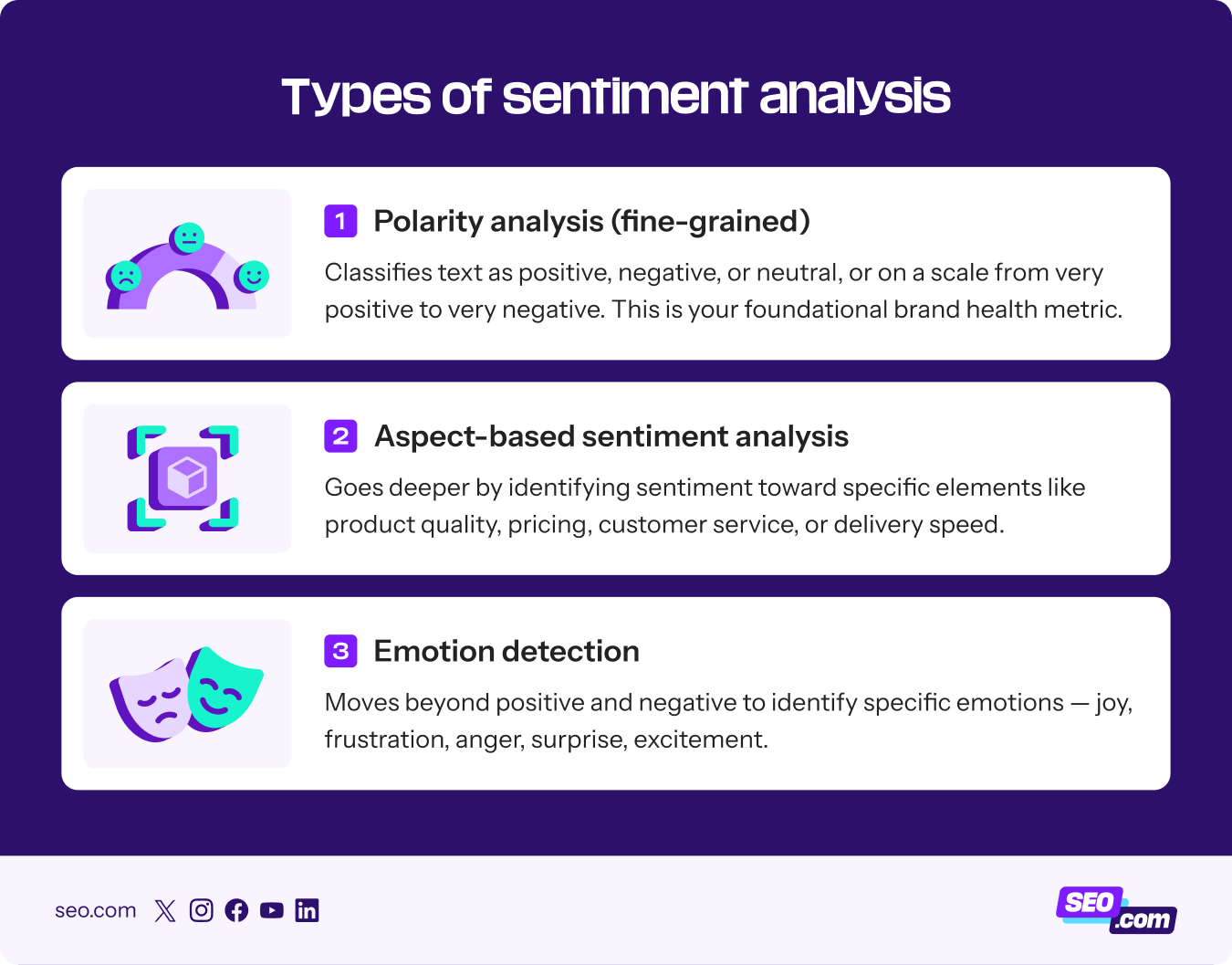
You don’t need to understand the technical mechanics of sentiment analysis algorithms. What matters is knowing which type of analysis gives you the insights you need. Here are the three main types and what each one tells you:
- Polarity analysis (fine-grained): Classifies text as positive, negative, or neutral, or on a scale from very positive to very negative. This is your foundational brand health metric. Research found that brand managers use sentiment data to track real-time brand positioning and competitive brand analysis. Use this type when you need a quick read on overall brand perception.
- Aspect-based sentiment analysis: Goes deeper by identifying sentiment toward specific elements like product quality, pricing, customer service, or delivery speed. Instead of just knowing people feel negatively about your brand, you know they’re specifically frustrated with your checkout process or shipping times. Use this type when you need to pinpoint exactly what’s driving customer satisfaction or dissatisfaction.
- Emotion detection: Moves beyond positive and negative to identify specific emotions — joy, frustration, anger, surprise, excitement. This level of granularity reveals the emotional register of your audience’s response to campaigns, product launches, or brand messaging. Use this type when you need to understand whether your marketing is landing with the intended emotional impact.
Why sentiment analysis matters for marketers
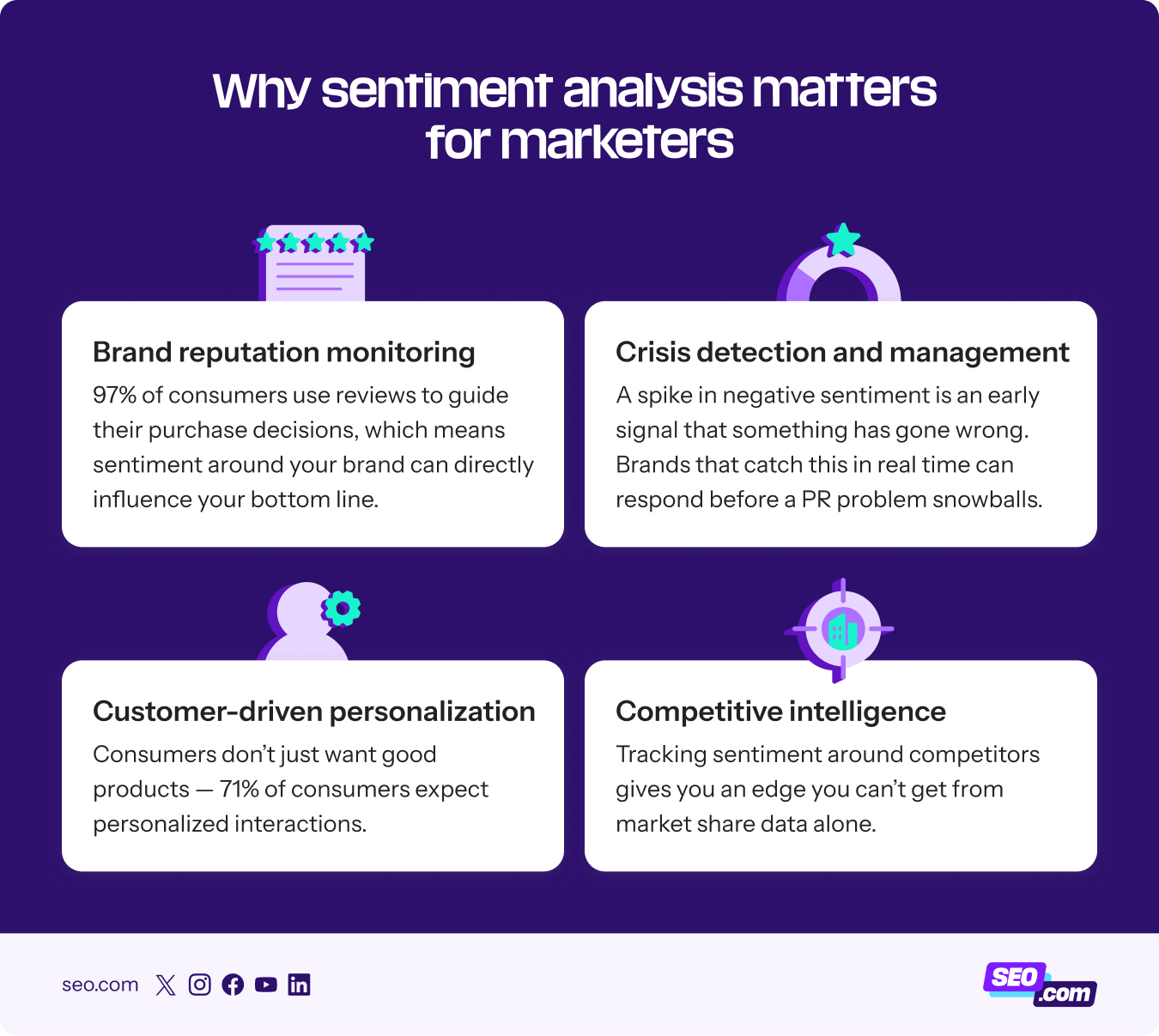
Sentiment analysis isn’t just another dashboard metric. It’s a decision-making tool that connects directly to revenue, retention and competitive positioning. Here’s where it delivers tangible value:
- Brand reputation monitoring: 97% of consumers use reviews to guide their purchase decisions, which means sentiment around your brand can directly influence your bottom line. Sentiment analysis is your early warning system. When sentiment around your brand starts trending negative — even before complaints reach your inbox — you can respond, course-correct, and protect your reputation. Monitoring brand reputation on social media gives you the real-time visibility you need to stay ahead of perception shifts.
- Customer-driven personalization: Consumers don’t just want good products — 71% of consumers expect personalized interactions. Sentiment data reveals how your audience feels about your brand at the category level, enabling you to match your messaging to their emotional state. Personalization grounded in sentiment reflects how people actually experience your brand.
- Competitive intelligence: Tracking sentiment around competitors gives you an edge you can’t get from market share data alone. You can see where they’re losing customer confidence, identify gaps in their messaging, and position your brand as the stronger alternative. Monitor branded keywords for competitors, track sentiment on their product reviews, and compare share of voice alongside sentiment trends to understand who’s being talked about positively.
- Crisis detection and management: A sharp spike in negative sentiment is an early signal that something has gone wrong — a product defect, a tone-deaf campaign, a customer service failure. Brands that catch this in real time can respond before a PR problem snowballs. Sentiment analysis gives you the lead time you need for effective brand reputation management.
How to use sentiment analysis in your marketing strategy
Knowing what sentiment analysis is matters — knowing how to act on it is what separates reactive brands from proactive ones.
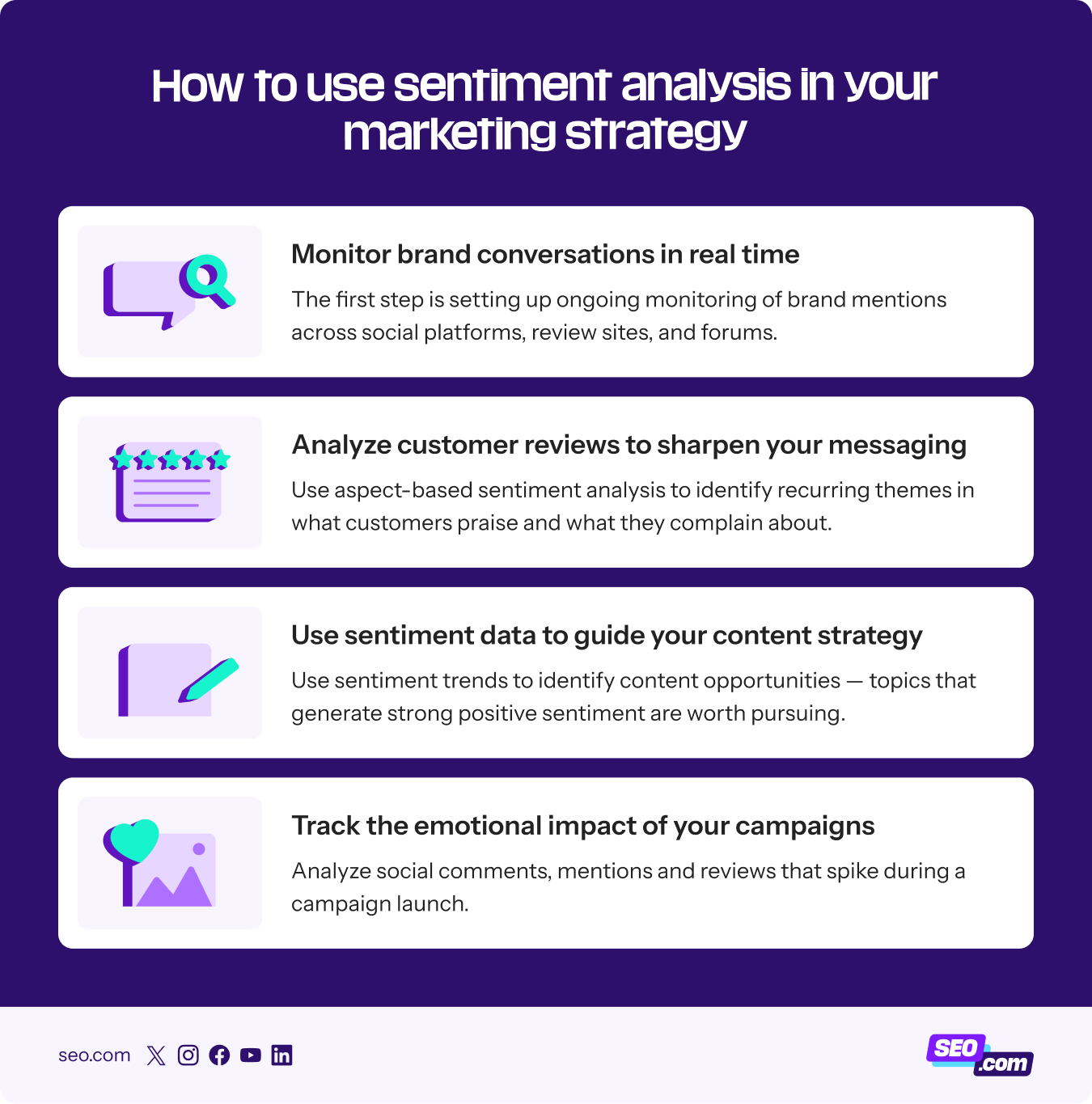
Monitor brand conversations in real time
The first step is setting up ongoing monitoring of brand mentions across social platforms, review sites, and forums. Sentiment analysis tools automatically scan and classify these mentions, surfacing shifts in tone before they become visible problems. Configure alerts for sharp negative sentiment spikes so your team can respond, not react. Real-time monitoring means you’re not caught off guard by a reputation issue that’s been building for days.
Analyze customer reviews to sharpen your messaging
Customer reviews are one of the richest sources of unsolicited sentiment data available to marketers. Use aspect-based sentiment analysis to identify recurring themes in what customers praise and what they complain about — then feed those insights directly into your messaging and content strategy.
If reviews consistently surface confusion about pricing, your brand needs to proactively address that in its content before prospective customers encounter the same friction. If customers rave about your customer service but criticize your product packaging, you know where to double down and where to improve.
Use sentiment data to guide your content strategy
Sentiment signals reveal what topics resonate with your audience, what language feels authentic to them and what pain points are most top-of-mind. Use sentiment trends to identify content opportunities — topics that generate strong positive sentiment are worth pursuing, while content that lands with a flat or negative emotional response signals a messaging mismatch.
Your content strategy should reflect your audience and what they care about, not just what ranks. Sentiment analysis helps you close that gap. There’s a close connection between brand sentiment and search visibility — positive sentiment can drive branded search volume and signals authority to search engines.
Track the emotional impact of your campaigns
Clicks and conversions tell you what people did — sentiment analysis tells you how people felt. Layer sentiment monitoring onto campaign performance tracking by analyzing social comments, mentions and reviews that spike during a campaign launch. This reveals the emotional resonance of your messaging and informs future campaign iterations. If a campaign drives conversions but generates neutral or negative sentiment, you’ve won the sale but potentially damaged long-term brand equity. Sentiment data helps you optimize for both.
Get more marketing insights from the experts
You now have a working understanding of sentiment analysis and how to integrate it into your marketing strategy. The next step is staying ahead of the tools and trends shaping how brands compete for attention and market share.
Our email newsletter delivers the latest news in the search world and breaks down the biggest topics and stories.
Sign up for our email list and make sure you’re never behind on what matters.



AI search is changing fast. Are you keeping up?
Get expert breakdowns and insights on the latest AI search trends and changes.

Table of Contents
- What is Sentiment Analysis?
- Types of Sentiment Analysis
- Why Sentiment Analysis Matters for Marketers
- How to Use Sentiment Analysis in Your Marketing Strategy
- Monitor Brand Conversations in Real Time
- Analyze Customer Reviews to Sharpen Your Messaging
- Use Sentiment Data to Guide Your Content Strategy
- Track the Emotional Impact of Your Campaigns

AI search is changing fast. Are you keeping up?
Get expert breakdowns and insights on the latest AI search trends and changes.
Writers