




When you invest in search engine optimization (SEO), you know that keywords are a crucial component of your strategy. Does that include meta keywords, though, which appear in your website’s <head> section? It shouldn’t — keep reading to learn why!
Pontos principais
What are meta keywords?
Meta keywords are specific tags integrated into the header section of your website’s HTML that indicate the target keywords for the page. These tags help provide search engines with more information about the page’s content and are not visible to website visitors.
Looking for meta keyword ideas? Try our free keyword generator.
Generate Keyword Ideas in Seconds
Do meta keywords matter?
When you look into meta keywords, you’ll find that meta keywords have no ranking authority, power, or influence. Back in 2009, Google shared that they don’t use keyword meta tags as a factor in search engine rankings.

“Google doesn’t use the keywords meta tag in our web search ranking.”
Meta keywords were removed as a ranking factor because people tried to keyword-stuff (that is, they tried to overuse keywords to rank better) on the backend of their site.
As a result, the meta keywords tag doesn’t matter for ranking in search results because it’s not a ranking factor.
Should I use the meta keywords tag?
So, the keyword metatag doesn’t impact ranking in search results, but should you still use it anyway?
The answer is no.
Overall, it’s best to skip doing meta keywords SEO because it has more drawbacks and almost no benefits. If any SEO companies are telling you otherwise, it’s time to run!
One drawback is that, given the past history of people abusing the meta keywords tag, some search engines see meta keywords as spam. Even if you use the keyword metatag on your website without malicious intent, search engines might still see it as spam.
Additionally, using meta keywords puts you at risk of your competition discerning your keyword strategy. They can visit your website and inspect the elements on the page to see what keywords you optimize for on the backend.
So, overall, you’ll want to avoid using the keyword metatag so you don’t hurt your SEO.
4 tags to use instead of the meta keywords tag
So, the keyword metatag is out. But there are still other tags you can use on your website to help boost your SEO. Here are four tags you’ll want to use to improve your SEO:
Continue lendo para saber mais sobre cada um deles!
1. Title tags
Instead of focusing on the meta keywords tag, focus on optimizing your title tags. Title tags appear in search results to tell users the context of your page.

You’ll want to optimize these tags to generate clicks and drive traffic to your pages. To make the process easier, you can use our free AI Title Generator to instantly create optimized title tag ideas that balance keyword usage, length, and click-worthiness.
Here are some best practices for creating effective title tags:
- Use your core keyword towards the beginning to show relevancy
- Use power words (ex. free, extraordinary, magic) to generate interest
- Stay within the 60-character limit
2. Meta descriptions
Another tag you can optimize instead of the keyword meta tag is your meta description. This tag appears below the title tag in search results and provides a summary of information about the page.
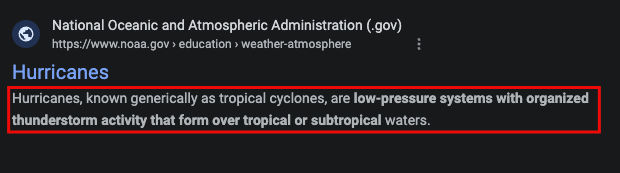
This tag is important for providing a preview of the page that entices people to click and learn more.
Here are some best practices to optimize this tag:
- Integrate your core keyword somewhere in the description
- Stay within the 160-character limit
- Give a descriptive overview of what people can expect to learn on your page
3. Image alt tags
An alternative tag option to the meta keywords tag is the image alt tag. This tag appears on the backend of your website to provide descriptions for images.
Search engines can’t “read” images, so it’s important to add the image alt tag so search engines can gather context about visuals on your page. These tags can also provide you with the opportunity to slide your keyword in naturally for improved SEO.
Here are some tips for doing image alt tags:
- Provide a detailed description of the image
- Don’t start with “This is an image of” or “Here is a picture of”
- Only integrate keywords where they fit naturally — don’t force them in
4. Heading tags
Another tag you can optimize for your website is your heading tag. Heading tags are the titles that break up different section of text on your website.

The headers on your page play a crucial role in helping break up the text on your website, but they also add context to your page.
Here are some best practices for using header tags:
- Integrate your keywords into your header tags where they fit
- Make your header tags descriptive
- Use a tiered header system (H1, H2, H3, etc.) to organize your pages
Discover more keyword strategies with SEO.com
Meta keywords are just one of the many SEO tactics to help your site’s ranking. Need expert help? Learn how our team can assist you in refining your SEO strategy and optimizing your website for better search performance by contacting us online today!

Serviços de SEO que não são padronizados
Obtenha uma estratégia de SEO personalizada para o seu negócio, setor e metas de receita.


Serviços de SEO que não são padronizados
Obtenha uma estratégia de SEO personalizada para o seu negócio, setor e metas de receita.
Escritores