




AI SEO: Your Pocket Guide to Optimizing for AI Search
Search isn’t simple anymore. It’s not just about finding your place on Google and Bing — now it encompasses getting into ChatGPT, AI Overviews, Claude, Gemini, and more. If you aren’t sure where to begin with AI SEO, you’ve come to the right place.

What is AI SEO?
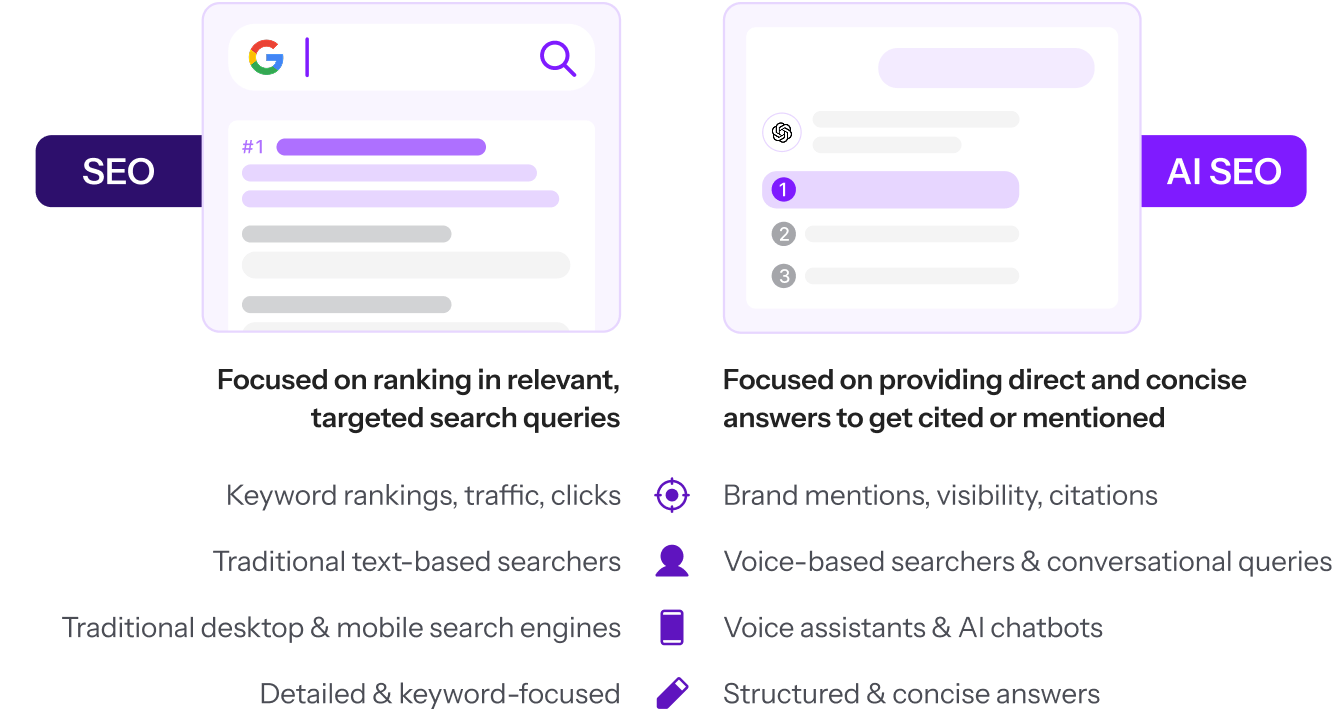
AI SEO is a strategy that involves optimizing for artificial intelligence-powered search engines, like ChatGPT, Claude, Gemini, and more. It also involves optimizing for AI features like AI Overviews. AI SEO helps you optimize your search strategy for the way AI engines deliver responses, so you can reach people who use AI-powered search platforms to find information.
Note: Whether you see it referred to as AI SEO, AEO, or GEO, they’re all focused on the same thing — getting your website optimized for AI engines.
How do I do AI SEO?
Here’s what you can do to optimize your website for inclusion in AI search answers:
1. Focus on intent first, not keywords
A big mindset shift you need to make is focusing on intent, not keywords. AI search engines operate on a semantic approach to search — they’re looking at context and details to help produce responses. AI engines aren’t looking for specific keywords alone, which is why optimizing for intent is so important.
Because here’s the thing: The average search in an AI engine is about 23 words compared to 3-4 for traditional search.
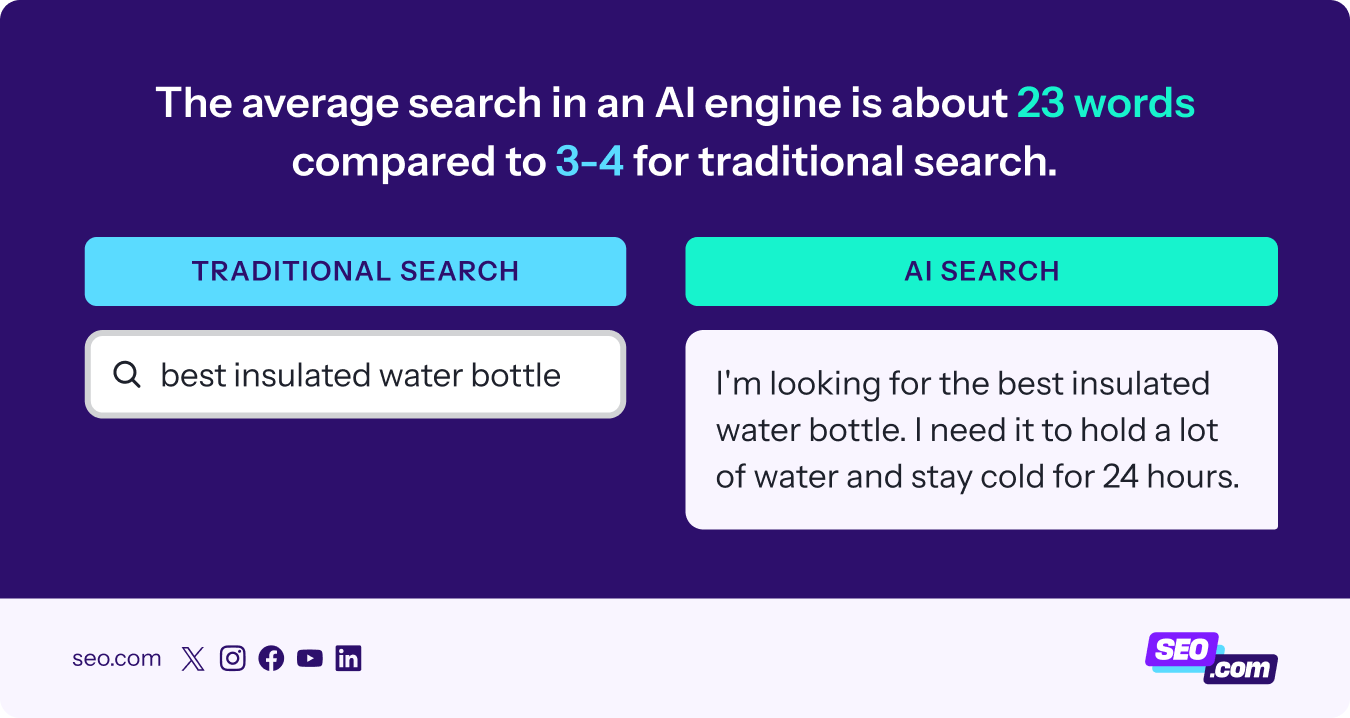
And most of those words aren’t keywords, but context.
Now, that doesn’t mean you throw out your keywords completely. Keywords can still provide relevancy and context — but they shouldn’t be the only thing you’re considering when creating or optimizing content.
Looking at the intent of the search can help provide context and insight into what people want to know. See what’s ranking and what comes up in AI search results if you turn your keyword into a question (e.g. “water heater isn’t working” ➡️ “Why isn’t my water heater working?”).
This will help you gain a clearer picture of what searchers want to know, so you can ensure you provide that information.
2. Follow an answer-first content structure
Answer-first content structure involves providing the answer to a question or sharing the most important information on a topic first, rather than building up to it. This structure allows AI engines to extract the information easily, increasing your ability to get cited and mentioned in AI search results.
If your content spends time building up to the conclusion for dramatic effect, you’ll want to skip it. AI engines don’t want the suspense and build up to the answer or the information — they want a direct answer.
A study from CXL found that AI Overview citations, in particular, come from the top 55% of content. Kevin Indig’s analysis of ChatGPT citations found a similar pattern — 44.2% of ChatGPT citations come from the first 30% of a page.
What this means is AI engines aren’t digging deep for answers, which means you need to provide them first and fast.
So, restructure your content to ensure you’re providing the most important and valuable information first. Then, build off it and dive into more detail.
3. Establish strong E-E-A-T signals
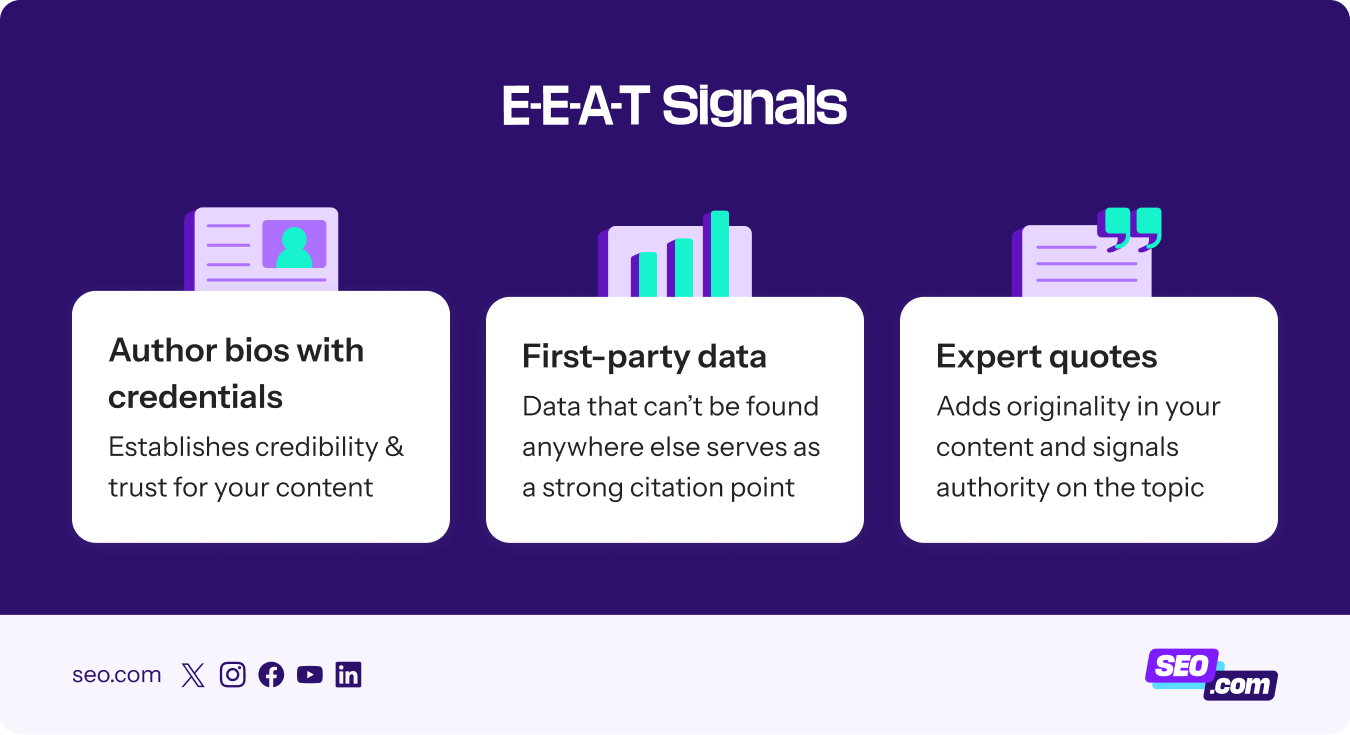
E-E-A-T signals are aspects that show search engines you are a trustworthy, reliable, and knowledgeable source of information. AI engines want to cite trustworthy sources, so having E-E-A-T signals like author bios with credentials, first-party data, and expert quotes can help build that trust.
E-E-A-T signals have long been an important part of Google’s search ecosystem. Showing you have experience, expertise, authority, and trust makes Google more likely to rank your pages better in search — now it’s even more important for AI engines.
Here are some E-E-A-T signals you can implement into your pages to ensure you’re establishing your authority:
- Author bios with credentials: Having author bios with credentials helps establish credibility for your content. It essentially tells AI engines that the person who created the content is a skilled expert whose insights should be trusted.
- First-party data: Data that can’t be found anywhere else serves as a strong citation point, especially if the data is very valuable and helpful to your audience.
- Expert quotes: Having insights from your team of experts is a great way to have original, unique ideas within your content, while also signaling authority on the topic.
4. Manage your third-party reputation and brand
Your brand’s reputation plays a pivotal role in getting cited in AI engines — if your brand isn’t trustworthy, you aren’t likely to get cited in AI engines. Managing your third-party reputation, like reviews, is critical for ensuring that AI engines see your brand positively and view you as a reliable source for information.
A big shift with AI search is that your brand reputation holds more weight. With traditional search, having a strong brand reputation was just good business practice. Now, it’s pivotal if you want to get in AI-powered responses.
That means you need to spend more time managing your brand’s reputation across the web. Make sure you keep on top of reviews, especially on your Google Business Profile, and what people say about your brand on forums like Reddit.
If you’re finding that there is a lot of negativity around your brand, make sure you address it. Try to resolve issues and create resources when you can to help address points of frustration.
5. Think beyond the core subject
If your content just repeats what everyone else says on the subject, you’re not giving AI engines an incentive to cite you over a competitor. You need to go beyond the core subject and add unique information to your page, whether it’s answering a question others aren’t, adding unique expert insights, or something similar.
Basically, you need to find a balance between being a standout resource and doing too much. You don’t want to overload your page with a ton of information in hopes it stands out. You need to have a balance of high-quality information and unique perspectives or angles.
6. Leverage FAQ sections
FAQ sections are a key component of success for AI SEO. With an FAQ section, you address a lot of different questions about a subject, which creates more opportunities for your page to be cited. FAQs help you create more valuable pages and address important topics your audience wants information on.
Think about common questions your audience asks around a subject. Build an FAQ with those questions and answer them directly and thoroughly. It can help you increase your chances of getting cited in AI engines.
7. Experiment with trends and findings from the community
One of the most impactful things you can do with AI SEO is experimenting with trends and findings from the SEO community. Because AI search is still so new, a lot of the experts are still figuring it out too. That means you can look towards the SEO experts in the community to test findings and ideas with your own strategy.
Take LLMs.txt, for example. This was something found out within the community that many people have experimented with to see if it helps with AI citations and visibility. Even things like FAQs, answer-first content, and prompt targeting were all experiments people tried.
Being in-tune with the SEO community can help you find things to experiment with in your AI SEO strategy, so you can get ahead of your competition.
Can I use AI for SEO?
Yes! You can leverage AI to help with your search optimization strategy, whether you’re targeting traditional search engines or AI-powered ones. Here are a few ways you can use AI for SEO:
- Topic discovery: AI can help you close topic gaps and ensure you’re covering important topics within your niche. With AI, you can analyze your current content to identify opportunities for expansion.
- Competitor analysis: AI engines can help you analyze your competitors to see how you stack up against them whether in traditional engines or AI engines. Dedicated AI visibility tools can benchmark your share of voice across ChatGPT, Perplexity, and AI Overviews — giving you a clearer picture of where you and your competitors stand.
- Creating content: Not only can AI help with finding topics, but it can also help with the content creation process. It can help with outlining, research, and more.
- Identifying prompts: AI search requires more than targeting keywords — you need to target prompts. AI engines can help you find what prompts you can target to reach people on AI engines.

Get found in AI-powered search results
Be a brand AI engines recommend with a customized AI search strategy from the experts at WebFX.

How AI is changing SEO
AI is changing how we approach search engine optimization. While SEO is a good foundation for optimizing for AI-powered search, there are nuances like semantics, context, and query formation that have changed because of AI.
If you just try to use an SEO strategy for getting into AI search results, it won’t work. A traditional SEO strategy is a good foundation, but AI search requires more. There are additional optimizations you need to do to ensure you can rank in AI search results.
SEO isn’t going away. SEO isn’t dead. It’s just evolving and adapting with the current search landscape, which means that your strategy looks different too.
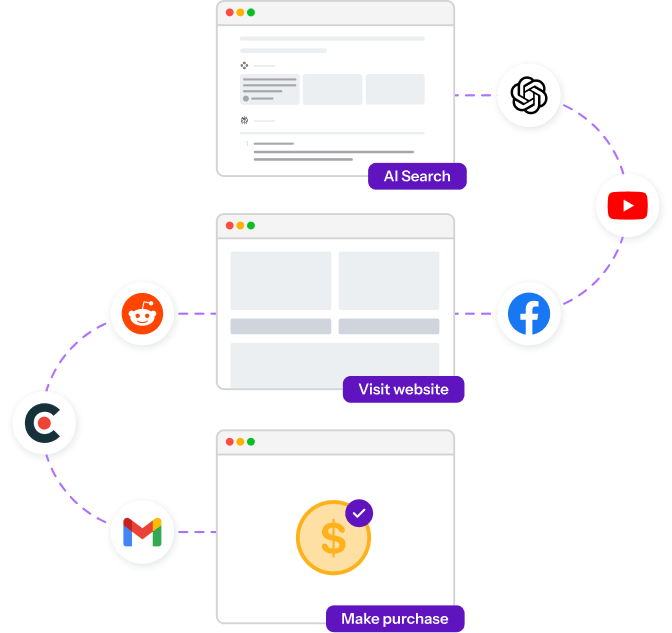
“AI isn’t just changing the way we approach search from a strategy perspective, but also an audience perspective. The audience’s search journey looks different now, too. They’re spending more time doing research and discovery on AI engines before ever visiting your website. That means they know all about you before you’ve even connected with them."

Macy S.
Content Marketing Consultant, SEO.com

Check if your site appears in AI Overviews
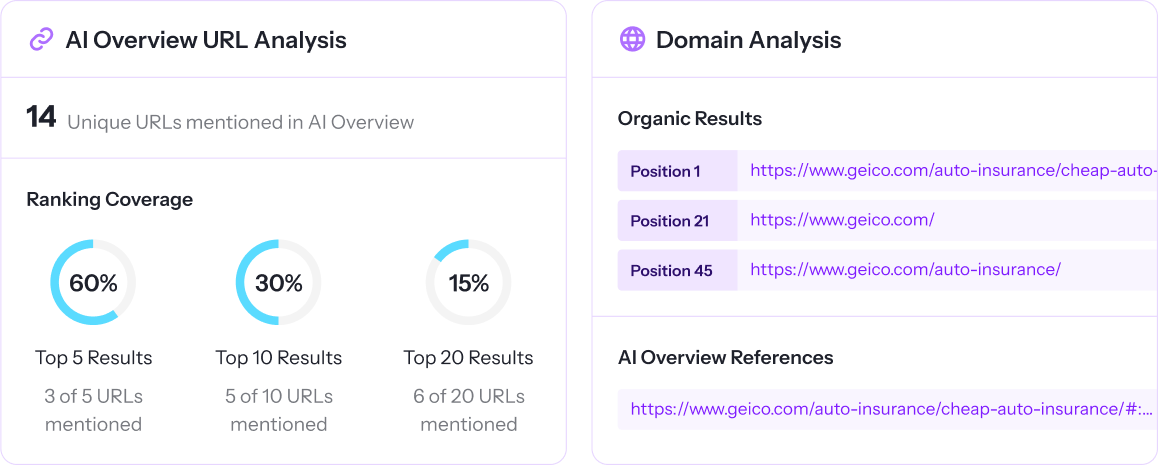
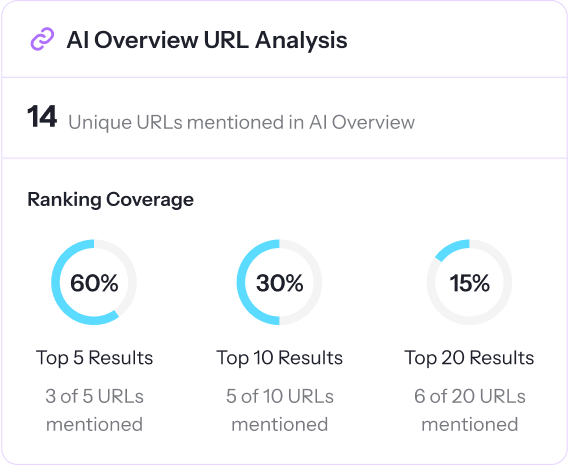
Are you unsure if your website is appearing in AI Overviews? Our free AI Overview Checker will let you know! Not only that, it will display some crucial information for how organic results are informing the AI Overviews, and how your site can improve.
FAQs on AI SEO
Why should I optimize for AI search?
Without sounding like a broken record, search is changing. SEO has always been changing.
However, with AI, it’s no longer Google alone making these changes. There is a new era coming of multiple search experiences competing against the traditional forms of Google’s own search engine.
Google captured over 90% of search market share in its prime. Now, we’re seeing more and more searches starting on LLMs like ChatGPT, which is creating new user journeys.
So now, you need to make sure you’re reaching people on these platforms. Optimizing for AI search is no longer optional — it’s mandatory if you want to reach people where they’re at.
Will AI replace SEO?
We’ve heard this question a lot! As a matter of fact, we’ve also heard “SEO is dead” just about every year for the last 10 years.
So will AI replace SEO? No.
Users will never stop asking questions about what products and services they are hoping to acquire. Techniques for showing up where those questions get raised will change, but they will not disappear.
In fact, SEO has always been changing. AI is just the latest iteration of how SEO is different.
Will AI replace SEO experts?
No, AI will not replace SEO experts. AI can do a lot to help with search optimization, but it is lacking in a lot of areas.
It can produce prompts, for example, but can’t decipher which prompt targeting makes the most sense — that requires human insight.
AI can create content, but it can’t add human touches that make the content resonate with your audience.
AI can speed things up, but it can’t always recognize when it’s making an error or getting the wrong impression.
SEO specialists will always be needed to do the work — AI just helps them do more.
How do AI engines choose which sources to cite?
While there isn’t a foolproof list of qualities, there are some known qualities that cited content seems to have. Most citable content is clear, well-structured, and backed by authority. The content typically is organized for quick extraction, so AI engines get the information they need fast.
Do keywords still matter for AI SEO?
Not as much. You don’t need to abandon your keywords completely, but know that context and intent are taking center stage. Keywords can help with providing context, but they shouldn’t be the only thing you focus on when trying to get in AI search results.
Are GEO, AI SEO, and AEO the same?
Yes. They are all different names for the same concept. All of them focus on adapting your website to get in AI-powered search results.
Does schema matter for AI SEO?
Yes. Schema helps provide context for AI engines that crawl your website. AI platforms use your schema to clarify meaning and better understand the content on your pages.
Latest from SEO.com
-
What Makes Content High Quality? Breaking Down High-Quality Content
Macy Storm

-
What Is an LLM and How Does It Work?
Lace Llanora

-
What Is Sentiment Analysis and Why Does It Matter?
Jess Bonacci

-
How Your Company Can Harness Site Listings for SEO
Matthew Gibbons

-
What is Keyword Cannibalization and How Do I Fix It?
Sarah Berry

-
What Are NAP Citations and Why Do They Matter?
Abby Fields