


Learning the difference between long-tail vs. short-tail keywords helps you understand how each shapes your SEO strategy, including rankings, traffic, and conversions—so you can prioritize the right keywords for better results.
Key differences between long-tail and short-tail keywords:
| Factor | Long-tail Keywords | Short-tail Keywords |
| Length | 3+ words | 1–2 words |
| Intent | Specific | Broad |
| Search volume | Lower | Higher |
| Competition | Lower | Higher |
| Targeting | Easier, more precise | Harder, less precise |
| Traffic quality | More qualified | More general |
| Best use | Targeted, non-branded searches | Branded or high-authority sites |
In this guide, we’ll cover:
- What is the Difference Between Long-tail vs. Short-tail Keywords?
- Why Are Long-tail Keywords Better Than Short-tail Keywords?
- The Basics of Long-tail Keywords
- The Basics of Short-tail Keywords
What is the difference between long-tail vs. short-tail keywords?
The difference between long-tail vs. short-tail keywords is length, search volume, and competitiveness, with long-tail keywords having more words but less search volume and competitiveness than short-tail keywords, which are one to two words. This distinction is foundational to long tail keywords SEO, where specificity often leads to better targeting.
Which is better, long-tail or short-tail keywords?
Long-tail keywords are typically better than short-tail keywords. While long-tail keywords have a lower search volume than short-tail keywords, they have a more defined search intent, which makes them easier to target and more effective at attracting your target audience — a core advantage of longtail SEO strategies.

Why are long-tail keywords better than short-tail keywords?
Long-tail keywords are better than short-tail keywords for a few reasons, including the following:
- Relevancy: There is a difference between “amusement parks” and “amusement parks southern california.” When you target long-tail keywords, you become more relevant to users searching online and focus your efforts on qualified users vs. all users — a key principle in long tail keywords SEO.
- Volume: Long-tail keywords have a lower search volume than short-tail keywords, but there are more long-tail keywords than short-tail keywords available to target. That’s why leaning into long-tail keywords and investing in long tail keywords research can benefit your long-term SEO strategy.
- Ease: Compared to short-tail keywords, long-tail keywords are easier to target. Besides having a more definitive search intent, long-tail keywords are also less competitive, which makes ranking for them and capturing their traffic easier.
- Effectiveness: Long-tail keywords are also effective because of their targeted search intent. They attract your target audience, which helps you bring qualified traffic to your site that your team can convert into raving fans.
While short-tail keywords have their use cases (like for extremely authoritative sites and branded keywords), you’ll often see more SEO benefits from focusing your keyword targeting strategy on long-tail keywords.
The basics of long-tail keywords
Learn the basics of long-tail keywords below:
What are long-tail keywords?
Long-tail keywords are keywords that contain at least three or more words, like “amusement park southern california.” Because of their length, they typically have a more refined search intent but also lower search volume and competition levels, making them essential to long tail keywords SEO
What are examples of long-tail keywords?
Some examples of long-tail keywords include:
- Top of the funnel long-tail keywords
- “best budget travel destinations in europe”
- “tech gadgets for remote work productivity”
- “healthy vegan recipes for dinner”
- Middle of the funnel long-tail keywords
- “home workout routines without equipment”
- “fashion trends for winter 2023”
- “beginners guide to astrophotography”
- Bottom of the funnel long-tail keywords
- “child-friendly restaurants in new york”
- “emergency plumber los angeles”
- “walt disney world tickets discount”
- “seo companies philadelphia“
- “heavy equipment rental in philadelphia”
When should I use long-tail keywords?
Except for your organization’s branded terms, you should target long-tail keywords. Even though they have fewer searches, long-tail keywords are incredibly effective at reaching your target audience because of their specific intent.
A strong longtail SEO approach ensures you capture highly specific queries that drive qualified traffic.
How do I find long-tail keywords?
You can find long-tail keywords in a few ways, including the following:
Internal feedback
Feedback from your internal teams, from sales to customer support, can help you surface long-tail keyword ideas. For example, your sales team could share common questions during the pitch process, while your customer support team could highlight common issues during ticket resolution — both valuable inputs for long tail keywords research and predictive SEO.
Keyword Generator
There are plenty of free keyword research tools available, including our free keyword generator. With our free keyword research tool, you can discover thousands of long-tail keyword ideas and comprehensive metrics that help you prioritize your keyword strategy.
Free keyword generator

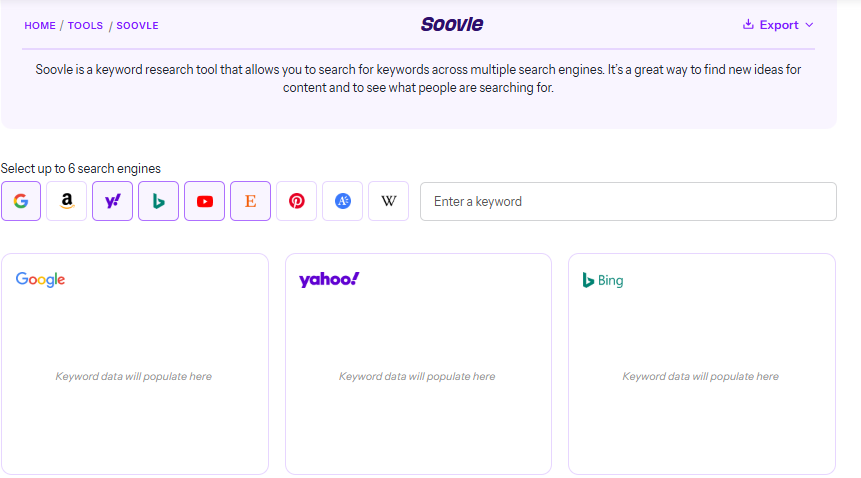
Soovle
Generate keyword ideas across multiple search engines for free with Soovle. This free keyword research tool is easy to use with no login required. Find keyword ideas for YouTube, Etsy, Pinterest, Wikipedia, and more!
Google Search
Google Search is another free way to find long-tail keywords, like through:
- Autocomplete: Start typing a search, and Google will try to complete your thought. While more time-intensive, this tool can help uncover long-tail keywords related to a short-tail keyword by offering suggestions.
- People also ask: See what questions people ask related to your search. People also ask is an excellent resource for investigating search intent or discovering new, standalone keywords your site could target.
- Related searches: View searches related to yours at the bottom of Google search results. You can use this tool by searching for short or long-tail keywords to get keyword ideas for more refined searches.
While Google Search is one way to find keywords, it’s not the most effective time-wise.
Google Trends

With Google Trends (another free keyword research) tool, you can research long-tail keywords by:
- Viewing trending topics
- Comparing keywords and their trends over time
- Browsing related topics
If you use a paid keyword tool, like Keywords Everywhere, you can see keyword metrics like search volume and competitiveness within Google Trends. While optional, this data can help you skim your keyword results faster and support your long tail keywords research process.
Google Keyword Planner
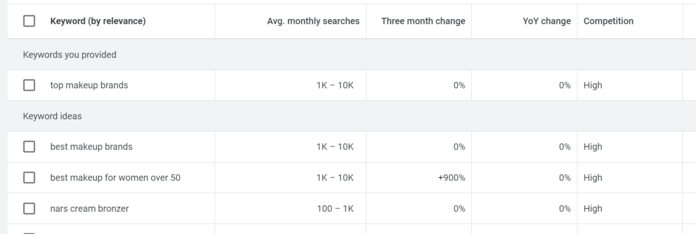
Google Keyword Planner is another answer for how to find long-tail keywords.
With Google Keyword Planner, you can enter a topic, and Google Keyword Planner will generate dozens of related keyword options. Plus, it’ll include keyword metric data like search volume and cost per click (CPC), which you can use to evaluate the keywords.
It’s important to note that Google Keyword Planner is intended for Google Ads, so you’ll find its keyword data focuses on more transactional terms since those are the types of searches advertisers bid on the most.
If you’re looking for Google Keyword Planner alternatives, tools like SEMrush, Ahrefs, and KeywordTool.io offer similar functionalities for keyword research.
Paid keyword research tool
Besides the free options above, you can use paid keyword research software like Ahrefs or Semrush. These tools have built-in keyword research toolkits that allow you to enter a seed keyword and then narrow your results through filters for search volume, number of words, competition score, and more.
The basics of short-tail keywords
Learn the basics of short-tail keywords below:
What are short-tail keywords?
Short-tail keywords are keywords that contain one to two words, like “travel destinations.” Because of their length, they typically have a broader search intent but also higher search volume and competitiveness.
What are examples of short-tail keywords?
Some examples of short-tail keywords include:
- Top of the funnel short-tail keywords
- “travel destinations”
- “vegan recipes”
- “tech gadgets”
- Middle of the funnel short-tail keywords
- “workout routines”
- “seo companies“
- “fashion trends”
- “astrophotography guide”
- Bottom of the funnel short-tail keywords
- “child-friendly restaurants”
- “emergency plumber”
- “walt disney”
When should I use short-tail keywords?
Consider using short-tail keywords when you have a highly authoritative domain or want to target your company’s branded keywords. You’ll usually start targeting short-tail keywords for branded terms vs. non-branded short-tail keywords.
How do I find short-tail keywords?
You can find short-tail keywords with the same strategies for long-tail keywords:
- Keyword Generator
- Soovle
- Google Search
- Google Trends
- Google Keyword Planner
- Paid keyword research tools
When using these tools, you’ll often start with branded search terms. As your site becomes more authoritative, you can expand and start researching short-tail keywords, which will contain only a few words.
Grow your knowledge of short-tail and long-tail keywords
Congrats, you’ve learned about the difference between short-tail and long-tail keywords! If you want to learn more about keyword targeting and improve your long tail keywords SEO strategy, visit the SEO.com blog or check out our SEO glossary.
Let’s Drive Results Together 


Meet
The top digital marketing company behind SEO.com.
Ready to get results? Connect with us, today!
Writers